Variant parts master and bills for vehicle makers
The variant parts master holds every part a vehicle plant buys or makes, with its drawing revision, supplier and approved alternate. Bills of materials are built on that master by model, trim, engine and market. Planners, buyers and stores read the same bill, so a diesel estate is never kitted like a petrol hatchback.
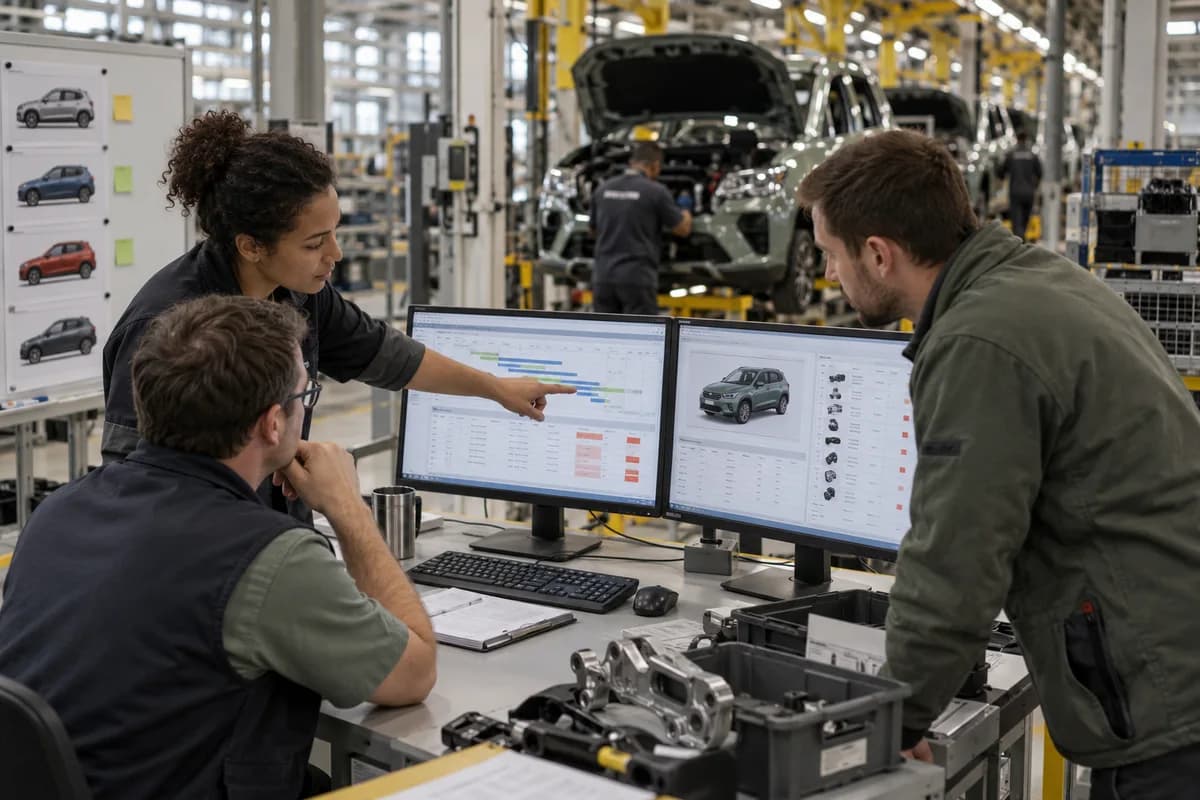
What the parts master records for each part
Every part is one record. Engineers, buyers and stores all read it. A bill is a list of those records. It is grouped by the variant that takes them, so a drawing change is made once and reaches every bill that carries the part.
A working week with the variant bills
The master is edited by a few people and read by everyone. Engineers change it. Buyers, planners, stores and the line read it every day. These four moments show where a bill is touched in a working week. Each one starts from the same record.
Who reads the parts master and what they see
Four roles read the master. Each looks for something different. Edits come from the people who own the drawings, and everyone else reads the record to make a decision of their own.
Decisions to settle before loading the parts master
A parts master is only as good as its first load. These four decisions are made with your engineers and buyers before any build order reads a bill. Settle them first.
How the parts master feeds the vehicle plant
The master sits at the start. Other features read from it or hand a change back to it. These are the points where a bill meets the rest of the product. A wrong record would travel to all of them, so the first load is checked with care.
- Build orders read the variant bill for shortages
- Station kitting issues kits from the same bill
- Engineering change control revises parts and sets the chassis number
- Supplier schedules and part approval use each part’s supplier record
- Warranty and recall traceability links part lots to vehicles
Where the vehicle parts master stops
The parts master records parts, revisions and bills. It is not a drawing system, so the drawing itself stays in your design and drawing revision system, which can be linked. It does not decide whether a design is right. Price and cost decisions stay with the buyer and your accountant. A garage building one kit car a month can run on a drawing register and a stock sheet.
Frequently asked questions
Can one part sit on bills for several variants?
Yes. The part is held once. Each bill that needs it points to that record. When engineering revises the drawing, the change is made on the one record and every bill that carries the part shows it.
Where is the approved alternate shown to buyers?
On the part record. A buyer chasing a late hinge pin or grommet sees the supplier and the approved alternate together, without opening another file. An alternate that engineering has not approved is not shown there.
What if two copies of a bill disagree at load?
Engineers settle it before loading. Where two spreadsheet copies of a bill differ, they name the correct one, and the other copy is left out of the load. Each build order then reads a single bill per variant, not a choice of two.
Does the master replace our drawing register?
No, it holds the drawing revision beside each part. A fitter then knows which drawing applies. The drawings stay in your design and drawing revision system. A link to it can be scoped in implementation.
How does a coach or ambulance builder use the bills?
A coachbuilder’s bodies get their own bill. The chassis arrives as a unit with its own number. The body build order then lists the parts for the box, tipper or coach shell that goes on it.
How this feature fits the system.
Auto Manufacturer Management Software: the parts that work with this feature, the trades that use it and the ways to put it in place.
Variant parts master and bills of materials
Each model, trim, engine and market has its own bill, from subframe to wiper arm. A build order reads only the parts that its variant needs.
Bill of MaterialsBuild orders and slot planning
Dealer orders become build orders in weekly slots. Short axles, seats or glazing for a slot show before the order is released to stores.
Production PlanningStation checks and torque records
Each unit carries a work order through body shop, paint and trim lines. An operator closes a station only after its nutrunner checks are recorded.
Work Order ManagementTell us what you need.
Tell us what your team does today, where work gets stuck and what you want to change.
What happens after you share your requirements
- We review your brief and the systems you already use.
- We clarify the workflow, missing information and the work to consider first.
- The proposed scope sets out the deliverables, responsibilities and dependencies.
- Review the scope and commercial terms before deciding whether to proceed.
Start with your requirements
Describe your current process, the people involved and the change you need. Start with the details you know; we can clarify the rest together.
Share your requirements