Lot tracing and recalls for breweries
Lot tracing and recalls lists every customer who received a given lot, with quantities and dates, from one search. The lot number is given at brewing and follows the beer through packaging and delivery. Whoever searches can start from a lot, a batch or a customer’s complaint.
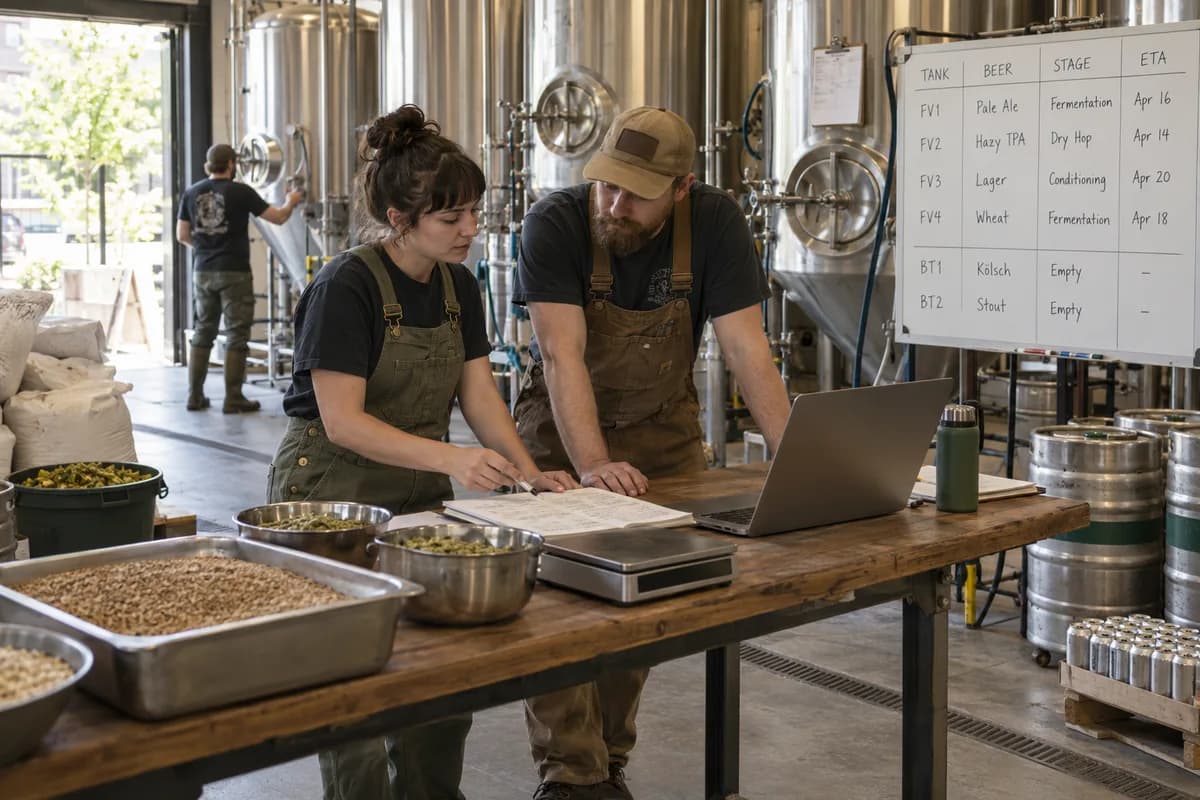
What a brewery lot trace draws together
This is a search over records the brewery already keeps. It starts from one lot number and reads forward to customers, and backward to ingredients. Nothing new is typed during a recall. The work was done at brewing, packaging and delivery.
A recall search through a bad day
A recall is rare. A complaint is not. These are the moments when a brewery uses the lot search in earnest. They run from a single phone call about one keg to a full decision about what to pull back from customers.
Who runs a lot search and who acts
One person runs the search, and several act on it. The four roles below each take a different step. Keep the order clear. The cellar should not wait for the desk, nor the desk for the cellar.
Decisions to settle for lot tracing
Tracing works when records are complete, and records are complete when the rules are clear. Settle these before the first batch is brewed. Each takes a short talk, and each pays off on the worst day.
How lot tracing connects to other features
Lot tracing owns no records of its own. It reads what other features keep and joins them under one number. The five links below show where each part of a trace comes from, so a gap in one place is a gap in the trace.
- Starts from lot numbers in batch and fermentation records
- Reads quantities filled from packaging runs
- Reads deliveries by customer from trade orders
- Reads batch approvals from quality checks
- Lists kegs out with customers from keg tracking
Where lot tracing stops
The search finds who received a lot. It does not decide to recall, write the notice or inform an authority. Those choices belong to the owner and an adviser, and the law of your country sets any duties. It cannot see beyond the customers you delivered to, such as a distributor’s own accounts. A brewery with a few regular customers can still trace by phone.
Frequently asked questions
How do we search for customers who received a lot?
Enter the lot number in one search. The result lists every customer who received it, with the quantity and the delivery date for each. Nobody opens dispatch notes one by one or rings the yard.
Can we trace from a customer complaint?
Yes. Start from the lot on the keg, or from the delivery the customer names. Either one leads to the lot. From there you reach the batch record and every other customer who received that lot.
Does it show ingredients behind a lot?
Yes, through the batch. Ingredient lots drawn from stock are recorded against the batch. The search can therefore read backward from a lot to the malt and hops that went in, as well as forward to customers.
Does it contact customers for us?
No. It produces the list and nothing more. Email and SMS appear among the listed connections, but the wording and the decision to send are the owner’s. Calls are made by your own sales desk.
What if a delivery was never entered?
Results are only as complete as the records. A delivery that was never booked will not appear. That is why dispatch is entered when the order is packed. A practice drill is worth doing now.
How this feature fits the system.
Brewery Management Software: the parts that work with this feature, the trades that use it and the ways to put it in place.
Recipes and brew plan
Each recipe lists malt, hops, yeast and water by quantity, and scales to the batch size so the brewer sees what a brew will use.
Bill of MaterialsBatch and fermentation records
A lot number is given at brewing and carried through every transfer, packaging run and delivery, so a beer can be traced forward.
Batch and Serial TrackingTank schedule
Brews are booked into tanks by date, and the plan shows when each vessel frees up so the next brew can be placed.
Production PlanningTell us what you need.
Tell us what your team does today, where work gets stuck and what you want to change.
What happens after you share your requirements
- We review your brief and the systems you already use.
- We clarify the workflow, missing information and the work to consider first.
- The proposed scope sets out the deliverables, responsibilities and dependencies.
- Review the scope and commercial terms before deciding whether to proceed.
Start with your requirements
Describe your current process, the people involved and the change you need. Start with the details you know; we can clarify the rest together.
Share your requirements