Packaging run records for kegs, cans and bottles
This record covers what was filled from a batch: the count of kegs, cases of cans or bottles, each under the batch’s lot number. Packaging staff close the run when filling ends. The brewery then knows how much of the batch is in stock and where it can be traced.
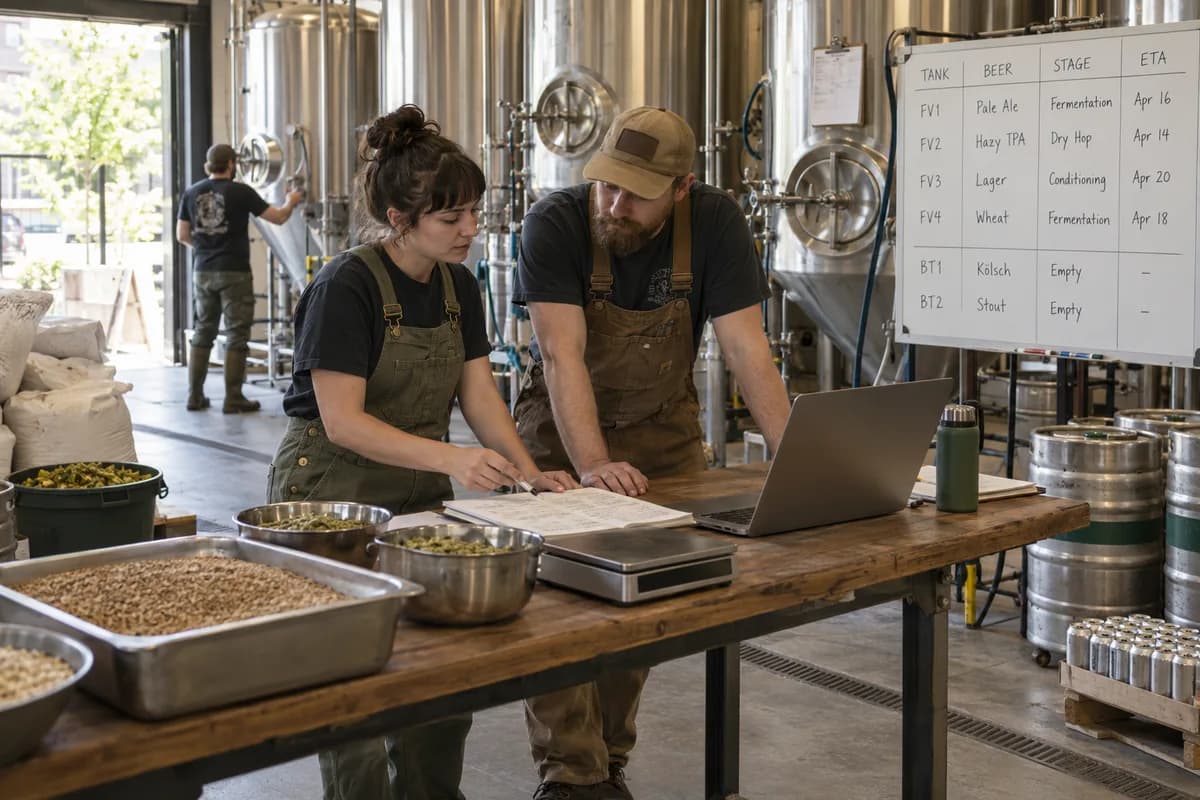
What a brewery packaging run records
One run is one session on the line for one batch. It is the bridge between a tank of beer and the things the brewery sells. The record is short on purpose. Four facts matter: the batch, the format, the quantity and the lot.
A packaging day from first keg to last case
A packaging day starts with a beer that has passed its check. It ends when the last pallet is counted. The record follows that day in order. Each step is one entry made by the person standing at the line.
Who opens, runs and reads a packaging run
Packaging touches several people in different ways. Each of the four roles below sees the part of the run that suits its job. None reads the whole record to find it.
Decisions to settle for packaging runs
These choices decide how clean the stock figures are after a month of runs. Settle them with the packaging lead and the head brewer before the first run is recorded. Each takes a short talk.
How packaging runs connect to other features
Here one batch becomes several products. A run stands between the quality hold and the sales channels of the brewery. The links below show what it receives and what it passes on. Read them in order. They follow the beer out of the door and into the customer’s hands.
- Takes only approved batches from quality checks
- Draws cans, labels and kegs from packaging stock
- Carries the batch’s lot number from batch records
- Hands new kegs to keg and container tracking
- Adds finished packs to taproom and trade stock
Where packaging run records stop
A run records quantities and lots. It does not drive the filler or the seamer, and it does not count by itself. Line settings, equipment upkeep and fill quality stay with the packaging team and the head brewer. Label design and what the law requires on a label belong to the owner and an adviser. A brewery that fills a few kegs by hand can keep a tally sheet.
Frequently asked questions
Can one batch be split into kegs and cans?
Yes. A packaging run splits a batch into kegs, cans and bottles under one lot number. Each format has its own quantity line. The batch record then shows how the beer was divided between them.
Can a batch on hold be packaged by mistake?
Beer held at quality checks stays out of the packaging list until it is approved. Approval is a recorded step by the brewer or the lab. That keeps unapproved beer out of kegs and cans. The hold is firm.
Does closing a run change stock?
Yes. Closing draws cans, labels and kegs down from packaging stock. It adds finished packs to saleable stock under the batch’s lot number. Open runs change nothing. A half-finished count never reaches the trade desk.
Can a run be corrected after it is closed?
Yes, by the person allowed to. That person is chosen at set-up. A correction changes stock counts and the lot trail, so the rule and the reason are worth writing down in the brewery’s own procedure.
How are packaging runs used in a recall?
Runs tie each keg, case and can count to its batch. A lot search then lists the customers who received it. Compare the two. The run shows how much of the batch was filled, to set beside what was delivered.
How this feature fits the system.
Brewery Management Software: the parts that work with this feature, the trades that use it and the ways to put it in place.
Recipes and brew plan
Each recipe lists malt, hops, yeast and water by quantity, and scales to the batch size so the brewer sees what a brew will use.
Bill of MaterialsBatch and fermentation records
A lot number is given at brewing and carried through every transfer, packaging run and delivery, so a beer can be traced forward.
Batch and Serial TrackingTank schedule
Brews are booked into tanks by date, and the plan shows when each vessel frees up so the next brew can be placed.
Production PlanningTell us what you need.
Tell us what your team does today, where work gets stuck and what you want to change.
What happens after you share your requirements
- We review your brief and the systems you already use.
- We clarify the workflow, missing information and the work to consider first.
- The proposed scope sets out the deliverables, responsibilities and dependencies.
- Review the scope and commercial terms before deciding whether to proceed.
Start with your requirements
Describe your current process, the people involved and the change you need. Start with the details you know; we can clarify the rest together.
Share your requirements