Enquiries and Site Survey for Water Treatment Firms
Each call from a factory canteen, hotel laundry or home owner opens an enquiry that holds the complaint, the contact and the water sample taken. The surveyor adds notes on the sump, overhead tank and pipe runs. Sales staff then price a plant from facts written at the site.
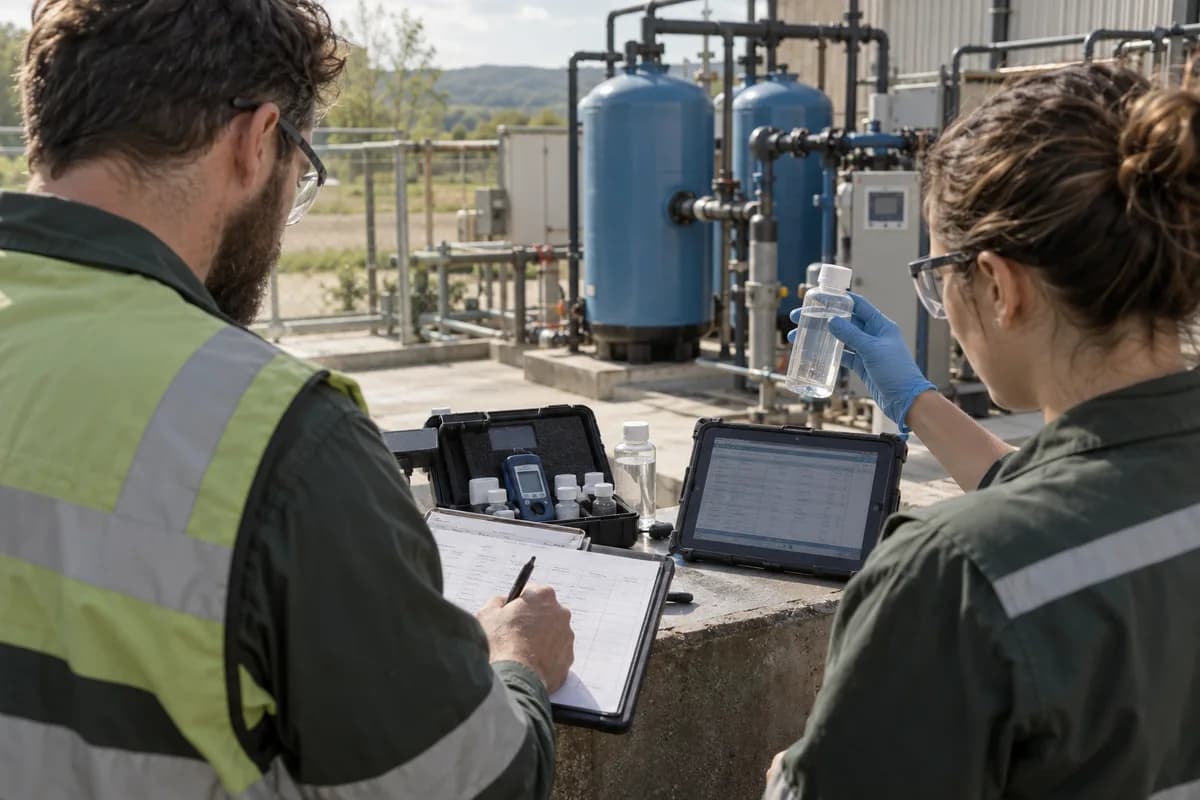
Facts a surveyor writes down before any quote
A treatment enquiry begins with a complaint, such as scale on a geyser element or a salty taste from a borewell. The record keeps that complaint beside what the surveyor finds on the visit. The complaint comes first. Everything else is measured against it.
One surveyor’s day from callback to site file
Each survey day starts at the depot with a list of callers waiting and ends with a site file ready for pricing. In between, the surveyor drives to a hotel laundry or a housing complex, draws a sample and walks the pipes. The record travels along.
What sales, survey and service staff see
One enquiry file serves several desks. Callers still waiting matter to sales. Notes from the last visit matter to the surveyor, the billing contact to accounts and the source of each enquiry to the owner.
Choices to make before the first survey is logged
Enquiry records are only as even as the people filling them. A few choices decide what every survey must contain, and they are cheaper to make before the first caller is entered. Settle them first.
Where the survey file hands work onward
As the first record on a site, the enquiry is what the rest of the product leans on. It hands its notes and sample details to analysis and quotations, and later to installation. It takes nothing from stock or billing, because no plant exists yet. That makes it the start of the chain.
- Lab results attach to the same site in water analysis records
- Plant quotations begin from the survey notes and the sample
- Accepted quotations open installation jobs on the same site
- Installed plant details later fill the plant and asset register
- Technicians read the original site notes before a first service visit
Judgements the survey file leaves to people
The survey file records what was seen and sampled. It does not read the lab figures, size a plant or choose between a softener and an RO skid. That judgement stays with the surveyor and the person who prices the plant. Choosing the plant stays a personal call. A small firm with a few enquiries a month may find a shared spreadsheet enough.
Frequently asked questions
Does the survey need a lab result before it closes?
A survey can be finished on the day, with the sample marked as sent. The lab figures are added when they arrive, and the enquiry sits at awaiting result until then. Pricing waits for them. That order is deliberate.
What happens to an enquiry that never becomes an order?
It stays on file with its status and the reason it was closed. If the caller rings again after a season, the same record is reopened. Earlier notes are still there. So are the sample details.
Do technicians see survey notes on their first visit?
Once an installation job or contract starts, the original notes on the sump, tank and pipe runs stay on the site file. A technician reads them before leaving the depot. Nobody works from a copy.
Can sales staff see which enquiries await a quotation?
Each enquiry carries a status, so callers awaiting a quotation stand apart from those awaiting a survey or a lab result. Staff open the file and read the notes. No separate tracker is kept. Nobody chases by memory.
Who decides what a survey form must contain?
Your surveyors and sales head agree the fields at set-up, such as sump, tank and pipe notes. GullySystem staff then set the form up that way, and amend it when asked. The form is yours, not a generic one.
How this feature fits the system.
Water Treatment Company Management Software: the parts that work with this feature, the trades that use it and the ways to put it in place.
Plant quotations
Softeners and RO skids are sized from the analysis and priced from your own list, with each revision kept beside the one the customer first saw.
Quote & Proposal ManagementInstallation jobs
An accepted quote becomes a job card with pipework, crew and pressure tests, and closes only after serial numbers and the first permeate readings are recorded.
Job CardsService contracts and visits
Each contract holds its scope, visit count and renewal date, so the office knows what is owed to the customer and when.
AMC and Service ContractsTell us what you need.
Tell us what your team does today, where work gets stuck and what you want to change.
What happens after you share your requirements
- We review your brief and the systems you already use.
- We clarify the workflow, missing information and the work to consider first.
- The proposed scope sets out the deliverables, responsibilities and dependencies.
- Review the scope and commercial terms before deciding whether to proceed.
Start with your requirements
Describe your current process, the people involved and the change you need. Start with the details you know; we can clarify the rest together.
Share your requirements