Reykjavik · CountriesReykjavik mixes harbour trades, hotels, tour desks and a university in one small, windy capital.
Reykjavik is the capital and the main gateway for visitors. Whale watching boats leave the old harbour, hotels fill along the main shopping street, and the University of Iceland feeds a small design and software scene. Fishing firms keep their offices here too. Remote support for such firms comes from our Bengaluru team.
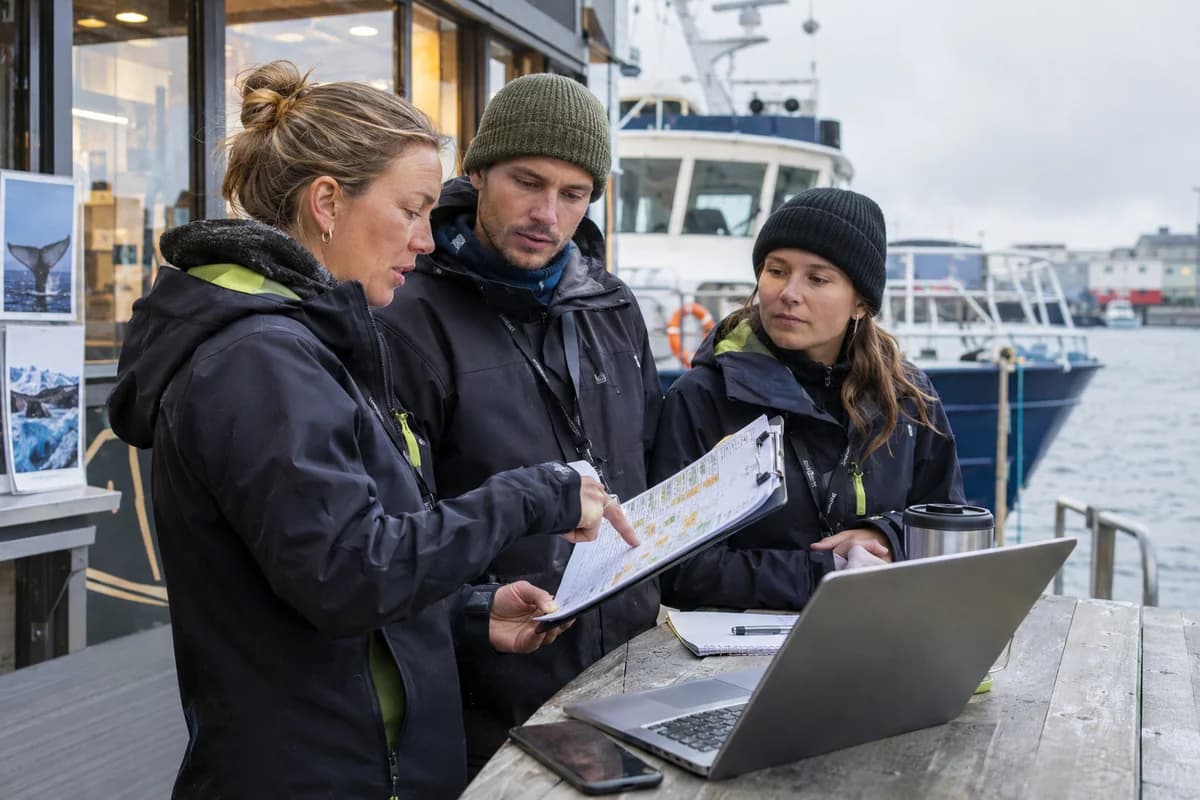
Most of Iceland’s hotels, tour desks and head offices sit within a few kilometres of each other here, so a visitor can book a room, a coach and a dinner. A tour desk sells a glacier trip, a whale boat seat and a hotel room to the same guest, and each of those has its own calendar. Weather can cancel any of them by breakfast.
Fishing and seafood firms keep their sales offices in the capital while the boats work from ports around the coast. Office staff track landings and buyers across the country by phone and spreadsheet, late in the day when the boats are back in. Bengaluru leads by 5.5 hours all year, so our afternoon meets the Reykjavik morning.
The districts, business parks and markets that matter in Reykjavik.
How Reykjavik businesses pick and use software.
Tour desk and guesthouse owners who juggle boats, buses and rooms for one guest.
Seafood sales offices that must match landings, buyers and invoices across the coast.
Where Reykjavik businesses lose time and money.
One guest, three calendars
A visitor buys a room, a whale trip and a coach tour, and each lives in a different system, so a storm means three calls. A single booking record moves all three to a new day.
Landings reach the office late
A sales office in Reykjavik hears about a catch by phone from a harbour hundreds of kilometres away. Weights and species get retyped. Entering the lot once at the quay lets the office invoice the same hour.
Foreign currency invoices drift
Buyers abroad are quoted in euros or dollars, while the books run in króna. Rates change between order and payment. Storing the rate on each invoice keeps the difference visible.
What we would build for Reykjavik businesses.
Usually in this order, starting with whatever the audit ranks first.
Web and Mobile Application Development
Web and mobile apps for customers, field staff and dealers, built to work on ordinary phones.
Learn moreAPI and System Integration
Connections between existing tools, with record ownership, duplicate handling and reconciliation agreed for each flow.
Learn moreERP, CRM and Business Software Implementation
One record of stock, orders, customers and accounts, set up so your team opens it every day.
Learn moreGlobal Compliance and Localisation
Software has to change for each country. Currency tables, VAT and sales tax codes, invoice layouts, translation files, storage regions and consent records are built as configuration that your team can edit without code changes. The legal question stays with your adviser.
Learn moreReady products that fit Reykjavik businesses.
Each one is adapted to how your business works before it goes live, and anything your trade needs that it lacks is added then. You are not paying to build the basics again.
Tour Operator Management Software
Itineraries, group departures, vendor bookings, vouchers, per-passenger costing, guest payments and vendor payables for tour operators running fixed departures and custom trips.
Learn moreHomestays and Guesthouse Management Software
Room and bed calendar, enquiries, guest register, deposits, meals, extras, housekeeping and bills for homestays and guesthouses.
Learn moreFisheries and Aquaculture Farm Management Software
Ponds and cages, seed lots, feed rounds, water readings, mortality, treatments, harvest grading and buyer billing for fish and shrimp farms.
Learn moreHow the work runs from Bengaluru for Reykjavik.
- 1
The audit, by call
A screen-share and a look at the sheets, accounting reports and WhatsApp groups your team uses. No travel needed.
- 2
A written proposal
Scope, what we build first and the cost, agreed in writing before anything starts.
- 3
Build in short rounds
Working screens shared every few weeks. Your team tests them from your own office.
- 4
Go-live, in person when it helps
For data migration and training we can come to Reykjavik. Travel is agreed in advance.
- 5
Support online
Fixes, changes and hosting handled remotely by the same team that built it.
The work we have published.
We don’t claim Reykjavik clients we don’t have. These are systems our team built; the way we work is the same wherever you are.
PetSeva: matching owners to the right vet, at any hour
A two-sided veterinary platform where vets are searchable by specialisation and bookable outside clinic hours. It now carries more than 2,000 veterinary doctors.
Read the case study Paying guest accommodationSAM Atithi Pavathi: bed-level occupancy as the source of truth
PG management software where allocation, rates and invoices are derived from bed-level occupancy and not maintained in parallel spreadsheets.
Read the case study School transport servicesSAM Tours: school transport on a single ledger
Registration, fee collection, routing and finance write to the same records, closing the gap between journeys run and fees collected.
Read the case study Microfinance and Self Help GroupsVikasa RDO: making SHG loan recovery auditable
Loan proposals, recoveries and commissions sit on one record, with a person attached to every state change, so a business handling a bank’s money can show where each rupee went.
Read the case studyMake the scope specific to your business.
Work through a real example from your operation and agree the handoffs, controls and support the project needs.
Foreign currency invoices drift
Can you explain the balance from its original documents?
Select a partly settled example in “Foreign currency invoices drift”. Ask for the invoice, allocated receipts and remaining balance to be shown together before agreeing the opening figures.
Background reading: ERPNext: outstanding invoices
Questions Reykjavik owners ask before they call.
Can one booking cover a room, a boat trip and a coach tour?
Yes. The guest gets one reference, and each part keeps its own capacity. If weather cancels the boat, the rest of the booking can move with it.
Do you work Icelandic hours?
Calls fit the Reykjavik morning, which is our early afternoon. Planned work does not need anyone awake at odd hours, and urgent faults follow an agreed route.
What happens after I share my requirements?
We review your brief and clarify the work with you. We then look at the software, spreadsheets and WhatsApp groups your business runs on today and write down what works, what slows your team down and what is missing. A demo login, a screen-share or a few screenshots are enough. You get a short written summary ordered by priority, with no obligation to hire us afterwards.
How much will the software cost?
We don’t publish a price, because it depends on what the system has to do. That first review settles the scope, and the cost goes into a written proposal before any work starts.
Industries we build for in Reykjavik.
Elsewhere in Iceland.
Tell us what your Reykjavik business runs on today.
Send a short note on the spreadsheets, software or WhatsApp groups your team depends on. We reply the same working day.
What happens after you share your requirements
- We review your brief and the systems you already use.
- We clarify the workflow, missing information and the work to consider first.
- The proposed scope sets out the deliverables, responsibilities and dependencies.
- Review the scope and commercial terms before deciding whether to proceed.
Start with your requirements
Describe your current process, the people involved and the change you need. Start with the details you know; we can clarify the rest together.
Share your requirements