Amsterdam · CountriesAmsterdam’s hotels, creative studios and tour firms juggle seasons, languages and small clients.
Visitors, design work and international headquarters keep Amsterdam busy. Canal-house hotels, tour firms, brand studios and software startups share a crowded city where guests arrive from everywhere and every square metre must pay. GullySystem in Bengaluru builds the booking, project and billing systems these Amsterdam firms need, and the two working days overlap for several hours.
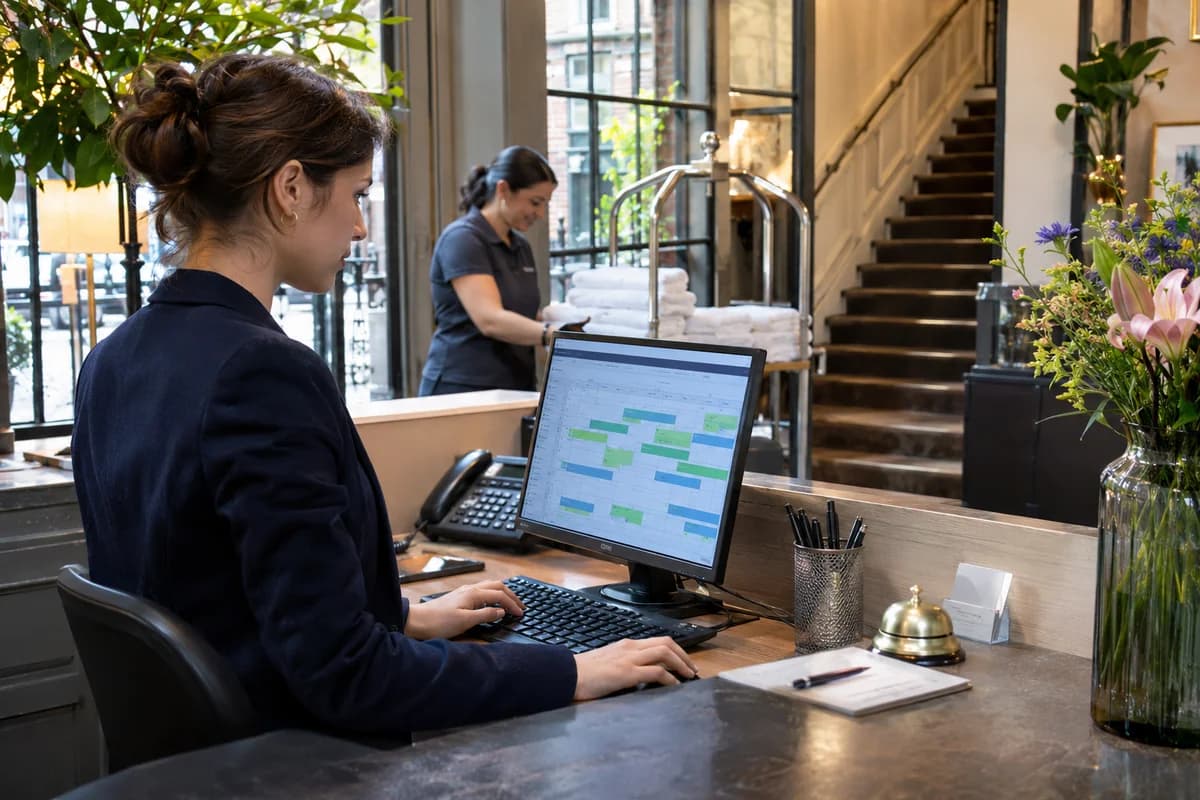
Hotels sit beside design studios. A small hotel in a narrow canal house takes bookings in six languages. Two streets away, a design studio bills hours against twelve clients, and across the river a startup counts its monthly subscribers. Space is tight. Every desk earns its keep.
We work from Bengaluru, which suits a city that already runs on remote teams and English, and Dutch mornings meet our afternoon, so a planning call fits before lunch in Amsterdam. Anything that needs a Dutch legal view stays with your own accountant and adviser.
The districts, business parks and markets that matter in Amsterdam.
How Amsterdam businesses pick and use software.
Owners of small hotels, guesthouses and tour firms that sell through several booking sites and want one calendar they trust.
Design studios, agencies and startups that bill by the hour or by subscription and want projects, time and invoices in one place.
Where Amsterdam businesses lose time and money.
One room, three booking sites
A hotel with twelve rooms sells them through several channels, and each channel holds its own idea of what is free. A booking calendar fed from every source stops the double sale before the guest is standing at the door.
Studio hours that never reach an invoice
A designer spends an afternoon on a client’s change request and forgets to log it, and the invoice goes out short. Hours lost add up to weeks. Time entry that takes ten seconds on a phone catches most of them.
Seasonal staff and changing shifts
Spring and summer bring tourists and extra staff for the same guest services. Rotas, hours and handover notes live in chat threads and get lost between one shift and the next.
What we would build for Amsterdam businesses.
Usually in this order, starting with whatever the audit ranks first.
Web and Mobile Application Development
Web and mobile apps for customers, field staff and dealers, built to work on ordinary phones.
Learn moreSaaS Product Development
Turning a system that works for one business into a product other businesses can subscribe to.
Learn moreAPI and System Integration
Connections between existing tools, with record ownership, duplicate handling and reconciliation agreed for each flow.
Learn moreUI/UX Design and Prototyping
Prototypes tested with the people doing the work, including corrections, missing information and everyday devices.
Learn moreReady products that fit Amsterdam businesses.
Each one is adapted to how your business works before it goes live, and anything your trade needs that it lacks is added then. You are not paying to build the basics again.
Hotel Management Software
A property management system for room bookings, the reservation chart, front desk, housekeeping, rate plans, guest folios and banquet hall bookings in hotels and resorts.
Learn moreTour Operator Management Software
Itineraries, group departures, vendor bookings, vouchers, per-passenger costing, guest payments and vendor payables for tour operators running fixed departures and custom trips.
Learn moreBranding and Design Studio Management Software
Briefs, stage quotes, proof rounds, approver sign-off, change requests, brand asset library and stage invoices for branding and design studios.
Learn moreHow the work runs from Bengaluru for Amsterdam.
- 1
The audit, by call
A screen-share and a look at the sheets, accounting reports and WhatsApp groups your team uses. No travel needed.
- 2
A written proposal
Scope, what we build first and the cost, agreed in writing before anything starts.
- 3
Build in short rounds
Working screens shared every few weeks. Your team tests them from your own office.
- 4
Go-live, in person when it helps
For data migration and training we can come to Amsterdam. Travel is agreed in advance.
- 5
Support online
Fixes, changes and hosting handled remotely by the same team that built it.
The work we have published.
We don’t claim Amsterdam clients we don’t have. These are systems our team built; the way we work is the same wherever you are.
PetSeva: matching owners to the right vet, at any hour
A two-sided veterinary platform where vets are searchable by specialisation and bookable outside clinic hours. It now carries more than 2,000 veterinary doctors.
Read the case study Paying guest accommodationSAM Atithi Pavathi: bed-level occupancy as the source of truth
PG management software where allocation, rates and invoices are derived from bed-level occupancy and not maintained in parallel spreadsheets.
Read the case study School transport servicesSAM Tours: school transport on a single ledger
Registration, fee collection, routing and finance write to the same records, closing the gap between journeys run and fees collected.
Read the case study Microfinance and Self Help GroupsVikasa RDO: making SHG loan recovery auditable
Loan proposals, recoveries and commissions sit on one record, with a person attached to every state change, so a business handling a bank’s money can show where each rupee went.
Read the case studyMake the scope specific to your business.
Work through a real example from your operation and agree the handoffs, controls and support the project needs.
One room, three booking sites
What becomes available when a booking is moved or cancelled?
Use “One room, three booking sites” to move a booking, then cancel a second example. Check the released slot, the person or resource still assigned, and any amount left to settle before accepting the revised schedule.
Background reading: ERPNext: appointment records
Studio hours that never reach an invoice
Can you explain the balance from its original documents?
Select a partly settled example in “Studio hours that never reach an invoice”. Ask for the invoice, allocated receipts and remaining balance to be shown together before agreeing the opening figures.
Background reading: ERPNext: outstanding invoices
Questions Amsterdam owners ask before they call.
Can a small Amsterdam hotel use a booking system built in India?
Yes, since the system runs in a browser and the build happens remotely. Guest-facing text can be set in Dutch, English and other languages, and your accountant decides how invoices and city tax are handled.
How do you handle the time difference with a Dutch team?
India is several hours ahead, so Dutch mornings meet our afternoons. We agree a fixed call and answer written questions during overlapping hours. Urgent faults get a same-day look.
What happens after I share my requirements?
We review your brief and clarify the work with you. We then look at the software, spreadsheets and WhatsApp groups your business runs on today and write down what works, what slows your team down and what is missing. A demo login, a screen-share or a few screenshots are enough. You get a short written summary ordered by priority, with no obligation to hire us afterwards.
How much will the software cost?
We don’t publish a price, because it depends on what the system has to do. That first review settles the scope, and the cost goes into a written proposal before any work starts.
Industries we build for in Amsterdam.
Elsewhere in Netherlands.
Tell us what your Amsterdam business runs on today.
Send a short note on the spreadsheets, software or WhatsApp groups your team depends on. We reply the same working day.
What happens after you share your requirements
- We review your brief and the systems you already use.
- We clarify the workflow, missing information and the work to consider first.
- The proposed scope sets out the deliverables, responsibilities and dependencies.
- Review the scope and commercial terms before deciding whether to proceed.
Start with your requirements
Describe your current process, the people involved and the change you need. Start with the details you know; we can clarify the rest together.
Share your requirements