Groningen · CountriesGroningen’s students, sensor makers, energy firms and dairy farms work in Dutch and English.
Groningen is the main city of the far north, home to a large university and thousands of students. Cycling is the normal way to get around. Nearby gas fields shaped the economy for decades, and now wind, hydrogen and sensor firms look to a new future, while dairy farms stretch beyond the ring road.
Few Dutch cities feel as young as Groningen. Students fill the streets, bars and bike racks of the old centre, and two institutions, a university and a polytechnic, anchor the whole city.
The ground beneath the province once supplied natural gas, and the engineering firms built around it are now turning to wind, hydrogen and heat. Farms in the countryside produce milk and potatoes. Winters are cold. Winds off the sea are steady.
The districts, business parks and markets that matter in Groningen.
How Groningen businesses pick and use software.
Landlords and housing agents who let rooms and flats to students on yearly or semester terms and return deposits each summer.
Owners of engineering firms that install solar, wind or heat systems and need job records for every site.
Where Groningen businesses lose time and money.
Student tenancies start and end together
Hundreds of leases begin in late summer and finish in June, so deposits, inspections and handovers pile up. A checklist per room keeps disputes short.
Sensor firms ship small batches with calibration data
Each device needs a calibration record and a serial number, and keeping them in a folder wastes time. A record created at test and linked to the order is easy to find.
Energy installers work across small sites
Crews visit homes and plants over weeks, and each visit adds parts and hours. Daily logs from the van make final billing simple.
What we would build for Groningen businesses.
Usually in this order, starting with whatever the audit ranks first.
IoT and Edge Computing
Machine and sensor readings connected to office records, with buffering limits and recovery after a lost connection defined.
Learn moreData Engineering and Business Intelligence
Dashboards that answer the owner’s Monday questions without anyone building an Excel sheet first.
Learn moreSoftware Maintenance, Support and Rescue
Taking over the system your last vendor stopped answering for: fixing it, documenting it and keeping it running.
Learn moreMVP Product Development
A first working version of a new product, small enough to launch and learn from.
Learn moreReady products that fit Groningen businesses.
Each one is adapted to how your business works before it goes live, and anything your trade needs that it lacks is added then. You are not paying to build the basics again.
Sensor Manufacturer Management Software
Variant codes, element lots, chamber calibration runs, master gauge register, certificates, OEM orders and drift returns for makers of pressure, temperature and level sensors.
Learn moreSolar Installation Management Software
Site surveys, proposals in kW, panel and inverter serial numbers, installation stages, net-metering and subsidy files, service visits and billing for rooftop solar installers.
Learn moreDairy Farm Management Software
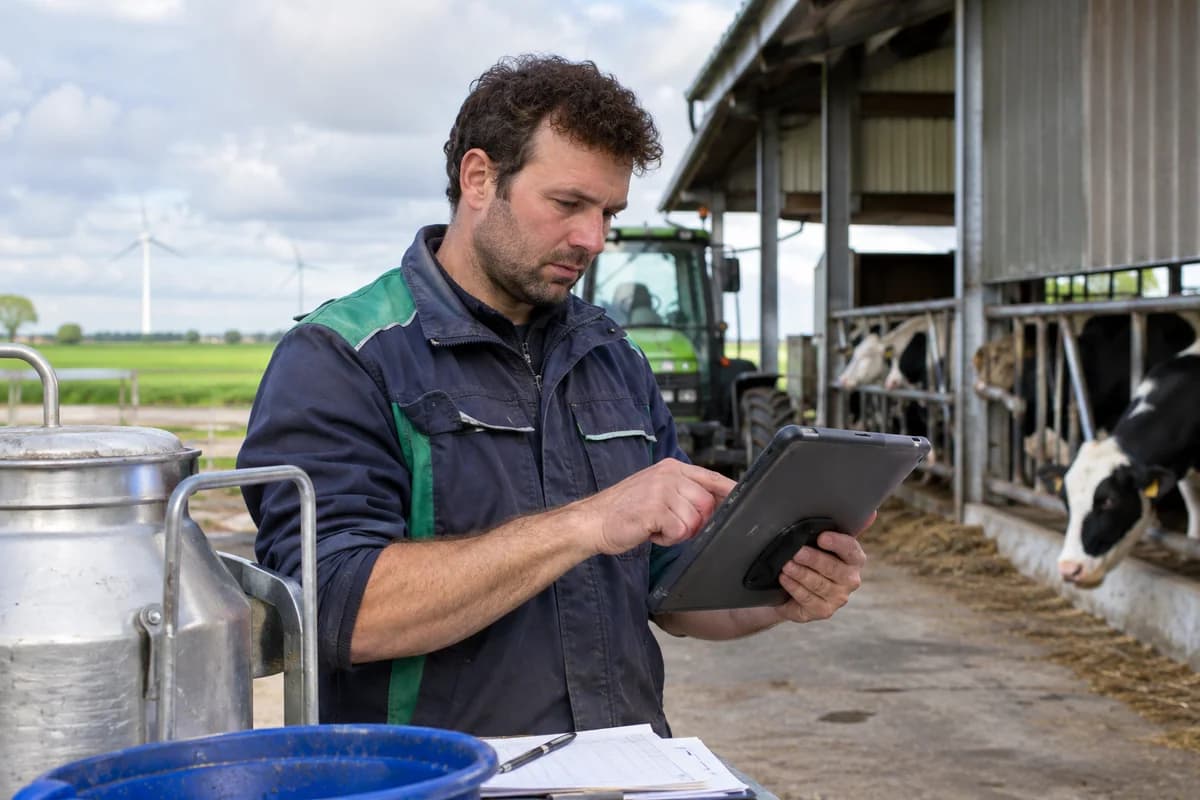
Herd register, milk yield, breeding and calving, treatment and withdrawal, feed rations, processor invoices and shed staff for dairy farms.
Learn moreHow the work runs from Bengaluru for Groningen.
- 1
The audit, by call
A screen-share and a look at the sheets, accounting reports and WhatsApp groups your team uses. No travel needed.
- 2
A written proposal
Scope, what we build first and the cost, agreed in writing before anything starts.
- 3
Build in short rounds
Working screens shared every few weeks. Your team tests them from your own office.
- 4
Go-live, in person when it helps
For data migration and training we can come to Groningen. Travel is agreed in advance.
- 5
Support online
Fixes, changes and hosting handled remotely by the same team that built it.
The work we have published.
We don’t claim Groningen clients we don’t have. These are systems our team built; the way we work is the same wherever you are.
PetSeva: matching owners to the right vet, at any hour
A two-sided veterinary platform where vets are searchable by specialisation and bookable outside clinic hours. It now carries more than 2,000 veterinary doctors.
Read the case study Paying guest accommodationSAM Atithi Pavathi: bed-level occupancy as the source of truth
PG management software where allocation, rates and invoices are derived from bed-level occupancy and not maintained in parallel spreadsheets.
Read the case study School transport servicesSAM Tours: school transport on a single ledger
Registration, fee collection, routing and finance write to the same records, closing the gap between journeys run and fees collected.
Read the case study Microfinance and Self Help GroupsVikasa RDO: making SHG loan recovery auditable
Loan proposals, recoveries and commissions sit on one record, with a person attached to every state change, so a business handling a bank’s money can show where each rupee went.
Read the case studyMake the scope specific to your business.
Work through a real example from your operation and agree the handoffs, controls and support the project needs.
Sensor firms ship small batches with calibration data
What happens when the connection stays down longer than the local buffer allows?
Test “Sensor firms ship small batches with calibration data” with a controlled disconnection. Check how missing readings, delayed uploads and storage limits are made visible before relying on the history.
Background reading: AWS: local stream storage
Questions Groningen owners ask before they call.
Can calibration records be kept with each serial number?
Yes. Test results, calibration dates and certificates attach to each device record and its customer order, and an export pack for a buyer can be produced when asked.
Can rooms and leases be tracked by academic year?
Yes. Leases carry start and end dates, deposits and inspection notes, with reminders ahead of each handover. Your own rules decide how deposits are returned.
What happens after I share my requirements?
We review your brief and clarify the work with you. We then look at the software, spreadsheets and WhatsApp groups your business runs on today and write down what works, what slows your team down and what is missing. A demo login, a screen-share or a few screenshots are enough. You get a short written summary ordered by priority, with no obligation to hire us afterwards.
How much will the software cost?
We don’t publish a price, because it depends on what the system has to do. That first review settles the scope, and the cost goes into a written proposal before any work starts.
Industries we build for in Groningen.
Elsewhere in Netherlands.
Tell us what your Groningen business runs on today.
Send a short note on the spreadsheets, software or WhatsApp groups your team depends on. We reply the same working day.
What happens after you share your requirements
- We review your brief and the systems you already use.
- We clarify the workflow, missing information and the work to consider first.
- The proposed scope sets out the deliverables, responsibilities and dependencies.
- Review the scope and commercial terms before deciding whether to proceed.
Start with your requirements
Describe your current process, the people involved and the change you need. Start with the details you know; we can clarify the rest together.
Share your requirements