One connected system for surveys, proposals, installation stages and service.
Manage a rooftop solar business in one system. Enquiries and site surveys lead to proposals sized in kW, and accepted jobs move through material, installation, net-metering and PM Surya Ghar subsidy paperwork, and handover. Panel and inverter serial numbers, warranties and annual service visits stay on each customer’s record.
- Your system sizes, brands, packages and stage checklist entered as you sell
- Open jobs and past customers migrated, with serial numbers and warranties
- Checklist, proposal and service edits handled by GullySystem when you ask
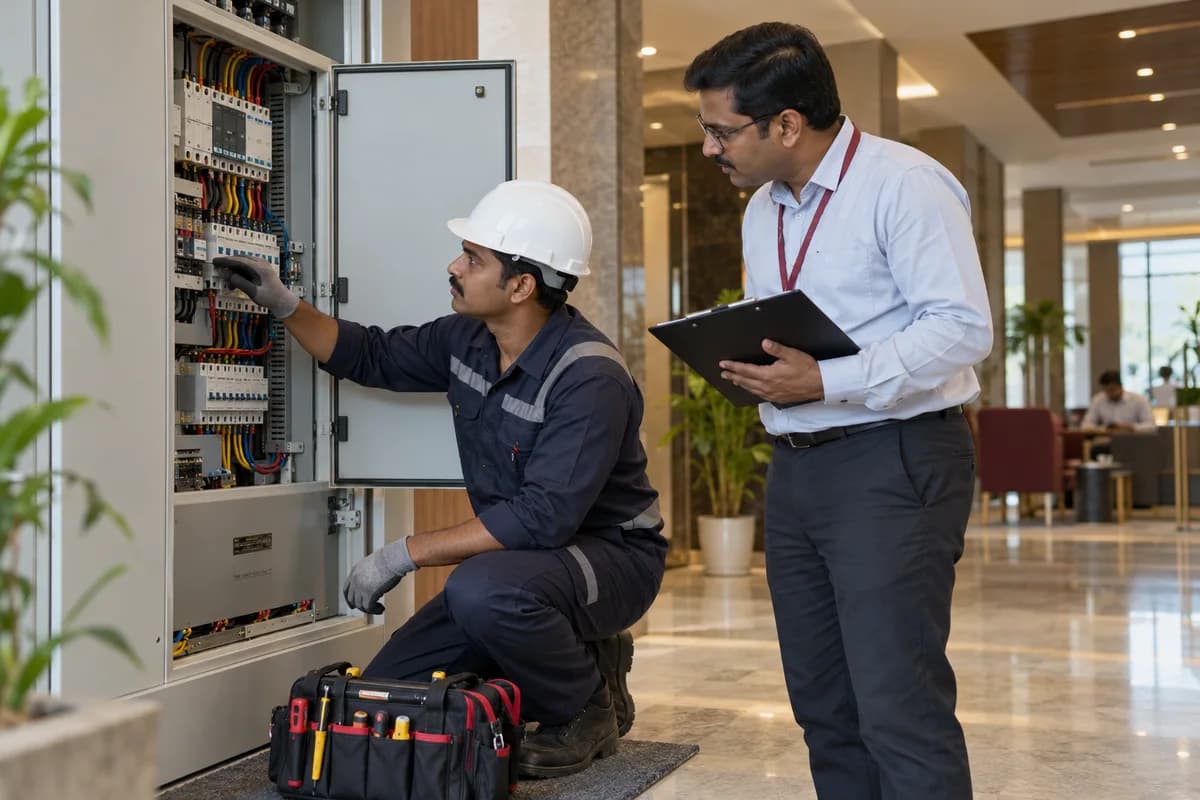
Site surveys, proposals and installation stages sit in one record in Solar Installation Management Software. GullySystem sets it up for rooftop installers and EPC firms with survey, installation and service crews. Each job carries panel and inverter serial numbers, warranty dates, net-metering and PM Surya Ghar subsidy files with the DISCOM, commissioning readings and annual service visits. Invoices follow the stage reached.
What goes wrong before the software.
How the work flows through it, step by step.
- 1
Enquiry and survey
An enquiry arrives from a call, a referral or a website form. A surveyor visits and records the roof, shadow, sanctioned load and photos.
- 2
Proposal
The office sizes the plant, selects panels, inverter and structure from the price list, and issues a proposal for the customer to accept.
- 3
Material and installation
Material is issued from stock against the job, and serial numbers are logged. Crews close each stage, from structure to wiring, on a phone.
- 4
Paperwork and commissioning
Net-metering and subsidy files are tracked with the DISCOM. The plant is commissioned and handed over with a record of what was fitted.
- 5
Billing
Advance, material and handover invoices are raised against the job, with payments recorded by cash, bank transfer or UPI.
- 6
Service and follow-up
Annual service visits, cleaning and complaints are booked against the plant, and warranty dates are on file for every customer.
What is inside.
Every module can be switched on, left out or changed to match how your team already works.
Enquiries and site surveys
Record each enquiry, assign a surveyor and keep roof details, shadow notes, sanctioned load and photos on one survey sheet.
Learn moreProposals and quotations
Size the plant in kW, pick panels, inverter and structure, and issue a priced proposal with revisions kept against the enquiry.
Learn moreCustomer records and documents
Keep customer details, electricity connection particulars, identity and ownership documents and signed proposals in one folder per site.
Learn moreMaterial and serial numbers
Track panels, inverters, structures, cables and protection items in stock, and tie panel and inverter serials to the job.
Learn moreInstallation stages and crews
Assign crews and close each stage, from structure to wiring and earthing, with photos and notes from site.
Learn moreNet-metering and PM Surya Ghar subsidy files
Track each file by its stage, from feasibility and technical sanction to inspection, net meter installation, the commissioning certificate and the subsidy credited. See which files are waiting and on whom.
Learn moreCommissioning and handover
Record test readings, inverter settings, monitoring login details and a handover checklist signed by the customer.
Learn moreService visits and AMC
Book cleaning, inspection and fault visits, and track annual maintenance contracts and renewals by plant.
Learn moreWarranty register
Hold panel, inverter and workmanship warranty dates by serial number, with claims raised against the supplier.
Learn moreBilling and payments
Raise advance, material and handover invoices with GST, and record payments received against each job.
Learn moreThe business modules it is built from.
Each one is also available on its own, or inside a system built for you.
- Estimate/Quotation Management
Sales engineers size the plant in kW, choose panels, inverter and structure, and issue a priced proposal with every revision kept against the enquiry.
- Batch and Serial Tracking
Panels, inverters, structures, cables and protection items are tracked in stock, and panel and inverter serial numbers are tied to the installed job.
- AMC and Service Contracts
Cleaning, inspection and fault visits are booked per plant, with each annual maintenance contract and its renewal date tracked.
- Lead Management
Each enquiry gets a surveyor, and roof details, shadow notes, sanctioned load and photos are kept on a single survey sheet.
- Invoice Management
Accounts raise advance, material and handover invoices with GST, and record payments received against each installation job.
- Technician Scheduling
Supervisors assign crews and close each installation stage, from structure to wiring and earthing, with site photos and notes.
- Document Management
A folder per site holds customer details, electricity connection particulars, identity and ownership papers and the signed proposal.
How we would put it in.
Setup, data migration, integrations and anything built on top.
Topics beyond the modules.
Each page covers one part of how the system is used, connected or controlled.
Views for Solar Installer Owners, Crews and Service Teams
Each person in a solar business opens the screens for their own part of a job.
Learn moreReports for Solar Installer Owners and Managers
These reports come from the surveys, stages, files, invoices and visits that the team already records.
Learn moreSolar Installer Software Connections to WhatsApp, UPI and Tally
The system connects to messaging, payment and accounts tools that a solar installer already uses.
Learn moreOne system, each person sees their part.
For owners
See surveys, proposals pending, jobs by stage, files waiting with the DISCOM, money due and service visits coming up.
For the sales and survey team
Log enquiries, record site surveys, issue proposals and follow up on those not yet accepted.
For installation crews
See the day’s jobs, the material issued, the stage to close and the photos to upload from site.
For the office and accounts
Manage paperwork files, stock, invoices and payments, and book service visits against plants.
For service technicians
See assigned visits, the plant’s serial numbers and warranty status, and record what was done.
The numbers the owner asks for.
- Enquiries, surveys and proposals by stage
- Jobs in progress by installation stage
- Net-metering and subsidy files pending, by stage and office
- Material in stock and shortfall against open jobs
- Payments received and due by job
- Service visits and AMC renewals due
- Warranty dates by supplier and serial number
Who this is built for.
- Rooftop solar installers serving homes and small businesses
- Installers who handle net-metering and subsidy paperwork for customers
- EPC firms with separate survey, installation and service crews
- Installers selling annual maintenance contracts
- Channel partners who buy panels and inverters from several suppliers
When it is not the right choice.
- A one-person installer doing a handful of jobs a year can manage with a notebook and a spreadsheet.
- Electrical contractors doing wiring and panel work, with no solar, will find an electrical contractor product fits better.
- Large ground-mounted solar plants with project scheduling are closer to the Construction Project Management Software.
Adapted to your business before it goes live.
You are not handed a login and left to it. The product is set up around your records, your people and the tools you already use.
Works alongside
- SMS
- UPI and payment gateway
- Tally export (quoted separately)
- Inverter monitoring portals, where the make allows it
Questions owners ask before a demo.
Is this a solar CRM, or does it sit beside one?
It is the solar CRM for your own pipeline. Enquiries, surveys, proposals and follow-up calls sit with the job, so a second CRM is not needed. It then carries the same job through installation stages, paperwork and service.
Does it track PM Surya Ghar subsidy and net-metering applications?
It tracks the file, not the filing. Each application, its documents, the inspection, the meter change and the date the subsidy is credited are recorded against the job. Filing happens on the portal and with the DISCOM, whose steps are reviewed with you during scoping.
What happens when the DISCOM returns a file or asks for a second inspection?
The file stays open at that stage with a note of what was asked for. A resubmission or a fresh inspection is recorded against the same job, so the earlier dates and documents are not lost.
Can proposals show different system sizes, generation and payback?
Several sizes in kW can sit on one enquiry, and the revision the customer accepts is kept with the job. Expected units generated and payback are not calculated here.
Can it keep serial numbers for each customer?
Yes. Panel and inverter serial numbers are logged when material is issued, so a warranty claim starts from the customer’s record.
Can crews update jobs from site?
Yes. Crews close stages and upload photos from a phone, so the office sees progress without a call. The phone needs a working connection at the site; there is no offline mode.
Can it track annual maintenance contracts?
Yes. Each plant carries its contract dates, and visits due and renewals show to the office before they lapse.
Is Tally connected?
Not in the standard set-up. Invoices and receipts are kept on file for your accountant to pick up. A Tally export is quoted separately, once we know the setup.
Does it read inverter data?
Not by default. Monitoring portals differ by inverter make, so any link is confirmed during scoping.
Who owns the customer data?
You do. Exit terms for your jobs, customers and documents are written into the proposal you sign first.
Wondering what it costs? Six questions give you a written scope and the buckets any quote should separate.
Written for this trade.
Practical notes on running the business, not product marketing.
How to Automate a Rooftop Solar Installation Business
A practical order for moving a rooftop solar installer off notebooks and spreadsheets: surveys, proposals, stock, crews, DISCOM files, billing and service.
Learn moreHow to Track Solar Project Stages, Proposals and Service Visits
How rooftop solar installers can record proposal revisions, installation stages and after-sales visits against one plant, with serials and warranty dates.
Learn moreBusinesses that use this.
Related products.
See Solar Installation Management Software with your own data.
Tell us how you run things today. We’ll show you the parts that matter to you and say plainly what would need changing.
- No obligation
- A reply within one business day
- Your details stay private