Skopje · CountriesSkopje, on the Vardar, holds the capital’s offices, the Old Bazaar, industrial zones and service centres.
North Macedonia’s capital lies on the Vardar river below Mount Vodno. Its Old Bazaar, trade fair, industrial zones, service centres and universities carry much of the country’s business. Our developers sit in Bengaluru, nobody of ours is stationed in Skopje, and every project runs remotely.
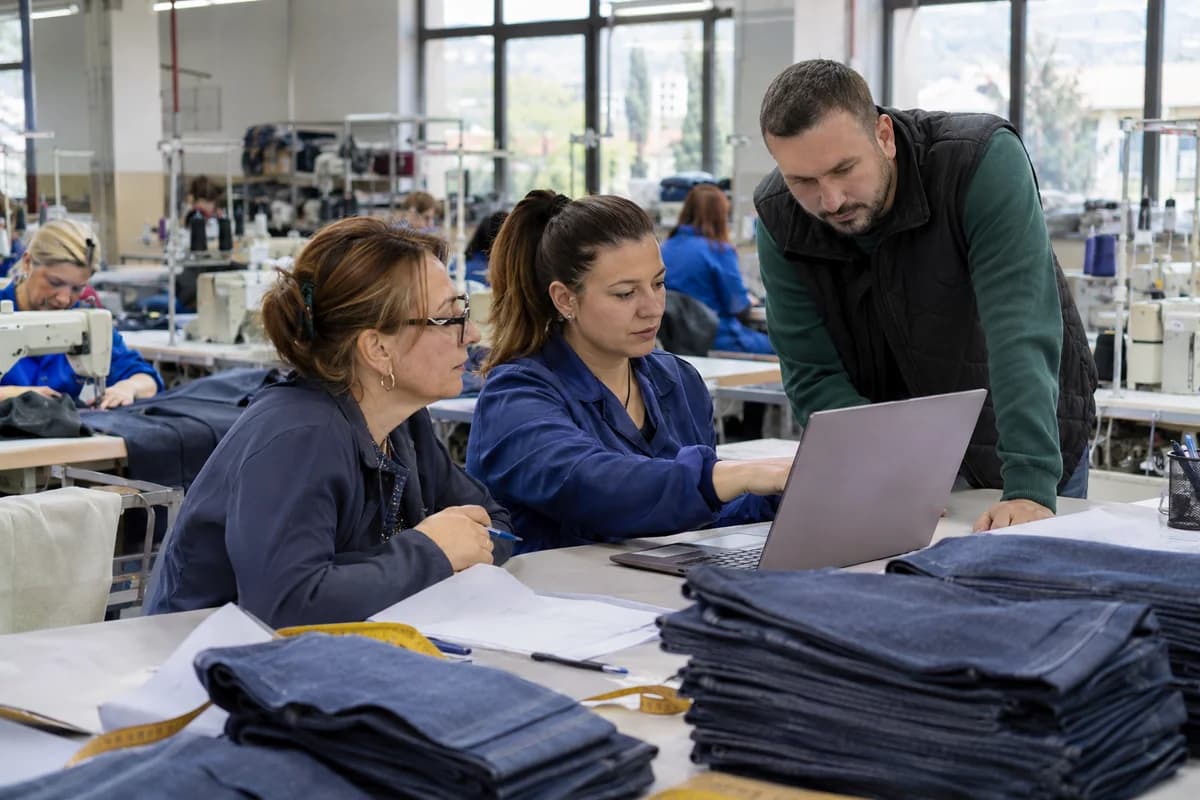
Skopje spreads along the Vardar, and the Stone Bridge links the modern centre to the Old Bazaar. Shops there have sold copper, cloth and sweets for generations, with the grandchildren of the first owners behind the counter. Offices fill the new centre. Factories sit in zones on the outskirts, and their trucks cross the border toward Greece, Bulgaria and Serbia every morning.
Service centres answer customers in Macedonian, Albanian, English and other languages for firms abroad, and the fair hosts exhibitions through the year. Calls fit in the morning.
The districts, business parks and markets that matter in Skopje.
How Skopje businesses pick and use software.
Garment and parts makers that ship to buyers abroad.
Service centres and accounting firms working for foreign clients.
Where Skopje businesses lose time and money.
Piece rates worked by hand
A sewing hall that pays per piece can lose days to payroll sums. Logging pieces at the line turns payroll into a report that supervisors can check on Friday morning with the operator standing beside them.
Tickets in shared inboxes
A centre that answers clients by email loses tickets whenever staff change shifts, and the client notices first. A queue with owners and clocks shows which customer has waited longest.
Bazaar stock in notebooks
A shop with a hundred items cannot tell what runs low. Barcodes help. So does a count on Sunday evening.
What we would build for Skopje businesses.
Usually in this order, starting with whatever the audit ranks first.
Business Process Automation
Approvals, reminders and reports triggered by agreed rules, with exceptions assigned to a responsible person.
Learn moreData Migration and Moving Off Spreadsheets
Data migration and spreadsheet replacement covers auditing existing files, cleaning and deduplicating records, loading them into a new system and reconciling the loaded result against known totals. Both systems then run side by side before cutover. Originals stay untouched.
Learn moreAPI and System Integration
Connections between existing tools, with record ownership, duplicate handling and reconciliation agreed for each flow.
Learn moreCustom Software and Product Engineering
Software built around how your business actually runs, when nothing off the shelf fits without workarounds.
Learn moreReady products that fit Skopje businesses.
Each one is adapted to how your business works before it goes live, and anything your trade needs that it lacks is added then. You are not paying to build the basics again.
Apparel Manufacturer Management Software
Purchase orders by colour and size, fabric and trims, cutting lays, bundle tickets, sewing lines, outside processing, piece-rate pay and packing for garment makers.
Learn moreCustomer Support Centre Management Software
Queues, tickets, skill routing, rosters, service targets, quality scoring, escalations, coaching plans, callbacks and client reports for customer support centres and multi-client helpdesks.
Learn moreAccounting Outsourcing Firm Management Software
Client engagements, document intake, payables and receivables queues, reviewer sign-off, reconciliations, month-end close, time and fee billing for accounting outsourcing firms.
Learn moreHow the work runs from Bengaluru for Skopje.
- 1
The audit, by call
A screen-share and a look at the sheets, accounting reports and WhatsApp groups your team uses. No travel needed.
- 2
A written proposal
Scope, what we build first and the cost, agreed in writing before anything starts.
- 3
Build in short rounds
Working screens shared every few weeks. Your team tests them from your own office.
- 4
Go-live, in person when it helps
For data migration and training we can come to Skopje. Travel is agreed in advance.
- 5
Support online
Fixes, changes and hosting handled remotely by the same team that built it.
The work we have published.
We don’t claim Skopje clients we don’t have. These are systems our team built; the way we work is the same wherever you are.
PetSeva: matching owners to the right vet, at any hour
A two-sided veterinary platform where vets are searchable by specialisation and bookable outside clinic hours. It now carries more than 2,000 veterinary doctors.
Read the case study Paying guest accommodationSAM Atithi Pavathi: bed-level occupancy as the source of truth
PG management software where allocation, rates and invoices are derived from bed-level occupancy and not maintained in parallel spreadsheets.
Read the case study School transport servicesSAM Tours: school transport on a single ledger
Registration, fee collection, routing and finance write to the same records, closing the gap between journeys run and fees collected.
Read the case study Microfinance and Self Help GroupsVikasa RDO: making SHG loan recovery auditable
Loan proposals, recoveries and commissions sit on one record, with a person attached to every state change, so a business handling a bank’s money can show where each rupee went.
Read the case studyMake the scope specific to your business.
Work through a real example from your operation and agree the handoffs, controls and support the project needs.
Piece rates worked by hand
Which rule wins when two rates or offers apply?
Use “Piece rates worked by hand” to check an ordinary sale and one that meets two pricing conditions. Ask for the calculation behind each final amount, rather than only the total.
Background reading: ERPNext: pricing conditions
Bazaar stock in notebooks
What happens to movements entered while a count is being checked?
For “Bazaar stock in notebooks”, choose a count date and trace the movements around it. Agree who investigates a difference before an adjustment changes the available balance.
Background reading: ERPNext: stock reconciliation
Questions Skopje owners ask before they call.
Can a garment maker pay by piece?
Yes. Operators log pieces by style and size. Pay comes from the piece rate, and supervisors review the totals before payroll closes, so mistakes are caught on the same day they happen and not three weeks later.
How would a support centre track tickets?
Every customer message becomes a ticket. Managers see queues and response times by client, and handover notes travel with the ticket from one shift to the next, so nobody starts a night shift blind.
What happens after I share my requirements?
We review your brief and clarify the work with you. We then look at the software, spreadsheets and WhatsApp groups your business runs on today and write down what works, what slows your team down and what is missing. A demo login, a screen-share or a few screenshots are enough. You get a short written summary ordered by priority, with no obligation to hire us afterwards.
How much will the software cost?
We don’t publish a price, because it depends on what the system has to do. That first review settles the scope, and the cost goes into a written proposal before any work starts.
Industries we build for in Skopje.
Elsewhere in North Macedonia.
Tell us what your Skopje business runs on today.
Send a short note on the spreadsheets, software or WhatsApp groups your team depends on. We reply the same working day.
What happens after you share your requirements
- We review your brief and the systems you already use.
- We clarify the workflow, missing information and the work to consider first.
- The proposed scope sets out the deliverables, responsibilities and dependencies.
- Review the scope and commercial terms before deciding whether to proceed.
Start with your requirements
Describe your current process, the people involved and the change you need. Start with the details you know; we can clarify the rest together.
Share your requirements