Trondheim · CountriesTrondheim runs on a technical university, a large research institute and a cathedral town’s calm.
Trondheim is Norway’s technology university city, built around the Nidelva river and the Nidaros Cathedral. NTNU and the research institute SINTEF supply engineers and spin-off companies in sensors, energy, ocean technology and software. Students shape the cafes. Firms invoice in Norwegian, use English with the university crowd, and plan their year around long, dark winters and bright summers when work slows for the holidays.
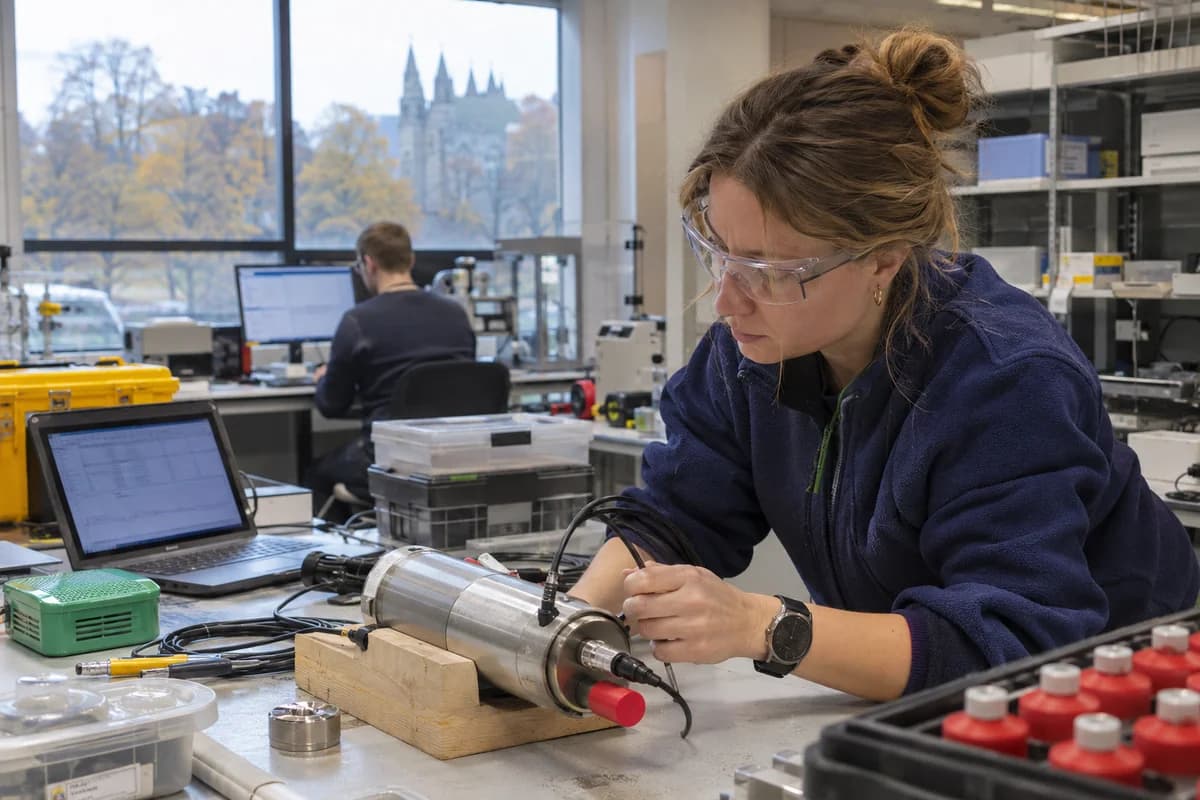
Trondheim was a royal centre first. Today the wooden warehouses of Bakklandet and Solsiden sit a short walk from labs that build ocean sensors and energy models, and a graduate can walk between the two in a morning. Money comes through research contracts, public grants and a steady flow of start-ups, each with its own milestones, reports and rules for what may be charged.
Contracts have milestones. A small firm must show hours by contract. Bengaluru is a few hours ahead, so we can read your evening notes before our day begins. We have no ties with NTNU or SINTEF.
The districts, business parks and markets that matter in Trondheim.
How Trondheim businesses pick and use software.
Spin-offs and small technology firms that live on research contracts and grants and must report hours and costs by project, leaving one person in the office to understand the rules.
Cafes, small hotels and shops that depend on students in winter and visitors in summer.
Where Trondheim businesses lose time and money.
Hours and costs by contract
A firm has three research contracts and each counts costs a little differently, so one flat expense sheet fails the first time a funder asks for a split. Timesheets tagged with the contract code make each report a filter rather than a rebuild.
Prototype hardware with no history
A sensor team builds batches by hand, in a lab, with parts from three suppliers. If a customer reports a fault, nobody remembers which batch used which parts. Serial numbers fix that.
Student turnover in rentals
Landlords see tenants change each August. Tenancy, deposit and inspection records kept in one register shorten the handover from one cohort of students to the next.
What we would build for Trondheim businesses.
Usually in this order, starting with whatever the audit ranks first.
SaaS Product Development
Turning a system that works for one business into a product other businesses can subscribe to.
Learn moreIoT and Edge Computing
Machine and sensor readings connected to office records, with buffering limits and recovery after a lost connection defined.
Learn moreData Engineering and Business Intelligence
Dashboards that answer the owner’s Monday questions without anyone building an Excel sheet first.
Learn moreUI/UX Design and Prototyping
Prototypes tested with the people doing the work, including corrections, missing information and everyday devices.
Learn moreReady products that fit Trondheim businesses.
Each one is adapted to how your business works before it goes live, and anything your trade needs that it lacks is added then. You are not paying to build the basics again.
Sensor Manufacturer Management Software
Variant codes, element lots, chamber calibration runs, master gauge register, certificates, OEM orders and drift returns for makers of pressure, temperature and level sensors.
Learn moreSoftware Development Company Management Software
Statements of work, project plans, timesheets, bench allocation, change requests, milestone and time-and-materials invoices and margin for software development companies.
Learn moreWind Energy Developer Management Software
Land options, met mast campaigns, studies, permit conditions, grid offers, tenders, deliveries and handover for wind energy developers.
Learn moreHow the work runs from Bengaluru for Trondheim.
- 1
The audit, by call
A screen-share and a look at the sheets, accounting reports and WhatsApp groups your team uses. No travel needed.
- 2
A written proposal
Scope, what we build first and the cost, agreed in writing before anything starts.
- 3
Build in short rounds
Working screens shared every few weeks. Your team tests them from your own office.
- 4
Go-live, in person when it helps
For data migration and training we can come to Trondheim. Travel is agreed in advance.
- 5
Support online
Fixes, changes and hosting handled remotely by the same team that built it.
The work we have published.
We don’t claim Trondheim clients we don’t have. These are systems our team built; the way we work is the same wherever you are.
PetSeva: matching owners to the right vet, at any hour
A two-sided veterinary platform where vets are searchable by specialisation and bookable outside clinic hours. It now carries more than 2,000 veterinary doctors.
Read the case study Paying guest accommodationSAM Atithi Pavathi: bed-level occupancy as the source of truth
PG management software where allocation, rates and invoices are derived from bed-level occupancy and not maintained in parallel spreadsheets.
Read the case study School transport servicesSAM Tours: school transport on a single ledger
Registration, fee collection, routing and finance write to the same records, closing the gap between journeys run and fees collected.
Read the case study Microfinance and Self Help GroupsVikasa RDO: making SHG loan recovery auditable
Loan proposals, recoveries and commissions sit on one record, with a person attached to every state change, so a business handling a bank’s money can show where each rupee went.
Read the case studyMake the scope specific to your business.
Work through a real example from your operation and agree the handoffs, controls and support the project needs.
The SINTEF research complex
Which observation would change the proposed scope?
For “The SINTEF research complex”, observe someone completing the task with a representative example. Record where they stop, ask another person or re-enter information, then choose the smallest change whose result the team can verify.
Background reading: GOV.UK: researching user needs
Prototype hardware with no history
Can someone correct a mistake without losing their earlier work?
Use “Prototype hardware with no history” to test an incomplete submission with keyboard-only input. Check the error wording and retained values before signing off the screen.
Background reading: W3C: usable form validation
Questions Trondheim owners ask before they call.
Can timesheets be tagged to research contracts and grants?
Yes. Each entry carries a contract code, and reports can be filtered by contract, person and period. Cost rules stay with your accountant.
Do you work with hardware start-ups on device data?
Yes. The pipeline runs from sensor readings to a dashboard, and its documentation is written for your own engineers to maintain.
What happens after I share my requirements?
We review your brief and clarify the work with you. We then look at the software, spreadsheets and WhatsApp groups your business runs on today and write down what works, what slows your team down and what is missing. A demo login, a screen-share or a few screenshots are enough. You get a short written summary ordered by priority, with no obligation to hire us afterwards.
How much will the software cost?
We don’t publish a price, because it depends on what the system has to do. That first review settles the scope, and the cost goes into a written proposal before any work starts.
Industries we build for in Trondheim.
Elsewhere in Norway.
Tell us what your Trondheim business runs on today.
Send a short note on the spreadsheets, software or WhatsApp groups your team depends on. We reply the same working day.
What happens after you share your requirements
- We review your brief and the systems you already use.
- We clarify the workflow, missing information and the work to consider first.
- The proposed scope sets out the deliverables, responsibilities and dependencies.
- Review the scope and commercial terms before deciding whether to proceed.
Start with your requirements
Describe your current process, the people involved and the change you need. Start with the details you know; we can clarify the rest together.
Share your requirements