Take orders from every delivery app and cook them for each virtual brand from one kitchen record.
Cloud kitchens cook for several delivery brands out of one kitchen, with orders arriving on aggregator tablets and drawing on one shared stock room. The software holds every channel, brand menu, prep ticket, rider handover and payout statement together in one view.
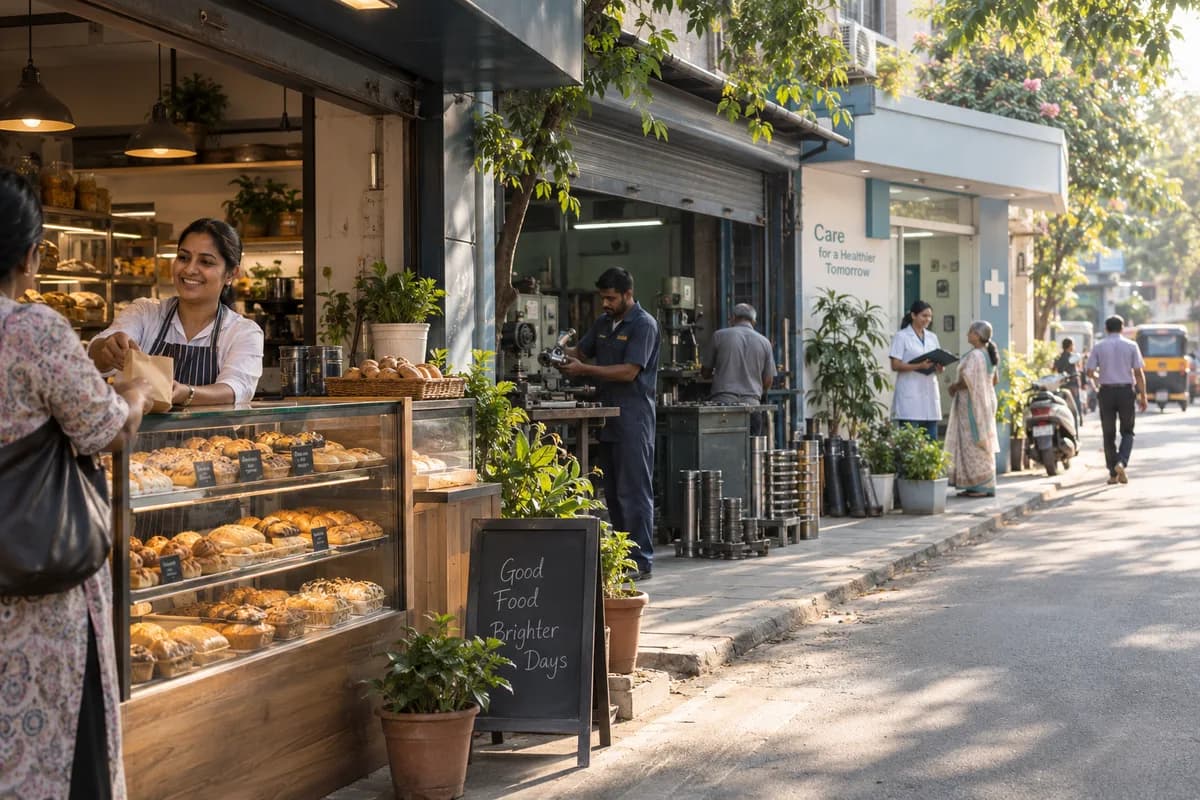
A cloud kitchen has no dining room. It has a pass, a row of stations and three or four delivery brands that all draw on the same walk-in fridge.
Orders land on separate tablets from separate apps. Each app reports its own sales, its own commission and its own refunds, so the kitchen never sees one picture of the day.
The kitchen manager opens with a prep list for the day’s expected orders, checks the walk-in against it and sets stations for the grill, the fryer, the wok and cold pass. Tablets from each delivery app ring as orders arrive, and a runner re-keys some of them onto a kitchen printer.
Line cooks work the tickets while the packer seals each box, adds the sauce sachet and sticks the order label. Riders arrive from different apps within minutes of each other and queue at the hatch. A late handover turns into a cold box and a complaint.
At night the manager pauses brands that ran out of a key item, counts what is left and reads three separate app dashboards. Payout statements arrive days later with deductions that nobody can match to a single order.
What goes wrong for cloud kitchens without a proper system.
What we would build for cloud kitchens.
Named the way your team already talks about the work. We start with whichever part the audit shows is costing you most.
A requirements checklist for cloud kitchens.
What to cover, which reports to ask for and what to put to every vendor, ready to print or save as a PDF.
A product already built for cloud kitchens.
It is adapted to how your business works before it goes live, and anything your trade needs that it lacks is added then.
Cloud Kitchen Management Software
Aggregator orders, virtual brand menus, station tickets, prep lists, rider handover, shared stock and payout matching for cloud kitchens.
The business modules cloud kitchens use most.
Each one is also available on its own, or inside a system built for you.
The services behind it.
API and System Integration
Accounting software, WhatsApp, payment gateways, tax portals and your own apps sharing one set of numbers.
Learn moreBusiness Process Automation
Approvals, reminders, follow-ups and reports that run on their own instead of on someone remembering.
Learn moreData Engineering and Business Intelligence
Dashboards that answer the owner’s Monday questions without anyone building an Excel sheet first.
Learn moreIoT and Edge Computing
Machines, meters and sensors feeding the same system your office uses, even when the network drops.
Learn moreHow the work runs from Bengaluru for your city.
- 1
The audit, by call
A screen-share and a look at the sheets, accounting reports and WhatsApp groups your team uses. No travel needed.
- 2
A written proposal
Scope, what we build first and the cost, agreed in writing before anything starts.
- 3
Build in short rounds
Working screens shared every few weeks. Your team tests them from your own office.
- 4
Go-live, in person when it helps
For data migration and training we can come to your city. Travel is agreed in advance.
- 5
Support online
Fixes, changes and hosting handled remotely by the same team that built it.
Software we have built and run.
We only name clients whose work is published. These are systems our team designed, built and supports.
PetSeva: matching owners to the right vet, at any hour
A two-sided veterinary platform where vets are searchable by specialisation and bookable outside clinic hours. It now carries more than 2,000 veterinary doctors.
Read the case study Paying guest accommodationSAM Atithi Pavathi: bed-level occupancy as the source of truth
PG management software where allocation, rates and invoices are derived from bed-level occupancy and not maintained in parallel spreadsheets.
Read the case study School transport servicesSAM Tours: school transport on a single ledger
Registration, fee collection, routing and finance write to the same records, closing the gap between journeys run and fees collected.
Read the case studyQuestions cloud kitchens ask before they call.
Can orders from the delivery apps come in automatically?
That depends on each app and the access it gives. Some partners offer order feeds, others only a tablet. The route for every channel you use is confirmed during implementation, and a manual entry screen covers the rest.
We run five virtual brands from one kitchen. Is that a problem?
It is the normal case. Each brand has its own menu, prices and packaging, and all of them share recipes and the walk-in. Reports split sales and ingredient use by brand.
Does it print kitchen tickets for the stations?
Yes, to a kitchen printer or a screen at each station. The grill sees only grill items, and the pass sees the whole order. Printer models are checked with your team before go-live.
What happens to our sales history from the apps?
Past payout statements and order exports can be loaded as history if you hold them as files. Which brands and months come across is settled with you first, and your kitchen manager then compares the loaded order totals against the statements you supplied.
What happens after I share my requirements?
An engineer reads what you send and replies within one business day. We then look at the software, spreadsheets and WhatsApp groups your business runs on today and write down what works, what slows your team down and what is missing. A demo login, a screen-share or a few screenshots are enough. You get a short written summary ordered by priority, with no obligation to hire us afterwards.
How much will the software cost?
We don’t publish a price, because it depends on what the system has to do. That first review settles the scope, and the cost goes into a written proposal before any work starts.
Related industries.
Part of a wider group.
Tell us how your business runs today.
A few lines on your spreadsheets, software and WhatsApp groups is enough. We reply the same working day.
- No obligation
- A reply within one business day
- Your details stay private
Start with your requirements
Seven short steps that tell us what you need. An engineer reads them before getting in touch.
Share your requirements