Sampling schedules for field rounds and bottle lists
Sampling schedules lets an environmental laboratory plan each field round by site, matrix and date. A manager assigns samplers, and the system generates the bottle list for every visit. Samplers carry the list on a tablet, and the receipt desk knows what to expect back. Clients can see which rounds are planned.
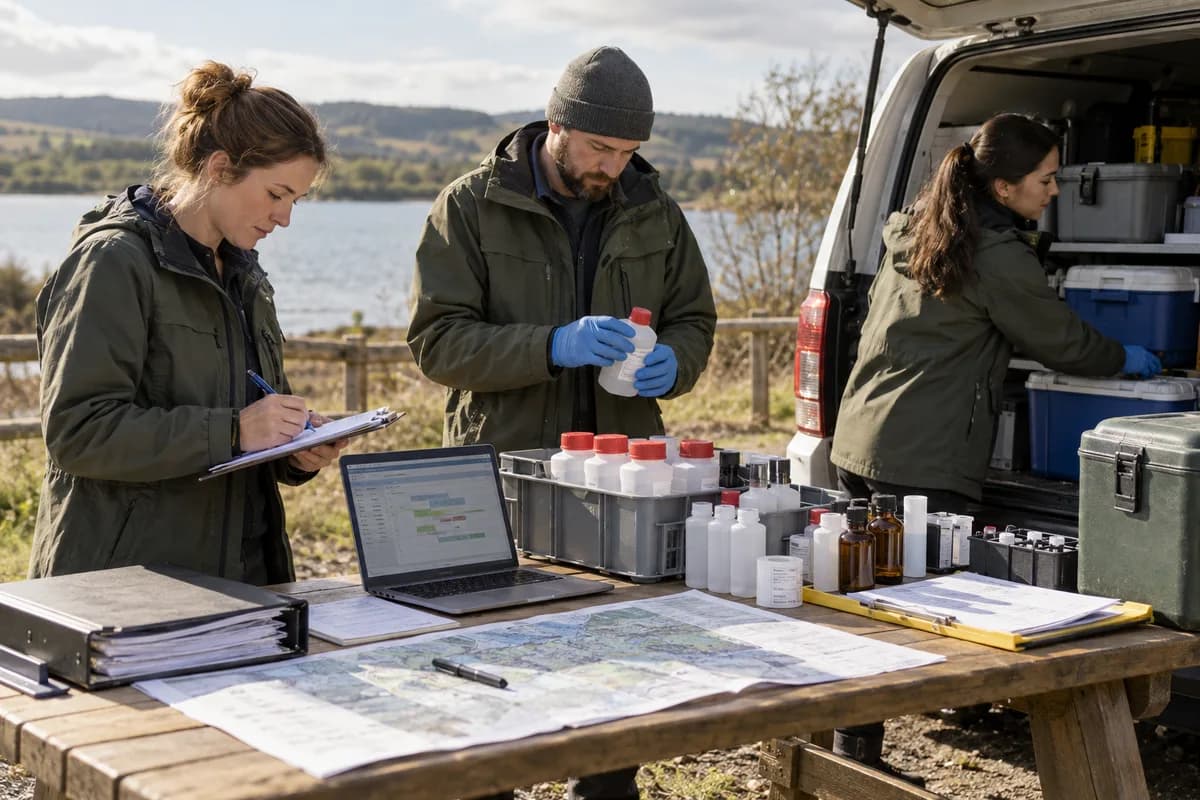
What a sampling round record holds
A round is one planned trip to one or more sites. The record ties the date, the sites, the matrix and the people together, then adds the bottle set that each sampling point needs. Nothing is prepared from memory. Bottle lists come from the tests ordered.
A sampling round from booking to packing
Schedules change every working day. The moments below follow one round, from its first booking to the morning the cool boxes leave. Each moment is a person in the laboratory using the schedule to close a gap before it reaches the field.
Who plans, collects and checks the rounds
Four people work from the schedule, and each needs a different view of it. Their screens show the same rounds, sorted by what that person must do next.
Decisions to settle before schedules go live
Four decisions shape how the schedule is used day to day. Make them with the manager and one experienced sampler in the room. Keep it brief. Their answers are written into the set-up and checked after the first rounds.
How schedules connect to custody and receipt
A schedule is the first step in the sample record. It takes sites, permits and contacts from the client record and the tests from the test menu. It then hands the visit to the sampler’s tablet, where chain of custody begins. Nothing is retyped between them.
- Takes sites and contacts from clients, sites and permits
- Takes tests and holding times from the test menu
- Hands each visit to chain of custody on the tablet
- Tells sample receipt which bottles to expect
- Gives analytical batches a view of coming work
Where sampling schedules stop
Schedules plan the visit. They do not drive the vehicle, book travel, set the sampling method or decide the number of samples a permit demands. Those choices belong to the laboratory’s own procedures, the client’s permit and an adviser. Weather, access and safety calls stay with the sampler on site. A laboratory with a single sampler and a fixed route may manage with a shared calendar.
Frequently asked questions
Can a repeat round be copied from an earlier one?
Yes, copy it. Change the date and adjust any site or sampler that differs. The bottle list is generated again from the tests ordered, so it matches the new round rather than the old one.
How does the bottle list know which preservative to use?
The tests ordered and the matrix decide the containers and preservatives, as your laboratory has set them. The list is built from those entries. Your staff set them once and keep them current as methods change.
Can samplers see the schedule on a tablet?
Yes, on a tablet or phone. Samplers open the day’s sampling list and record custody details at each site. The same visit carries the bottle list into the field. Changes made in the office show on the list.
What if a sampler is ill on the day?
Open the visit and reassign it. The new name shows on that person’s list and on the custody record that follows. The change is attributed, and the bottle list stays as it was, because the tests ordered have not changed.
Does the schedule warn about holding times?
Not by itself. The schedule shows when samples are due to arrive, and the bench list shows the date each test must start. Planning rounds for days the bench can analyse remains the manager’s call.
How this feature fits the system.
Environmental Testing Laboratory Management Software: the parts that work with this feature, the trades that use it and the ways to put it in place.
Sampling schedules
Each field round is placed against the samplers who will drive it, with the sites, bottle sets and visit dates visible to the whole team.
Technician SchedulingAnalytical batches and controls
Every sample receives a laboratory number and travels in a batch, so any result can be followed back to its bottle, analyst and run.
Batch and Serial TrackingSample receipt and labelling
Labels printed at the receipt desk carry the laboratory number for the bottle and each aliquot drawn from it.
Barcodes and LabelsTell us what you need.
Tell us what your team does today, where work gets stuck and what you want to change.
What happens after you share your requirements
- We review your brief and the systems you already use.
- We clarify the workflow, missing information and the work to consider first.
- The proposed scope sets out the deliverables, responsibilities and dependencies.
- Review the scope and commercial terms before deciding whether to proceed.
Start with your requirements
Describe your current process, the people involved and the change you need. Start with the details you know; we can clarify the rest together.
Share your requirements