Site layouts, bar lists, coating records and packing lists on one system.
Quotations, site layouts, bills of quantities, cutting plans, fabrication, hot-dip galvanising and powder coat records, clamp kits and dispatch share one system for solar mounting structure makers. A revised row pitch rebuilds the bar list before steel is cut. Each kit is packed by array row against the packing list. The crew opens a box that matches the drawing.
- Your structure types, part lists and kit counts keyed in during set-up
- Running projects and steel stock entered from your estimators’ sheets
- Our staff revise part lists whenever you ask
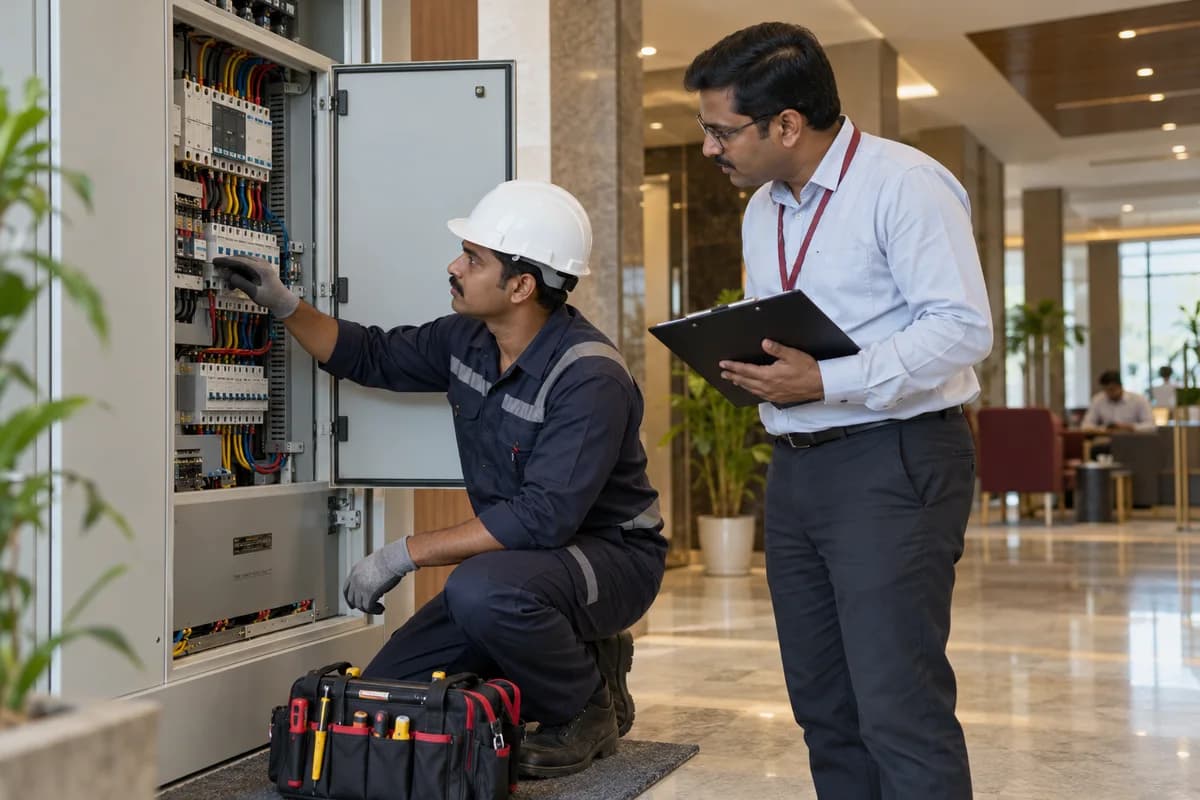
Quotations, layouts, bills of quantities, cutting plans, fabrication stages, galvanising records, clamp kits and dispatch are handled together in a system GullySystem configures for mounting structure makers. A layout revision rebuilds the bar list before steel is cut. Kits are packed by array row and checked against a packing list.
What goes wrong before the software.
How the work flows through it, step by step.
- 1
Enquiry and layout
A developer or installer sends the array layout with module size, tilt and structure type. Site name and engineer are noted against the enquiry.
- 2
Quotation
The bill of quantities is priced from steel, coating, fastener and labour rates. Revisions stay on file until the customer approves one.
- 3
Cutting plan
The approved layout expands into bar lists with cut lengths and hole positions for each post, rail and purlin.
- 4
Fabrication and coating
Parts are cut, punched, formed and welded. Those needing protection go out as a subcontracted lot and return with a thickness reading.
- 5
Kit packing
Fasteners and accessories are counted into bags by structure type. Kits are packed by row and labelled.
- 6
Dispatch and site receipt
The packing list travels with the load. The receiving crew records what arrived and any shortfall.
What is inside.
Every module can be switched on, left out or changed to match how your team already works.
The business modules it is built from.
Each one is also available on its own, or inside a system built for you.
- Lead Management
Each enquiry is logged with the site, module size, tilt and structure type, and layout drawings stay with the developer’s record.
- Estimate/Quotation Management
A rooftop rail system and a ground frame are priced from separate steel, coating and fastener rates, and revisions are kept until the customer approves.
- Bill of Materials
An approved layout expands into posts, rafters, purlins, braces and fasteners for every array row, with the total steel weight.
- Batch and Serial Tracking
Coils and tube bundles are received by heat number, and each issue to a project records which heat went into which part.
- Production Planning
Cutting plans are released by station, and a row board shows which projects wait at the punch, roll former or weld bay.
- Job Work Management
Parts sent for galvanising or powder coating are logged out and in with counts, thickness readings and any rejected pieces.
- Stock Tracking and Alerts
Steel and fastener stock is counted against reorder levels, and a low line raises a purchase request before a row stops.
- Barcodes and Labels
Kit labels name the array row and site, and scanning them at loading confirms the right kit goes on the right vehicle.
How we would put it in.
Setup, data migration, integrations and anything built on top.
One system, each person sees their part.
For the owner
See projects in fabrication, steel stock, coating lots out and dues by customer.
For design and estimating
Convert approved layouts into bills of quantities and cut lists. Price each revision before the customer decides.
For shop supervisors
Release cutting plans by station and mark each part through forming, welding and finishing.
For stores and packing
Issue coil, tube and fasteners to projects, pack kits by row and print the packing list.
For site coordinators
Follow dispatches to site and record receipt. Raise a supplementary load for any shortfall.
The numbers the owner asks for.
- Projects by fabrication stage and dispatch date
- Steel issued by heat number against bills of quantities
- Coating lots out, returned and rejected, by plant
- Fastener kits packed against site layouts
- Shortfalls reported from site, by project
- Offcut stock by tube and channel size
- Customer dues with oldest bill first
Who this is built for.
- Makers of rooftop rail and bracket systems
- Fabricators of ground-mount frames for solar farms
- Carport and canopy structure builders for solar arrays
- Makers of aluminium rail profiles and clamps
- Roll-forming shops that supply purlins and posts to installers
When it is not the right choice.
- An installer who buys mounting kits ready-made and only fits them will find Solar Installation Management Software closer.
- A general steel fabricator with no solar work may prefer Structural Steel Fabricator Management Software.
Adapted to your business before it goes live.
You are not handed a login and left to it. The product is set up around your records, your people and the tools you already use.
Works alongside
- SMS
- WhatsApp or other messaging
- Drawing file attachments
- Accounting export
Questions owners ask before a demo.
Does it work out loads and member sizes?
No. Structural design stays with your engineers. The software stores their approved layout and drives cutting, coating and packing from it.
What happens when the customer revises the layout?
The new revision is saved beside the old one and its bill of quantities is rebuilt. Open cutting plans are flagged, so the shop stops before wasting steel.
Can heat numbers from steel suppliers be recorded?
Yes. Coils and tube bundles are received by heat number with the mill certificate attached. Each issue to a project names the heat used.
How do we follow parts out at the coating plant?
A lot is logged out with a count and the plant’s name. The return entry records the count back and the thickness reading, and any gap is raised against the plant.
Can kits be packed by array row?
Yes. The packing list groups items by row, and labels name the row and the site. A crew unloads in the order it builds.
Is aluminium handled as well as steel?
Yes. Rail profiles and extrusions have their own stock lines and cut lists. A project can mix steel posts with aluminium rails.
Can the site report a missing item?
Yes. The site coordinator records the shortfall against the packing list, and a supplementary dispatch is raised from it.
Can drawings be attached?
Yes. Layout drawings and approvals are stored with each project revision and shown to the cutting team.
Who holds the project records?
You do. How layouts and dispatch records leave the system is set in the proposal before work begins.
How is cost decided?
We keep no price list. Cost rises with the stations on the shop floor and the people using the system. Send us one of your site layouts and we will show it running before any offer.
Wondering what it would cost? Share your requirements and an engineer will come back with a scope.
Businesses that use this.
See Solar Mounting Structure Maker Software with your own data.
Tell us how you run things today. We’ll show you the parts that matter to you and say plainly what would need changing.
- No obligation
- A reply within one business day
- Your details stay private
Start with your requirements
Seven short steps that tell us what you need. An engineer reads them before getting in touch.
Share your requirements