Water Analysis Records for Treatment Companies
Lab reports for hardness, turbidity, chlorine and alkalinity sit on the site they describe, each with its date and sample point. Surveyors and sales staff size a plant from them, and service staff return to them when a customer complains. Any two samples can be set side by side.
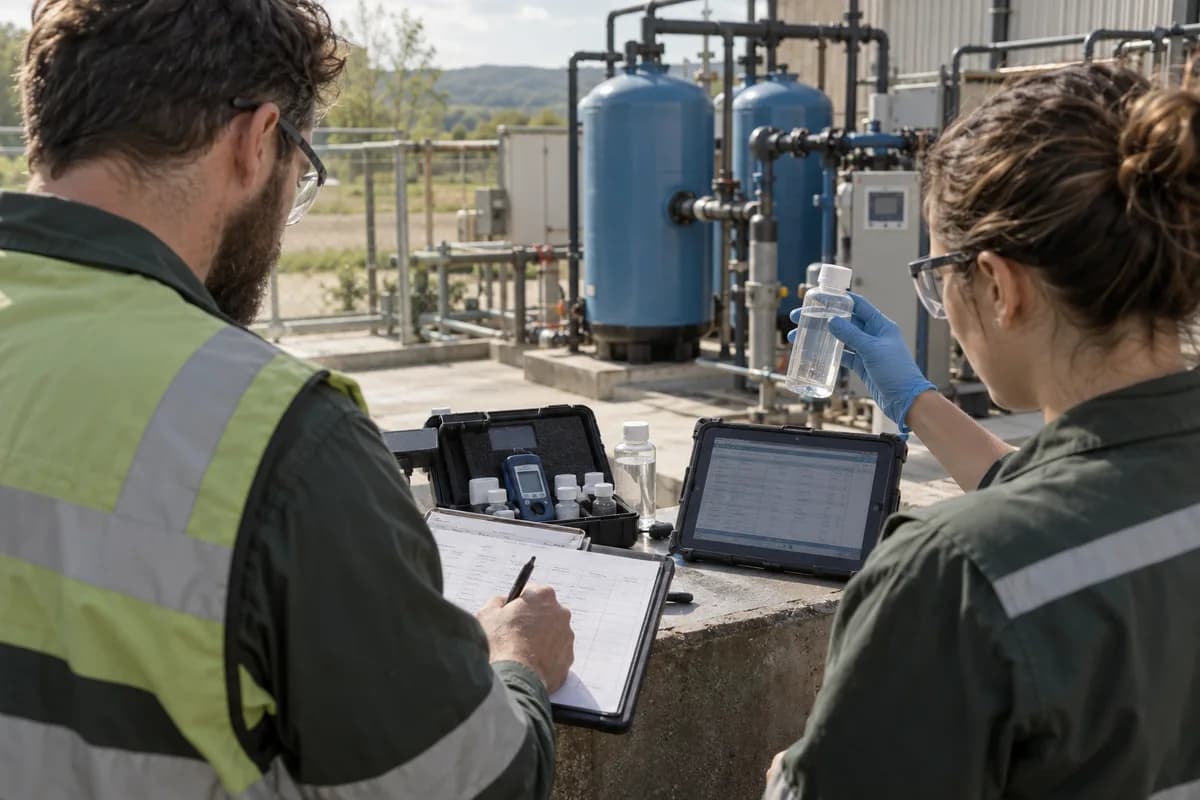
Lab figures kept against a borewell or tanker
A lab report is only useful when the next person knows which water it describes. Each analysis is stored on the site with its date and sample point, and the lab’s own page stays attached. The figures never float free of their source.
From lab report to a quotation that cites it
The lab sends its report to the surveyor or the office, and the day changes from waiting to sizing. One report may bring a quotation forward, send a surveyor back for a second sample or explain a complaint at a plant fitted last year.
What each desk takes from a lab report
A lab figure means different things at different desks. The surveyor wants the sizing basis, the technician wants to know what the plant is fighting and the owner wants evidence behind every quotation. Each desk reads it differently.
Settling how lab results enter the record
Lab results arrive in different forms, from printed sheets to messages. Before the first one is entered, the firm decides who types, what is kept and what is ignored. Decide these early.
Water analysis feeding the rest of the product
Water analysis sits between the survey and the quotation, then keeps working after the plant is in. It takes the sample from the enquiry, gives quotations their sizing basis and gives service visits something to measure against. It holds no stock or billing figures. The record stays upstream of both.
- Takes the sample point from the enquiry and site survey
- Supplies the sizing basis for plant quotations
- Shown on installation jobs beside commissioning checks
- Compared with inlet readings entered at service visits
- Listed on the plant and asset register for the site
Lab science stays with the lab
The record stores figures and compares samples. It does not run tests, judge whether water is fit to drink or decide which treatment a site needs. Those calls belong to the lab, the surveyor and the customer’s own adviser. A small firm that tests only a few sites in a year may prefer to keep printed reports in a folder.
Frequently asked questions
Can I compare two samples from different dates?
Pick any two analyses on the site and view them side by side with their dates and sample points. Comparison is the point. A surveyor can set an old borewell result beside a fresh one before a quotation is revised.
Does it interpret hardness figures for me?
It stores and displays what the lab reported, nothing more. Reading the figure and choosing a plant remain the work of your surveyor. That work starts from the right sample, taken at the right point. Interpretation stays human.
Where do the original lab reports go?
They stay attached to the analysis, so anyone can open the lab’s own page. That matters when a customer disputes a figure. The entered numbers and the source sit on one screen, side by side.
Can a site hold analyses from several sample points?
Each analysis names its sample point, such as the borewell, the sump or a tap. Several can exist for one site. They are listed by date, so the points stay distinguishable. A tap sample never overwrites a borewell one.
Are lab results sent to the customer automatically?
A message goes out only when staff send it. Service reports and visit reminders use the messaging channels set up for your firm. Lab figures stay inside unless you attach them. Sending is always a choice.
How this feature fits the system.
Water Treatment Company Management Software: the parts that work with this feature, the trades that use it and the ways to put it in place.
Plant quotations
Softeners and RO skids are sized from the analysis and priced from your own list, with each revision kept beside the one the customer first saw.
Quote & Proposal ManagementInstallation jobs
An accepted quote becomes a job card with pipework, crew and pressure tests, and closes only after serial numbers and the first permeate readings are recorded.
Job CardsService contracts and visits
Each contract holds its scope, visit count and renewal date, so the office knows what is owed to the customer and when.
AMC and Service ContractsTell us what you need.
Tell us what your team does today, where work gets stuck and what you want to change.
What happens after you share your requirements
- We review your brief and the systems you already use.
- We clarify the workflow, missing information and the work to consider first.
- The proposed scope sets out the deliverables, responsibilities and dependencies.
- Review the scope and commercial terms before deciding whether to proceed.
Start with your requirements
Describe your current process, the people involved and the change you need. Start with the details you know; we can clarify the rest together.
Share your requirements