Beijing · CountriesBeijing blends ministries, universities and the Zhongguancun technology district with a large service economy.
Beijing is the seat of government, and its universities, research institutes and the Zhongguancun technology district feed a large software and services trade. Law firms, consultancies and training centres cluster around the business district, while clinics and schools serve a very big population. GullySystem writes project, booking and records software for such firms in Bengaluru.
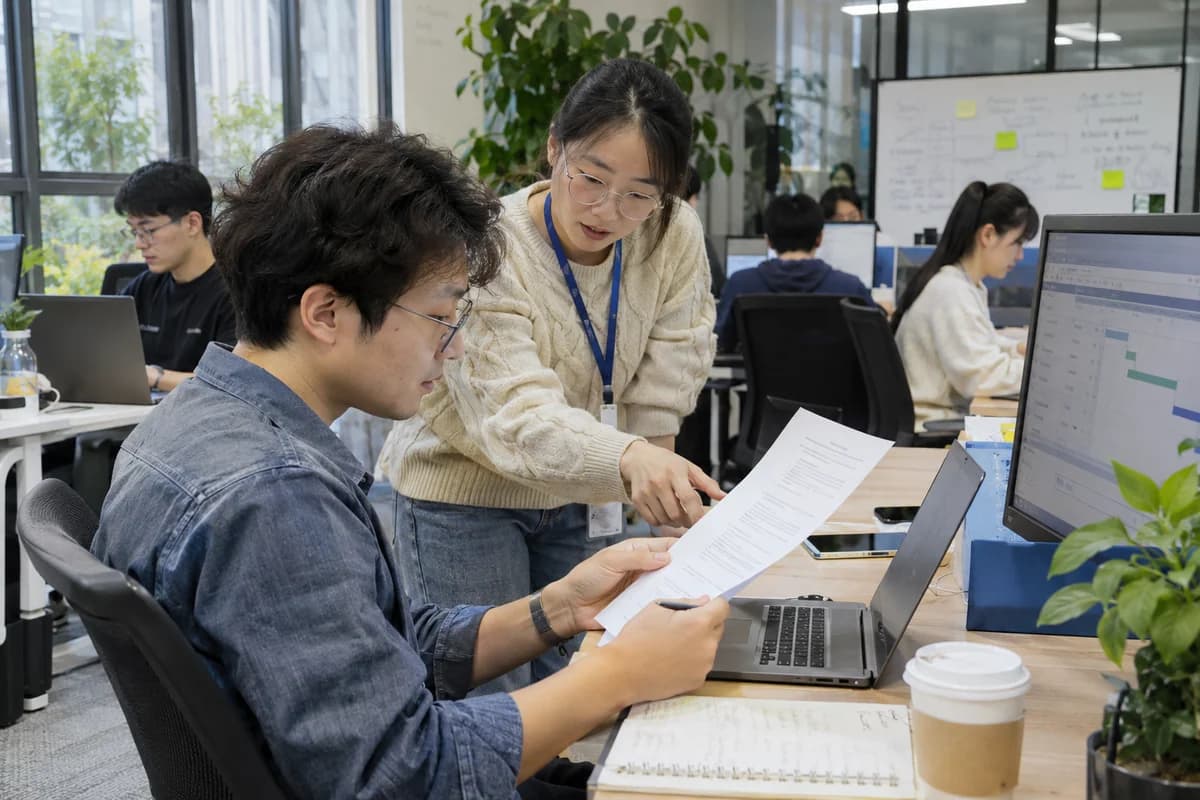
Software teams around Zhongguancun build products for clients across the country. Software teams there work on contract against long specifications, so time sheets, change requests and milestone payments decide whether a project earns money or loses it quietly.
Universities spin off research groups. Consultancies and law firms advise clients on government rules, and training centres and tutoring schools fill the evenings. Beijing’s clock is ahead of ours, so calls fit our afternoon.
The districts, business parks and markets that matter in Beijing.
How Beijing businesses pick and use software.
Delivery managers at software companies in Haidian who must track hours and change requests against signed milestones.
Directors of tutoring and language centres who run hundreds of weekly classes and parent accounts.
Where Beijing businesses lose time and money.
Change requests are never billed
Clients ask for small extras by chat. The work gets done unrecorded, and a change log tied to the contract shows what counts as extra and sends it for approval before the hours are spent.
Class schedules clash
Teachers, rooms and students are matched by hand each term, and one timetable that flags clashes and tracks make-up lessons saves a week of rework.
Consultants lose track of client documents
Reports travel by chat. A shared folder per client with version history and an access list ends the search for the latest copy, and shows who opened which file and when.
What we would build for Beijing businesses.
Usually in this order, starting with whatever the audit ranks first.
Custom Software and Product Engineering
Software built around how your business actually runs, when nothing off the shelf fits without workarounds.
Learn moreBusiness Process Automation
Approvals, reminders and reports triggered by agreed rules, with exceptions assigned to a responsible person.
Learn moreTraining and Adoption
Adoption work starts after launch. Each role is trained at its own screen on its own tasks, such as billing returns, goods receipts or closing job cards. Support stands on the floor at go-live. Afterwards the records are reviewed to find which steps staff skip, which fields stay blank and why the stores or field team still reach for a notebook. Share your requirements and we will plan it with you.
Learn moreReady products that fit Beijing businesses.
Each one is adapted to how your business works before it goes live, and anything your trade needs that it lacks is added then. You are not paying to build the basics again.
Software Development Company Management Software
Statements of work, project plans, timesheets, bench allocation, change requests, milestone and time-and-materials invoices and margin for software development companies.
Learn moreLanguage School Management Software
Placement tests, level classes, registers, lesson packs, make-up lessons, teacher hours, exam entries, course book issue and company group accounts for language schools.
Learn moreHow the work runs from Bengaluru for Beijing.
- 1
The audit, by call
A screen-share and a look at the sheets, accounting reports and WhatsApp groups your team uses. No travel needed.
- 2
A written proposal
Scope, what we build first and the cost, agreed in writing before anything starts.
- 3
Build in short rounds
Working screens shared every few weeks. Your team tests them from your own office.
- 4
Go-live, in person when it helps
For data migration and training we can come to Beijing. Travel is agreed in advance.
- 5
Support online
Fixes, changes and hosting handled remotely by the same team that built it.
The work we have published.
We don’t claim Beijing clients we don’t have. These are systems our team built; the way we work is the same wherever you are.
PetSeva: matching owners to the right vet, at any hour
A two-sided veterinary platform where vets are searchable by specialisation and bookable outside clinic hours. It now carries more than 2,000 veterinary doctors.
Read the case study Paying guest accommodationSAM Atithi Pavathi: bed-level occupancy as the source of truth
PG management software where allocation, rates and invoices are derived from bed-level occupancy and not maintained in parallel spreadsheets.
Read the case study School transport servicesSAM Tours: school transport on a single ledger
Registration, fee collection, routing and finance write to the same records, closing the gap between journeys run and fees collected.
Read the case study Microfinance and Self Help GroupsVikasa RDO: making SHG loan recovery auditable
Loan proposals, recoveries and commissions sit on one record, with a person attached to every state change, so a business handling a bank’s money can show where each rupee went.
Read the case studyMake the scope specific to your business.
Work through a real example from your operation and agree the handoffs, controls and support the project needs.
Change requests are never billed
Which observation would change the proposed scope?
For “Change requests are never billed”, observe someone completing the task with a representative example. Record where they stop, ask another person or re-enter information, then choose the smallest change whose result the team can verify.
Background reading: GOV.UK: researching user needs
Questions Beijing owners ask before they call.
Can a software team track hours against a fixed price contract?
Yes. Hours are logged on tasks, and the screen compares them with the planned effort for each milestone. Overruns appear while there is still time to talk to the client.
Can the system handle parents paying for several courses?
Yes. A parent account lists each child, course and payment. Receipts are produced per payment, and the payment service your centre uses is connected after we check its documentation.
What happens after I share my requirements?
We review your brief and clarify the work with you. We then look at the software, spreadsheets and WhatsApp groups your business runs on today and write down what works, what slows your team down and what is missing. A demo login, a screen-share or a few screenshots are enough. You get a short written summary ordered by priority, with no obligation to hire us afterwards.
How much will the software cost?
We don’t publish a price, because it depends on what the system has to do. That first review settles the scope, and the cost goes into a written proposal before any work starts.
Industries we build for in Beijing.
Tell us what your Beijing business runs on today.
Send a short note on the spreadsheets, software or WhatsApp groups your team depends on. We reply the same working day.
What happens after you share your requirements
- We review your brief and the systems you already use.
- We clarify the workflow, missing information and the work to consider first.
- The proposed scope sets out the deliverables, responsibilities and dependencies.
- Review the scope and commercial terms before deciding whether to proceed.
Start with your requirements
Describe your current process, the people involved and the change you need. Start with the details you know; we can clarify the rest together.
Share your requirements