Suzhou · CountriesSuzhou’s industrial park, silk workshops, canal gardens and electronics plants need exact batch records.
Suzhou, in Jiangsu province near Shanghai, joins old canal streets and silk crafts to a big industrial park of electronics and precision plants. Classical gardens bring visitors from across China. Invoices are in yuan. GullySystem writes production, stock and booking tools for such firms remotely from Bengaluru.
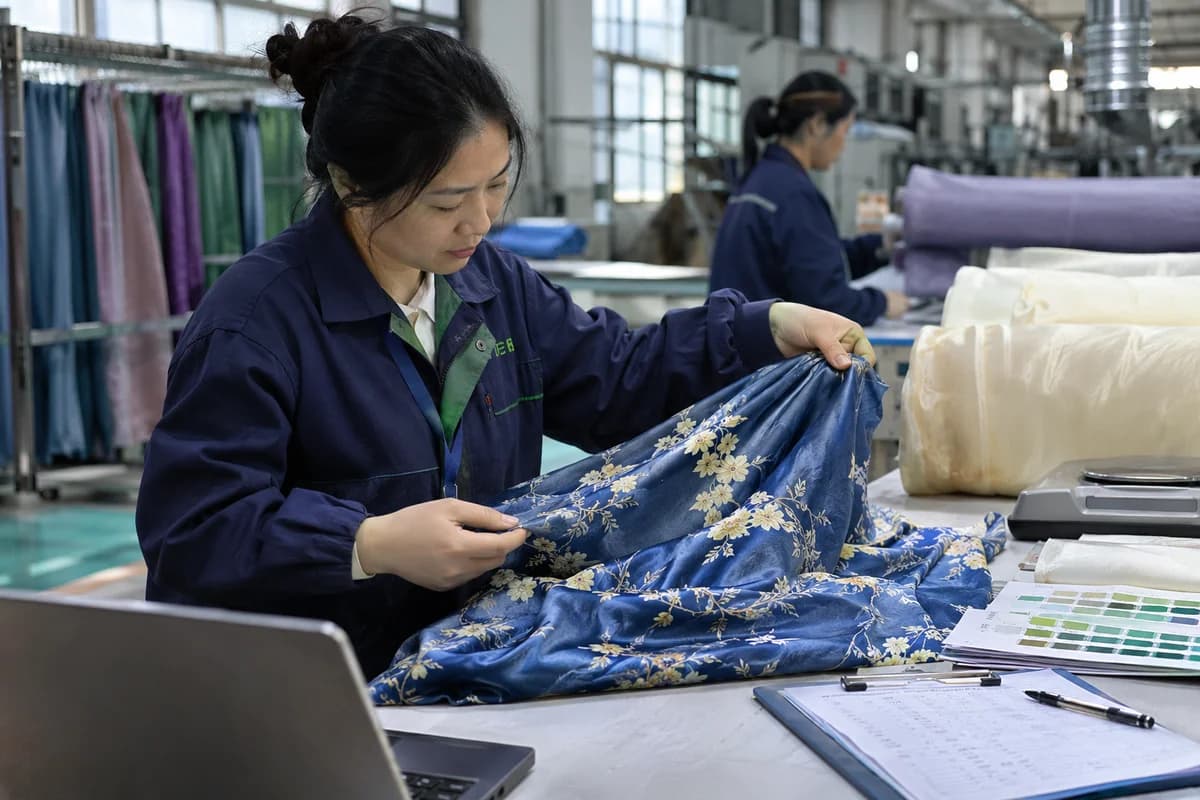
Suzhou has made silk for centuries. Workshops weave, dye and embroider fabric for scarves, clothing and wall pieces, and each order has its own colour, thread count and delivery date. Embroidery is a craft here.
The Suzhou Industrial Park, east of the old city, holds plants making electronics, medical devices and machinery, and some supply overseas brands directly. Those buyers audit lots, drawings and change records, so paper trails matter.
The districts, business parks and markets that matter in Suzhou.
How Suzhou businesses pick and use software.
Silk mill owners who match each order to a dye lot and a delivery date.
Electronics plant managers who must show lot records to overseas buyers.
Where Suzhou businesses lose time and money.
Dye lots do not match across orders
Silk from two dye runs looks different once sewn, and the mill cannot always say which roll came from which run. A lot record per roll solves this.
Audit requests take days to answer
Overseas buyers ask for the history of a batch, and staff search folders and emails for hours. Linked batch records make the answer fast.
Garden tour entry is booked by chat
Guides take group bookings by message, and the day’s list is a pile of screenshots. A single booking sheet is simpler.
What we would build for Suzhou businesses.
Usually in this order, starting with whatever the audit ranks first.
ERP, CRM and Business Software Implementation
One record of stock, orders, customers and accounts, set up so your team opens it every day.
Learn moreQA and Software Testing
Testing on the phones, browsers and patchy networks your customers and staff actually use.
Learn moreGlobal Compliance and Localisation
Software has to change for each country. Currency tables, VAT and sales tax codes, invoice layouts, translation files, storage regions and consent records are built as configuration that your team can edit without code changes. The legal question stays with your adviser.
Learn moreData Migration and Moving Off Spreadsheets
Data migration and spreadsheet replacement covers auditing existing files, cleaning and deduplicating records, loading them into a new system and reconciling the loaded result against known totals. Both systems then run side by side before cutover. Originals stay untouched.
Learn moreReady products that fit Suzhou businesses.
Each one is adapted to how your business works before it goes live, and anything your trade needs that it lacks is added then. You are not paying to build the basics again.
Fabric Manufacturer Management Software
Yarn lots, warp beams, loom output, roll registers, grey inspection points, outside processing and packing lists for fabric manufacturers.
Learn morePCB Assembly Company Management Software
Bills of materials, reel lots, kitting, paste and stencil logs, line setups, inspection, test and rework for surface mount and through-hole assembly houses.
Learn moreTour Operator Management Software
Itineraries, group departures, vendor bookings, vouchers, per-passenger costing, guest payments and vendor payables for tour operators running fixed departures and custom trips.
Learn moreHow the work runs from Bengaluru for Suzhou.
- 1
The audit, by call
A screen-share and a look at the sheets, accounting reports and WhatsApp groups your team uses. No travel needed.
- 2
A written proposal
Scope, what we build first and the cost, agreed in writing before anything starts.
- 3
Build in short rounds
Working screens shared every few weeks. Your team tests them from your own office.
- 4
Go-live, in person when it helps
For data migration and training we can come to Suzhou. Travel is agreed in advance.
- 5
Support online
Fixes, changes and hosting handled remotely by the same team that built it.
The work we have published.
We don’t claim Suzhou clients we don’t have. These are systems our team built; the way we work is the same wherever you are.
PetSeva: matching owners to the right vet, at any hour
A two-sided veterinary platform where vets are searchable by specialisation and bookable outside clinic hours. It now carries more than 2,000 veterinary doctors.
Read the case study Paying guest accommodationSAM Atithi Pavathi: bed-level occupancy as the source of truth
PG management software where allocation, rates and invoices are derived from bed-level occupancy and not maintained in parallel spreadsheets.
Read the case study School transport servicesSAM Tours: school transport on a single ledger
Registration, fee collection, routing and finance write to the same records, closing the gap between journeys run and fees collected.
Read the case study Microfinance and Self Help GroupsVikasa RDO: making SHG loan recovery auditable
Loan proposals, recoveries and commissions sit on one record, with a person attached to every state change, so a business handling a bank’s money can show where each rupee went.
Read the case studyMake the scope specific to your business.
Work through a real example from your operation and agree the handoffs, controls and support the project needs.
Garden tour entry is booked by chat
What becomes available when a booking is moved or cancelled?
Use “Garden tour entry is booked by chat” to move a booking, then cancel a second example. Check the released slot, the person or resource still assigned, and any amount left to settle before accepting the revised schedule.
Background reading: ERPNext: appointment records
Questions Suzhou owners ask before they call.
Can silk rolls be tracked by dye lot and order?
Yes. Each roll carries a lot code from the dye run, and orders show which rolls filled them. We would start with one product line and copy your existing lot sheet first.
Can your team work with Chinese and English documents?
Yes. Forms and screens can carry both languages, and we agree the wording with your staff on a sample. Jiangsu follows Beijing time, so a call after lunch in Suzhou reaches us in the middle of our morning.
What happens after I share my requirements?
We review your brief and clarify the work with you. We then look at the software, spreadsheets and WhatsApp groups your business runs on today and write down what works, what slows your team down and what is missing. A demo login, a screen-share or a few screenshots are enough. You get a short written summary ordered by priority, with no obligation to hire us afterwards.
How much will the software cost?
We don’t publish a price, because it depends on what the system has to do. That first review settles the scope, and the cost goes into a written proposal before any work starts.
Industries we build for in Suzhou.
Tell us what your Suzhou business runs on today.
Send a short note on the spreadsheets, software or WhatsApp groups your team depends on. We reply the same working day.
What happens after you share your requirements
- We review your brief and the systems you already use.
- We clarify the workflow, missing information and the work to consider first.
- The proposed scope sets out the deliverables, responsibilities and dependencies.
- Review the scope and commercial terms before deciding whether to proceed.
Start with your requirements
Describe your current process, the people involved and the change you need. Start with the details you know; we can clarify the rest together.
Share your requirements