Shenzhen · CountriesShenzhen designs and assembles electronics, from Huaqiangbei parts stalls to contract factories in Bao’an and Longgang.
Shenzhen is where devices get designed, prototyped and built. Huaqiangbei’s parts markets supply makers with chips and cables, factories in Bao’an and Longgang assemble boards and gadgets, and the port at Yantian ships them out. GullySystem in Bengaluru writes traceability and order software for these firms.
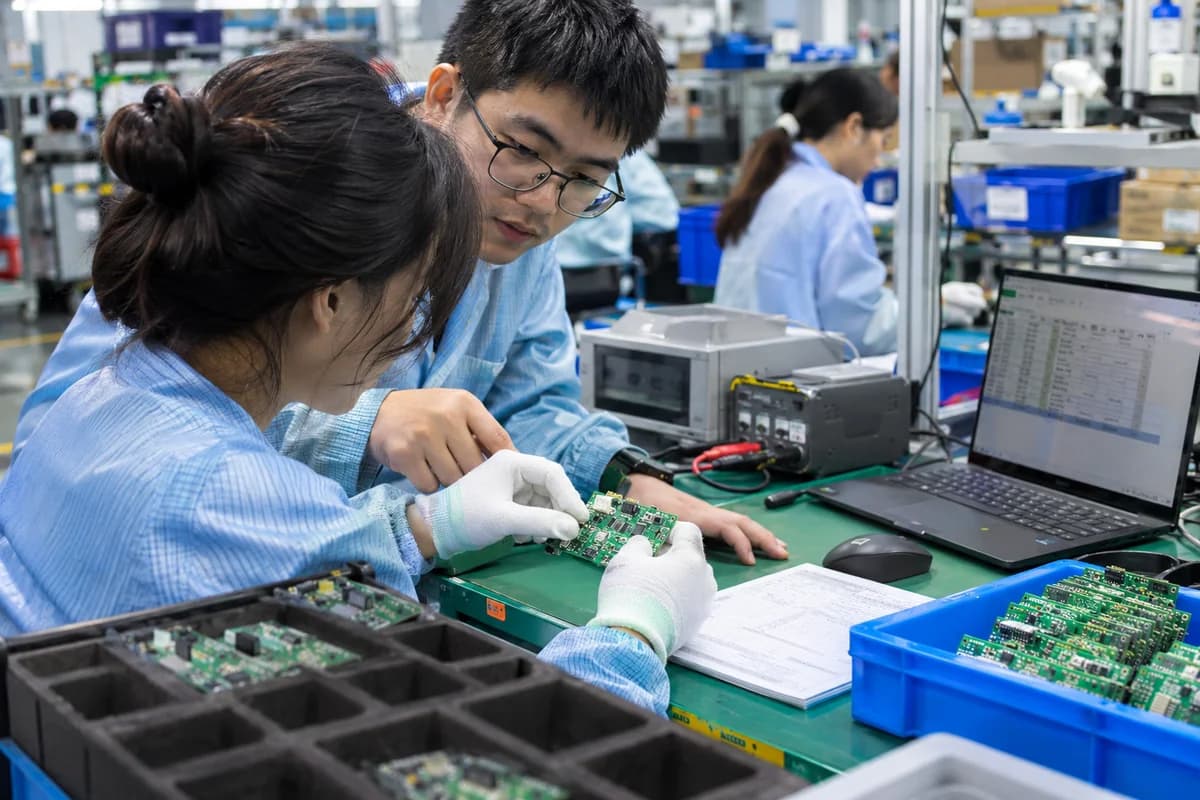
A device maker here can order a part in the morning and test it on a bench by evening, then change the design at dawn and start the whole cycle again. Designs change after each test. A bill of materials is never final, and the factory must know which version it is building today.
Contract assemblers run small orders for brands abroad, and each lot needs a parts record and a test log. Shenzhen keeps Beijing time, ahead of Bengaluru, which leaves a wide overlap in the afternoon.
The districts, business parks and markets that matter in Shenzhen.
How Shenzhen businesses pick and use software.
Production managers at contract assemblers who run small lots and must show a parts and test record for each.
Hardware start-up founders who move from prototype to a first production run and need purchase and stock under control.
Where Shenzhen businesses lose time and money.
Bills of materials change mid-run
An engineer swaps a chip. The floor keeps using the old one, and locking each work order to a revision and flagging stale parts catches the change at the line before a full batch is built.
Parts arrive from small sellers, one lot at a time
Orders go out by chat to market stalls and small makers. A purchase record with promised dates and received quantities shows which part is holding the build, and which seller to call first, long before the line stops for want of one connector.
Test results cannot be found later
A returned device needs its test log, and the log sits on a bench computer. Storing each result against the serial number makes the history available to anyone who needs it, including the support team that answers the customer on the phone.
What we would build for Shenzhen businesses.
Usually in this order, starting with whatever the audit ranks first.
IoT and Edge Computing
Machine and sensor readings connected to office records, with buffering limits and recovery after a lost connection defined.
Learn moreAPI and System Integration
Connections between existing tools, with record ownership, duplicate handling and reconciliation agreed for each flow.
Learn moreData Migration and Moving Off Spreadsheets
Data migration and spreadsheet replacement covers auditing existing files, cleaning and deduplicating records, loading them into a new system and reconciling the loaded result against known totals. Both systems then run side by side before cutover. Originals stay untouched.
Learn moreReady products that fit Shenzhen businesses.
Each one is adapted to how your business works before it goes live, and anything your trade needs that it lacks is added then. You are not paying to build the basics again.
EMS Provider Management Software
Customer products, engineering changes, forecasts, reel sourcing, build lots, serial numbers, test records, box build and RMA returns for electronic manufacturing services providers.
Learn moreElectronic Product Manufacturer Management Software
Models and variants, SMT runs, moisture-sensitive reel and floor-life control, ICT and ageing, carton packing, dealer orders and warranty returns for consumer electronics makers.
Learn moreHow the work runs from Bengaluru for Shenzhen.
- 1
The audit, by call
A screen-share and a look at the sheets, accounting reports and WhatsApp groups your team uses. No travel needed.
- 2
A written proposal
Scope, what we build first and the cost, agreed in writing before anything starts.
- 3
Build in short rounds
Working screens shared every few weeks. Your team tests them from your own office.
- 4
Go-live, in person when it helps
For data migration and training we can come to Shenzhen. Travel is agreed in advance.
- 5
Support online
Fixes, changes and hosting handled remotely by the same team that built it.
The work we have published.
We don’t claim Shenzhen clients we don’t have. These are systems our team built; the way we work is the same wherever you are.
PetSeva: matching owners to the right vet, at any hour
A two-sided veterinary platform where vets are searchable by specialisation and bookable outside clinic hours. It now carries more than 2,000 veterinary doctors.
Read the case study Paying guest accommodationSAM Atithi Pavathi: bed-level occupancy as the source of truth
PG management software where allocation, rates and invoices are derived from bed-level occupancy and not maintained in parallel spreadsheets.
Read the case study School transport servicesSAM Tours: school transport on a single ledger
Registration, fee collection, routing and finance write to the same records, closing the gap between journeys run and fees collected.
Read the case study Microfinance and Self Help GroupsVikasa RDO: making SHG loan recovery auditable
Loan proposals, recoveries and commissions sit on one record, with a person attached to every state change, so a business handling a bank’s money can show where each rupee went.
Read the case studyMake the scope specific to your business.
Work through a real example from your operation and agree the handoffs, controls and support the project needs.
Test results cannot be found later
Who decides whether a failed result blocks the next step?
For “Test results cannot be found later”, bring an accepted result and a failed one. Agree who can authorise an exception and what evidence must accompany that decision.
Background reading: ERPNext: inspection criteria
Questions Shenzhen owners ask before they call.
Can serial numbers link a device to its parts and test results?
Yes. Each device gets a serial number at the line, and the parts lots and test readings are attached to it. A search on one number shows the whole history.
Can our part lists come in from spreadsheets?
Yes. We load a sample first and show you how the lists look, then import the rest. Revisions are kept, so the old lists remain on file for reference.
What happens after I share my requirements?
We review your brief and clarify the work with you. We then look at the software, spreadsheets and WhatsApp groups your business runs on today and write down what works, what slows your team down and what is missing. A demo login, a screen-share or a few screenshots are enough. You get a short written summary ordered by priority, with no obligation to hire us afterwards.
How much will the software cost?
We don’t publish a price, because it depends on what the system has to do. That first review settles the scope, and the cost goes into a written proposal before any work starts.
Industries we build for in Shenzhen.
Tell us what your Shenzhen business runs on today.
Send a short note on the spreadsheets, software or WhatsApp groups your team depends on. We reply the same working day.
What happens after you share your requirements
- We review your brief and the systems you already use.
- We clarify the workflow, missing information and the work to consider first.
- The proposed scope sets out the deliverables, responsibilities and dependencies.
- Review the scope and commercial terms before deciding whether to proceed.
Start with your requirements
Describe your current process, the people involved and the change you need. Start with the details you know; we can clarify the rest together.
Share your requirements