Mexico City · CountriesMexico City’s corporate towers, giant wholesale market, taquerias and agencies keep a huge service economy moving.
Mexico City is the capital. Offices stand along Paseo de la Reforma and in Santa Fe, restaurants crowd Roma and Condesa, and the Central de Abasto feeds the whole valley. UNAM and other universities supply a deep market for tutors, recruiters and consultants.
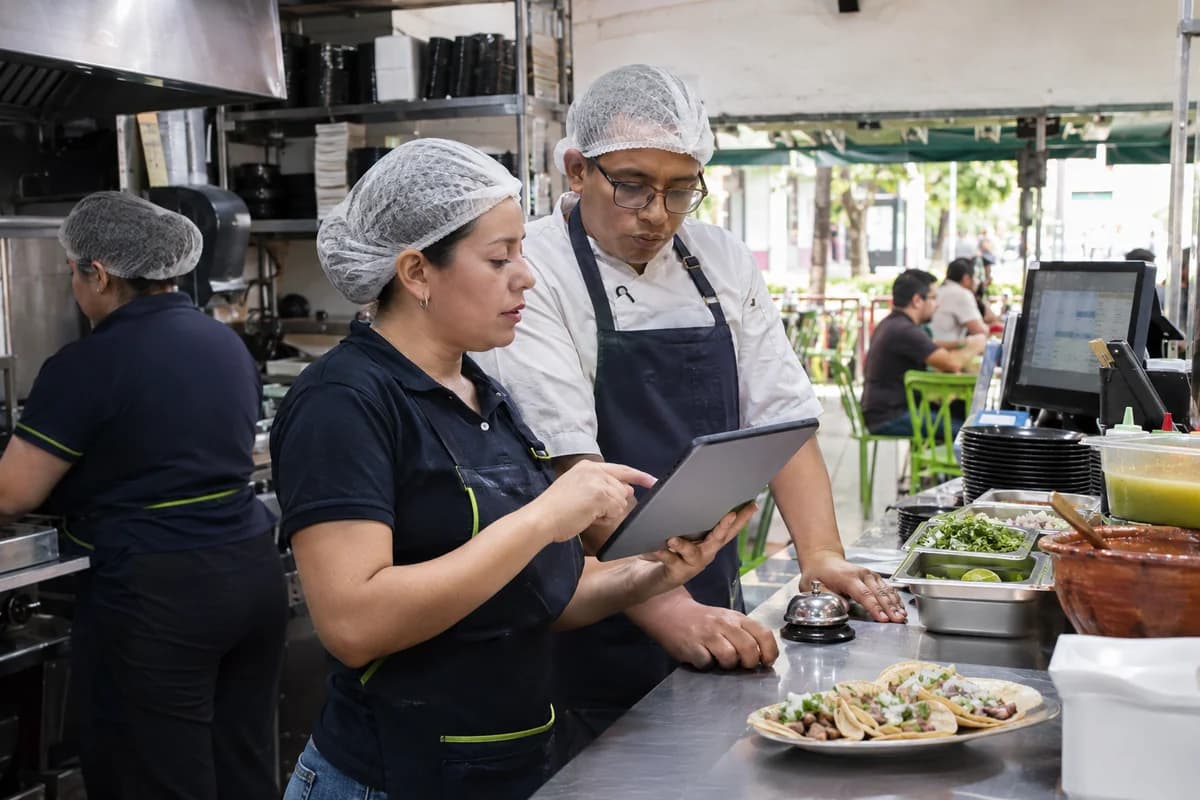
The valley of Mexico packs a country’s worth of trades into one metropolis. A corporate lawyer, a taco stand and a fabric wholesaler may all invoice on the same morning, and distances are long, traffic is heavy and meetings are planned around both.
We work from Bengaluru, about half a day ahead, with no Mexican office. A call in your morning reaches us late in the evening, so we ask for one decision maker per project and keep every change request in writing where nobody can lose it.
The districts, business parks and markets that matter in Mexico City.
How Mexico City businesses pick and use software.
Restaurant and cafe owners in Roma, Condesa and Polanco who run several tables, a kitchen and delivery apps at once.
Recruiters, real-estate agents and consultancies in the corporate towers who juggle candidates, listings and clients.
Where Mexico City businesses lose time and money.
Delivery apps beside the dining room
A restaurant receives orders from three apps and the floor. Printing each ticket by hand slows the kitchen, whereas a single order screen that merges every source cuts the shouting.
Listings and viewings out of sync
An agent shows a flat that a colleague has already let, because the listing sheet was last saved on a different laptop. A shared inventory with viewing slots prevents it.
Wholesale orders by phone
A grocery wholesaler takes orders in the early hours from dozens of shops. Slips of paper reach the invoice clerk late, so orders entered once, by the caller or the clerk, must flow on to packing and billing without being retyped.
What we would build for Mexico City businesses.
Usually in this order, starting with whatever the audit ranks first.
WhatsApp Business API and Chatbots
WhatsApp Business API work covers number onboarding, template approval, opt-in records and a chatbot with human handover, all set up under the client’s own Meta account. It connects WhatsApp to a CRM, billing or booking system, so every message is sent from an existing record and every reply is written back. It suits businesses that already take orders, payments or bookings in chat.
Learn moreAPI and System Integration
Connections between existing tools, with record ownership, duplicate handling and reconciliation agreed for each flow.
Learn moreData Migration and Moving Off Spreadsheets
Data migration and spreadsheet replacement covers auditing existing files, cleaning and deduplicating records, loading them into a new system and reconciling the loaded result against known totals. Both systems then run side by side before cutover. Originals stay untouched.
Learn moreWeb and Mobile Application Development
Web and mobile apps for customers, field staff and dealers, built to work on ordinary phones.
Learn moreReady products that fit Mexico City businesses.
Each one is adapted to how your business works before it goes live, and anything your trade needs that it lacks is added then. You are not paying to build the basics again.
Restaurant Management System
Table and counter orders, kitchen tickets (KOT), menu and recipe stock, platform orders, POS billing with tax and day close for restaurants.
Learn moreReal Estate CRM
Enquiries, site visits, follow-ups, unit inventory, bookings with payment schedules, channel partners and documents, set up around your own projects.
Learn moreWholesale and B2B Ordering Software
A dealer login with its own rates and schemes, live stock, credit checks, picking and dispatch, part loads, returns and repeat orders.
Learn moreHow the work runs from Bengaluru for Mexico City.
- 1
The audit, by call
A screen-share and a look at the sheets, accounting reports and WhatsApp groups your team uses. No travel needed.
- 2
A written proposal
Scope, what we build first and the cost, agreed in writing before anything starts.
- 3
Build in short rounds
Working screens shared every few weeks. Your team tests them from your own office.
- 4
Go-live, in person when it helps
For data migration and training we can come to Mexico City. Travel is agreed in advance.
- 5
Support online
Fixes, changes and hosting handled remotely by the same team that built it.
The work we have published.
We don’t claim Mexico City clients we don’t have. These are systems our team built; the way we work is the same wherever you are.
PetSeva: matching owners to the right vet, at any hour
A two-sided veterinary platform where vets are searchable by specialisation and bookable outside clinic hours. It now carries more than 2,000 veterinary doctors.
Read the case study Paying guest accommodationSAM Atithi Pavathi: bed-level occupancy as the source of truth
PG management software where allocation, rates and invoices are derived from bed-level occupancy and not maintained in parallel spreadsheets.
Read the case study School transport servicesSAM Tours: school transport on a single ledger
Registration, fee collection, routing and finance write to the same records, closing the gap between journeys run and fees collected.
Read the case study Microfinance and Self Help GroupsVikasa RDO: making SHG loan recovery auditable
Loan proposals, recoveries and commissions sit on one record, with a person attached to every state change, so a business handling a bank’s money can show where each rupee went.
Read the case studyMake the scope specific to your business.
Work through a real example from your operation and agree the handoffs, controls and support the project needs.
Wholesale orders by phone
Can you explain the balance from its original documents?
Select a partly settled example in “Wholesale orders by phone”. Ask for the invoice, allocated receipts and remaining balance to be shown together before agreeing the opening figures.
Background reading: ERPNext: outstanding invoices
Questions Mexico City owners ask before they call.
Can our restaurant merge delivery apps and dine-in orders?
Often, yes. It depends on whether each app offers an integration for your account, and where one does not, a staff member keys the order into the same screen in a few taps.
Can an agency keep Spanish and English versions of client reports?
Yes. Each report template can hold both languages, and users pick the version to send. Figures stay identical in both.
What happens after I share my requirements?
We review your brief and clarify the work with you. We then look at the software, spreadsheets and WhatsApp groups your business runs on today and write down what works, what slows your team down and what is missing. A demo login, a screen-share or a few screenshots are enough. You get a short written summary ordered by priority, with no obligation to hire us afterwards.
How much will the software cost?
We don’t publish a price, because it depends on what the system has to do. That first review settles the scope, and the cost goes into a written proposal before any work starts.
Industries we build for in Mexico City.
Elsewhere in Mexico.
Tell us what your Mexico City business runs on today.
Send a short note on the spreadsheets, software or WhatsApp groups your team depends on. We reply the same working day.
What happens after you share your requirements
- We review your brief and the systems you already use.
- We clarify the workflow, missing information and the work to consider first.
- The proposed scope sets out the deliverables, responsibilities and dependencies.
- Review the scope and commercial terms before deciding whether to proceed.
Start with your requirements
Describe your current process, the people involved and the change you need. Start with the details you know; we can clarify the rest together.
Share your requirements