Tijuana · CountriesTijuana’s border factories, medical device plants and dental clinics work with English and Spanish on one desk.
Tijuana sits on the United States border, beside San Diego. Assembly plants make medical devices, electronics and aerospace parts for export, dental and medical clinics receive patients who cross from the north, and trucks queue daily at the crossings. Paperwork is bilingual.
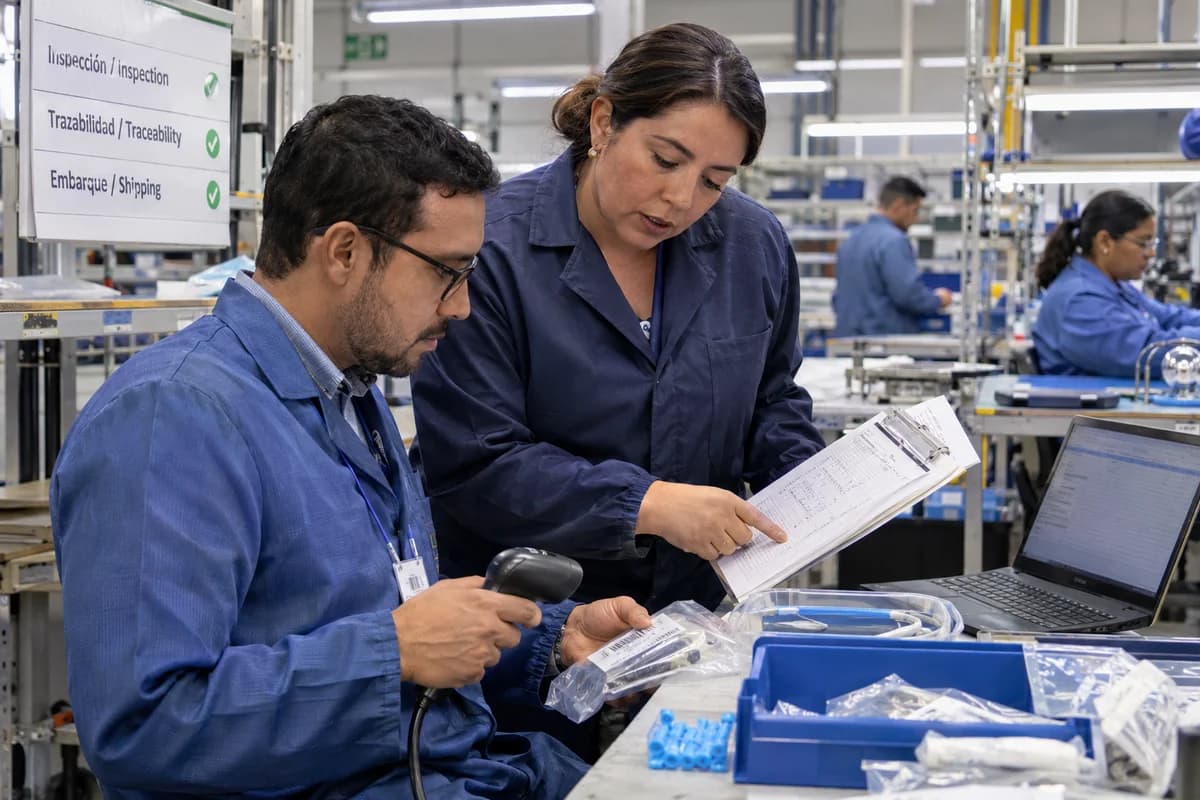
Few cities live as closely with a border. Workers may sleep in Tijuana and shop across the line, while managers cross in the other direction. Factories ship to American customers within a day.
Tijuana keeps Pacific time, over half a day behind Bengaluru, so our day ends as yours begins. Calls land in your early morning. Written specifications travel by email and shared files after that. No local Mexican office exists.
The districts, business parks and markets that matter in Tijuana.
How Tijuana businesses pick and use software.
Medical device and electronics plants that must trace every lot to a customer shipment across the border.
Dental and medical clinics that quote in dollars and schedule visits for patients from out of town.
Customs brokers and carriers who move trucks between factories and the crossings.
Where Tijuana businesses lose time and money.
Paperwork on two sides of the line
A shipment needs matching records in Mexico and in the United States, and a clerk who cannot find one set stalls the truck for hours. A single shipment file with both sets of documents lets a clerk answer a question in a minute. Trucks keep moving.
Traceability for medical parts
A device maker must show where each lot was sent, sometimes years after the sale. Barcode scans at each step build that trail without retyping. Recall drills take hours, not weeks.
Visiting patients and follow-up
A patient crosses once, gets treatment and goes home, but reminders and photos must still reach them in English by messaging app long after the visit. Follow-up happens on schedule. Nobody gets lost.
What we would build for Tijuana businesses.
Usually in this order, starting with whatever the audit ranks first.
WhatsApp Business API and Chatbots
WhatsApp Business API work covers number onboarding, template approval, opt-in records and a chatbot with human handover, all set up under the client’s own Meta account. It connects WhatsApp to a CRM, billing or booking system, so every message is sent from an existing record and every reply is written back. It suits businesses that already take orders, payments or bookings in chat.
Learn moreGlobal Compliance and Localisation
Software has to change for each country. Currency tables, VAT and sales tax codes, invoice layouts, translation files, storage regions and consent records are built as configuration that your team can edit without code changes. The legal question stays with your adviser.
Learn moreAPI and System Integration
Connections between existing tools, with record ownership, duplicate handling and reconciliation agreed for each flow.
Learn moreIoT and Edge Computing
Machine and sensor readings connected to office records, with buffering limits and recovery after a lost connection defined.
Learn moreReady products that fit Tijuana businesses.
Each one is adapted to how your business works before it goes live, and anything your trade needs that it lacks is added then. You are not paying to build the basics again.
Medical Device Manufacturer Management Software
Bills of materials, production orders, lot and serial records, inspections, supplier approvals, complaints and shipments for medical device manufacturers.
Learn moreDental Clinic Management Software
Appointments by chair, tooth charts, treatment plans, lab work orders, instalment billing, dentist payouts and recalls for dental clinics.
Learn moreFreight Forwarder Management Software
Rate sheets, quotations, job files, house bill drafts, milestones, buying and selling charges, vendor bills and agent statements for freight forwarders.
Learn moreHow the work runs from Bengaluru for Tijuana.
- 1
The audit, by call
A screen-share and a look at the sheets, accounting reports and WhatsApp groups your team uses. No travel needed.
- 2
A written proposal
Scope, what we build first and the cost, agreed in writing before anything starts.
- 3
Build in short rounds
Working screens shared every few weeks. Your team tests them from your own office.
- 4
Go-live, in person when it helps
For data migration and training we can come to Tijuana. Travel is agreed in advance.
- 5
Support online
Fixes, changes and hosting handled remotely by the same team that built it.
The work we have published.
We don’t claim Tijuana clients we don’t have. These are systems our team built; the way we work is the same wherever you are.
PetSeva: matching owners to the right vet, at any hour
A two-sided veterinary platform where vets are searchable by specialisation and bookable outside clinic hours. It now carries more than 2,000 veterinary doctors.
Read the case study Paying guest accommodationSAM Atithi Pavathi: bed-level occupancy as the source of truth
PG management software where allocation, rates and invoices are derived from bed-level occupancy and not maintained in parallel spreadsheets.
Read the case study School transport servicesSAM Tours: school transport on a single ledger
Registration, fee collection, routing and finance write to the same records, closing the gap between journeys run and fees collected.
Read the case study Microfinance and Self Help GroupsVikasa RDO: making SHG loan recovery auditable
Loan proposals, recoveries and commissions sit on one record, with a person attached to every state change, so a business handling a bank’s money can show where each rupee went.
Read the case studyMake the scope specific to your business.
Work through a real example from your operation and agree the handoffs, controls and support the project needs.
Traceability for medical parts
Can you follow a suspect input through to the affected deliveries?
Pick one real record from “Traceability for medical parts”. Ask the team to trace its origin and identify the later work or deliveries it affected, including any split quantities.
Background reading: ERPNext: forward and backward traceability
Paperwork on two sides of the line
Can a partial delivery be distinguished from a completed order?
For “Paperwork on two sides of the line”, follow an example that leaves in more than one trip. Compare the quantity handed over with the quantity still owed before closing the order.
Background reading: ERPNext: delivery notes
Questions Tijuana owners ask before they call.
Can a Tijuana plant trace each lot to a customer shipment?
Yes. Scans at receiving, production and dispatch link lots to shipments, so a recall query returns a buyer list. We pilot with one product line and test a mock recall before going wider.
Can a dental clinic send follow-up messages in English and Spanish?
It can. Reminders and aftercare notes go out in the language the patient chose, through an approved business messaging channel, and staff see replies in one inbox.
What happens after I share my requirements?
We review your brief and clarify the work with you. We then look at the software, spreadsheets and WhatsApp groups your business runs on today and write down what works, what slows your team down and what is missing. A demo login, a screen-share or a few screenshots are enough. You get a short written summary ordered by priority, with no obligation to hire us afterwards.
How much will the software cost?
We don’t publish a price, because it depends on what the system has to do. That first review settles the scope, and the cost goes into a written proposal before any work starts.
Industries we build for in Tijuana.
Elsewhere in Mexico.
Tell us what your Tijuana business runs on today.
Send a short note on the spreadsheets, software or WhatsApp groups your team depends on. We reply the same working day.
What happens after you share your requirements
- We review your brief and the systems you already use.
- We clarify the workflow, missing information and the work to consider first.
- The proposed scope sets out the deliverables, responsibilities and dependencies.
- Review the scope and commercial terms before deciding whether to proceed.
Start with your requirements
Describe your current process, the people involved and the change you need. Start with the details you know; we can clarify the rest together.
Share your requirements