Muscat · CountriesMuscat’s tour operators, hotels and contractors balance seasons, local hiring rules and government clients.
Muscat is a long, low city between mountains and sea. Ruwi and Muttrah hold the older trade, Qurum and Al Khuwair hold offices, and Rusayl is the main industrial estate. Tourism peaks in the cooler months, and firms are expected to hire and train Omani staff.
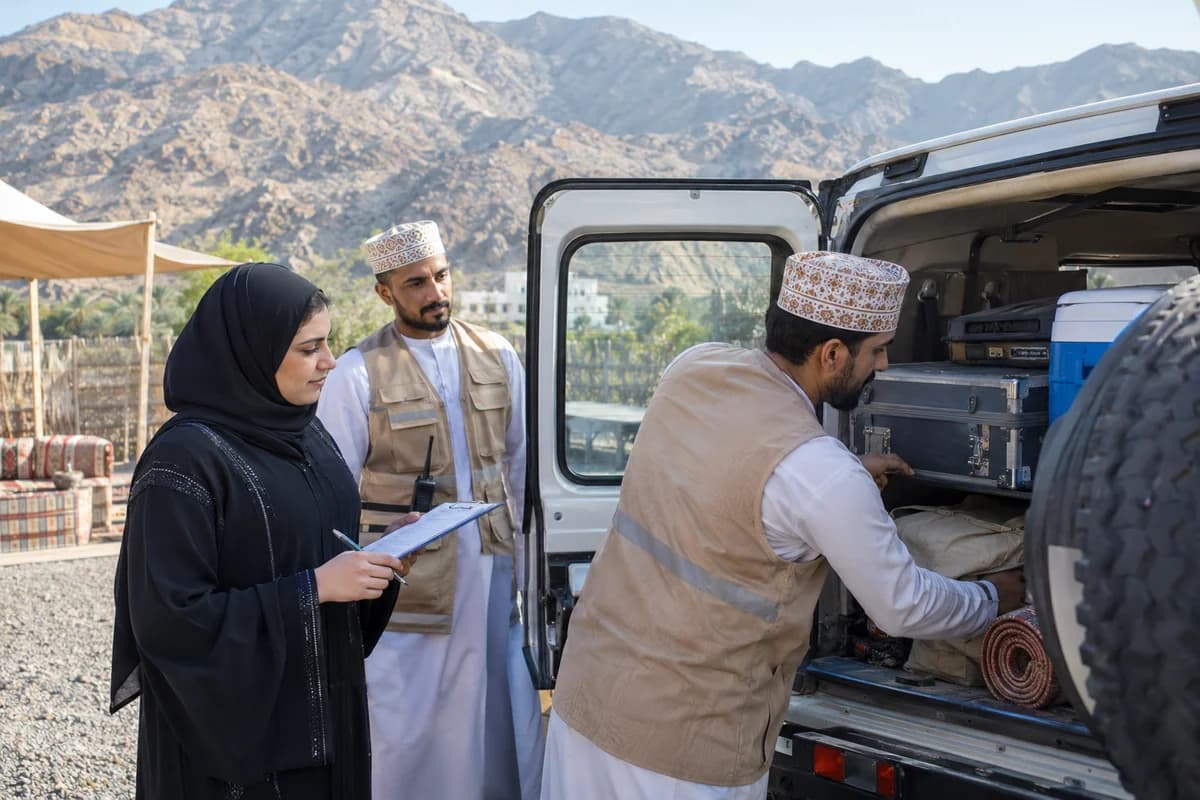
Muttrah has a corniche, a port and a souq that sell silver, incense and textiles to visitors. Ruwi is the traditional commercial district, with wholesalers, money changers and small offices. Tour companies take guests to the mountains, wadis and desert from October to April, the cooler months.
Qurum, Al Khuwair and the Seeb area carry banks, consultancies, clinics and the offices of oil and construction contractors, and the Rusayl Industrial Estate holds factories and warehouses. Employers subject to national hiring targets, known as Omanisation, watch training and staff records closely. Arabic and English both appear on documents. The working week runs Sunday to Thursday.
The districts, business parks and markets that matter in Muscat.
How Muscat businesses pick and use software.
Tour operators sell most in a few cool months, and they want itineraries, vehicles, guides and payments tied to one booking, so a change on one trip updates the rest.
Employers tracking local hiring need staff records with nationality, role and training history, grouped for the reports they must file.
Where Muscat businesses lose time and money.
Trips are planned in messages and spreadsheets
A guide, a vehicle and a camp are matched by phone, and a trip board that shows all three avoids double bookings.
Souq shops cannot see what sells
Stock and sales are entered at month end, and a till that records each sale shows fast and slow items by week.
Local hiring reports take days
Headcount by nationality is counted by hand, and staff records with the right fields print the report in minutes.
Contractor projects run over without warning
Costs are known after the invoice is issued. Costs posted to each project as they arrive show overrun early.
What we would build for Muscat businesses.
Usually in this order, starting with whatever the audit ranks first.
Web and Mobile Application Development
Web and mobile apps for customers, field staff and dealers, built to work on ordinary phones.
Learn moreERP, CRM and Business Software Implementation
One record of stock, orders, customers and accounts, set up so your team opens it every day.
Learn moreBusiness Process Automation
Approvals, reminders and reports triggered by agreed rules, with exceptions assigned to a responsible person.
Learn moreGlobal Compliance and Localisation
Software has to change for each country. Currency tables, VAT and sales tax codes, invoice layouts, translation files, storage regions and consent records are built as configuration that your team can edit without code changes. The legal question stays with your adviser.
Learn moreReady products that fit Muscat businesses.
Each one is adapted to how your business works before it goes live, and anything your trade needs that it lacks is added then. You are not paying to build the basics again.
Tour Operator Management Software
Itineraries, group departures, vendor bookings, vouchers, per-passenger costing, guest payments and vendor payables for tour operators running fixed departures and custom trips.
Learn moreHotel Management Software
A property management system for room bookings, the reservation chart, front desk, housekeeping, rate plans, guest folios and banquet hall bookings in hotels and resorts.
Learn moreHow the work runs from Bengaluru for Muscat.
- 1
The audit, by call
A screen-share and a look at the sheets, accounting reports and WhatsApp groups your team uses. No travel needed.
- 2
A written proposal
Scope, what we build first and the cost, agreed in writing before anything starts.
- 3
Build in short rounds
Working screens shared every few weeks. Your team tests them from your own office.
- 4
Go-live, in person when it helps
For data migration and training we can come to Muscat. Travel is agreed in advance.
- 5
Support online
Fixes, changes and hosting handled remotely by the same team that built it.
The work we have published.
We don’t claim Muscat clients we don’t have. These are systems our team built; the way we work is the same wherever you are.
PetSeva: matching owners to the right vet, at any hour
A two-sided veterinary platform where vets are searchable by specialisation and bookable outside clinic hours. It now carries more than 2,000 veterinary doctors.
Read the case study Paying guest accommodationSAM Atithi Pavathi: bed-level occupancy as the source of truth
PG management software where allocation, rates and invoices are derived from bed-level occupancy and not maintained in parallel spreadsheets.
Read the case study School transport servicesSAM Tours: school transport on a single ledger
Registration, fee collection, routing and finance write to the same records, closing the gap between journeys run and fees collected.
Read the case study Microfinance and Self Help GroupsVikasa RDO: making SHG loan recovery auditable
Loan proposals, recoveries and commissions sit on one record, with a person attached to every state change, so a business handling a bank’s money can show where each rupee went.
Read the case studyMake the scope specific to your business.
Work through a real example from your operation and agree the handoffs, controls and support the project needs.
Local hiring reports take days
What does one row mean before totals are combined?
Choose one period in “Local hiring reports take days” and compare it with the source records. Define the date basis and grouping before accepting a total that combines several kinds of entry.
Background reading: Microsoft: reporting grain and relationships
Questions Muscat owners ask before they call.
Can we sell trips online and still manage vehicles and guides?
Yes. The booking page and the internal trip board use the same records, so what a guest buys is what your team sees.
Do you know Omani labour rules?
We do not advise on them. You and your adviser tell us the reports required, and we build the records and the printouts for them.
What happens after I share my requirements?
We review your brief and clarify the work with you. We then look at the software, spreadsheets and WhatsApp groups your business runs on today and write down what works, what slows your team down and what is missing. A demo login, a screen-share or a few screenshots are enough. You get a short written summary ordered by priority, with no obligation to hire us afterwards.
How much will the software cost?
We don’t publish a price, because it depends on what the system has to do. That first review settles the scope, and the cost goes into a written proposal before any work starts.
Industries we build for in Muscat.
Elsewhere in Oman.
Tell us what your Muscat business runs on today.
Send a short note on the spreadsheets, software or WhatsApp groups your team depends on. We reply the same working day.
What happens after you share your requirements
- We review your brief and the systems you already use.
- We clarify the workflow, missing information and the work to consider first.
- The proposed scope sets out the deliverables, responsibilities and dependencies.
- Review the scope and commercial terms before deciding whether to proceed.
Start with your requirements
Describe your current process, the people involved and the change you need. Start with the details you know; we can clarify the rest together.
Share your requirements