Medina · CountriesMedina’s hotels, transport firms, gift sellers and date traders serve pilgrims in busy seasons.
Medina is home to the Prophet’s Mosque and receives pilgrims and visitors throughout the year. Hotels near the mosque, taxi and coach operators, caterers and gift shops depend on the pilgrimage calendar. Date farms in the surrounding oasis supply a well known local trade. Crowds peak at fixed times. Everything must be ready before they arrive.
The pilgrim calendar sets the year. Groups arrive in waves, and hotels, buses and food suppliers must be booked weeks ahead of the peak. Between the peaks demand falls sharply, so costs have to be planned across the whole cycle.
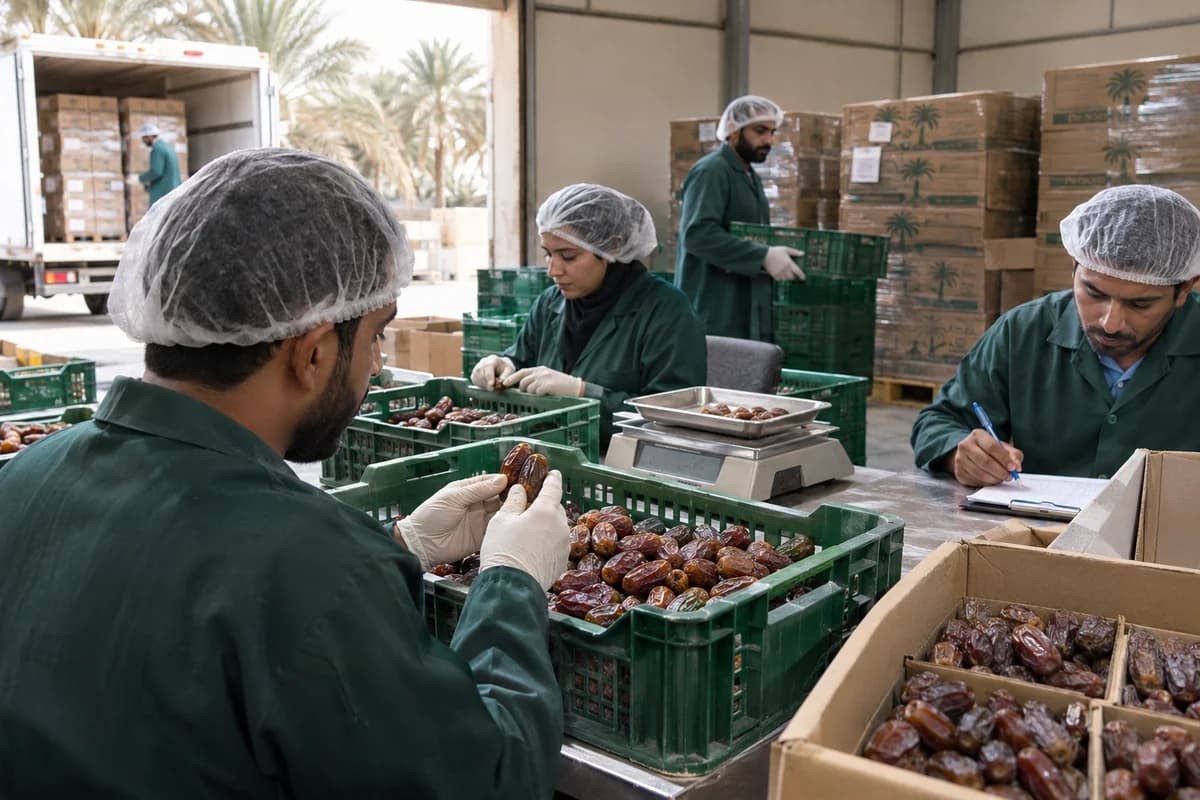
Around the city, date farms and packing houses send fruit to local markets and gift shops. Visitors buy dates, prayer items and keepsakes to take home. Firms invoice in Arabic and English, and bookings arrive through agents abroad. Saudi clocks run behind Bengaluru’s, so their mornings meet our late mornings.
The districts, business parks and markets that matter in Medina.
How Medina businesses pick and use software.
Hotel operators want group arrivals, room blocks and agent payments in one place, so reception, housekeeping and the finance desk all read the same list during a busy arrival week.
Taxi and coach owners need trips, drivers and fuel costs recorded per vehicle, because a monthly total hides the weeks when buses sat idle.
Date growers and gift shop owners want stock by grade and a clear sales record.
Where Medina businesses lose time and money.
Group lists change by the hour
Agents revise names and arrival times, and one shared list stops reception and drivers working from different versions of the same group.
Vehicles are idle between waves
Drivers and buses are paid in the peaks and wait in the troughs. Trip records show which contracts earn their cost.
Dates are sold without grade records
Prices differ by grade and size. A packing record per batch keeps each lot traceable.
Shop stock runs short in peak weeks
Sales history by week helps order gift stock before the pilgrim peaks.
What we would build for Medina businesses.
Usually in this order, starting with whatever the audit ranks first.
Web and Mobile Application Development
Web and mobile apps for customers, field staff and dealers, built to work on ordinary phones.
Learn moreBusiness Process Automation
Approvals, reminders and reports triggered by agreed rules, with exceptions assigned to a responsible person.
Learn moreGlobal Compliance and Localisation
Software has to change for each country. Currency tables, VAT and sales tax codes, invoice layouts, translation files, storage regions and consent records are built as configuration that your team can edit without code changes. The legal question stays with your adviser.
Learn moreWhatsApp Business API and Chatbots
WhatsApp Business API work covers number onboarding, template approval, opt-in records and a chatbot with human handover, all set up under the client’s own Meta account. It connects WhatsApp to a CRM, billing or booking system, so every message is sent from an existing record and every reply is written back. It suits businesses that already take orders, payments or bookings in chat.
Learn moreReady products that fit Medina businesses.
Each one is adapted to how your business works before it goes live, and anything your trade needs that it lacks is added then. You are not paying to build the basics again.
Taxi Company Management Software
Bookings, dispatch, duty slips, fare settlement, lease owners, vehicle papers, workshop jobs and corporate voucher billing for taxi companies.
Learn moreTourist Vehicle Operator Management Software
Hire quotes, booking calendar, vehicle and driver allotment, trip sheets, driver allowances, agent commission and permit dates for tourist vehicle operators.
Learn moreCrop Farm Management Software
Field plans, input stores, spray logs, machine hours, harvest weighbridge tickets, bin stock and grain contracts for arable crop farms.
Learn moreHow the work runs from Bengaluru for Medina.
- 1
The audit, by call
A screen-share and a look at the sheets, accounting reports and WhatsApp groups your team uses. No travel needed.
- 2
A written proposal
Scope, what we build first and the cost, agreed in writing before anything starts.
- 3
Build in short rounds
Working screens shared every few weeks. Your team tests them from your own office.
- 4
Go-live, in person when it helps
For data migration and training we can come to Medina. Travel is agreed in advance.
- 5
Support online
Fixes, changes and hosting handled remotely by the same team that built it.
The work we have published.
We don’t claim Medina clients we don’t have. These are systems our team built; the way we work is the same wherever you are.
PetSeva: matching owners to the right vet, at any hour
A two-sided veterinary platform where vets are searchable by specialisation and bookable outside clinic hours. It now carries more than 2,000 veterinary doctors.
Read the case study Paying guest accommodationSAM Atithi Pavathi: bed-level occupancy as the source of truth
PG management software where allocation, rates and invoices are derived from bed-level occupancy and not maintained in parallel spreadsheets.
Read the case study School transport servicesSAM Tours: school transport on a single ledger
Registration, fee collection, routing and finance write to the same records, closing the gap between journeys run and fees collected.
Read the case study Microfinance and Self Help GroupsVikasa RDO: making SHG loan recovery auditable
Loan proposals, recoveries and commissions sit on one record, with a person attached to every state change, so a business handling a bank’s money can show where each rupee went.
Read the case studyMake the scope specific to your business.
Work through a real example from your operation and agree the handoffs, controls and support the project needs.
Shop stock runs short in peak weeks
What happens to movements entered while a count is being checked?
For “Shop stock runs short in peak weeks”, choose a count date and trace the movements around it. Agree who investigates a difference before an adjustment changes the available balance.
Background reading: ERPNext: stock reconciliation
Questions Medina owners ask before they call.
Can the system hold bookings sent by agents in other countries?
Yes, it can. Agents send group lists by a form or a file, and the system turns them into room and transport requests once we have agreed the format with your main agents.
Will Arabic names print correctly on lists and invoices?
Yes, with testing. We check Arabic text, right to left layout and mixed Arabic and English lines on the actual forms your staff print, before anything goes live.
What happens after I share my requirements?
We review your brief and clarify the work with you. We then look at the software, spreadsheets and WhatsApp groups your business runs on today and write down what works, what slows your team down and what is missing. A demo login, a screen-share or a few screenshots are enough. You get a short written summary ordered by priority, with no obligation to hire us afterwards.
How much will the software cost?
We don’t publish a price, because it depends on what the system has to do. That first review settles the scope, and the cost goes into a written proposal before any work starts.
Industries we build for in Medina.
Elsewhere in Saudi Arabia.
Tell us what your Medina business runs on today.
Send a short note on the spreadsheets, software or WhatsApp groups your team depends on. We reply the same working day.
What happens after you share your requirements
- We review your brief and the systems you already use.
- We clarify the workflow, missing information and the work to consider first.
- The proposed scope sets out the deliverables, responsibilities and dependencies.
- Review the scope and commercial terms before deciding whether to proceed.
Start with your requirements
Describe your current process, the people involved and the change you need. Start with the details you know; we can clarify the rest together.
Share your requirements