Cape Town · CountriesCape Town’s harbour, wine routes, film crews and tourist trade run on seasons that swing hard.
Cape Town sells to visitors, ships fruit and wine through its harbour and hosts film crews each summer. Stellenbosch and Franschhoek estates lie within driving distance. Century City and the Waterfront hold offices and shops, while Bellville and Epping hold workshops and warehouses. The Cape working day overlaps well with Bengaluru, so calls rarely need odd hours.
Summer brings visitors, and the whole peninsula adjusts. Guesthouses, restaurants, tour guides and car hire desks fill up from December, then quieten through winter. A booking system has to cope with both ends of that swing.
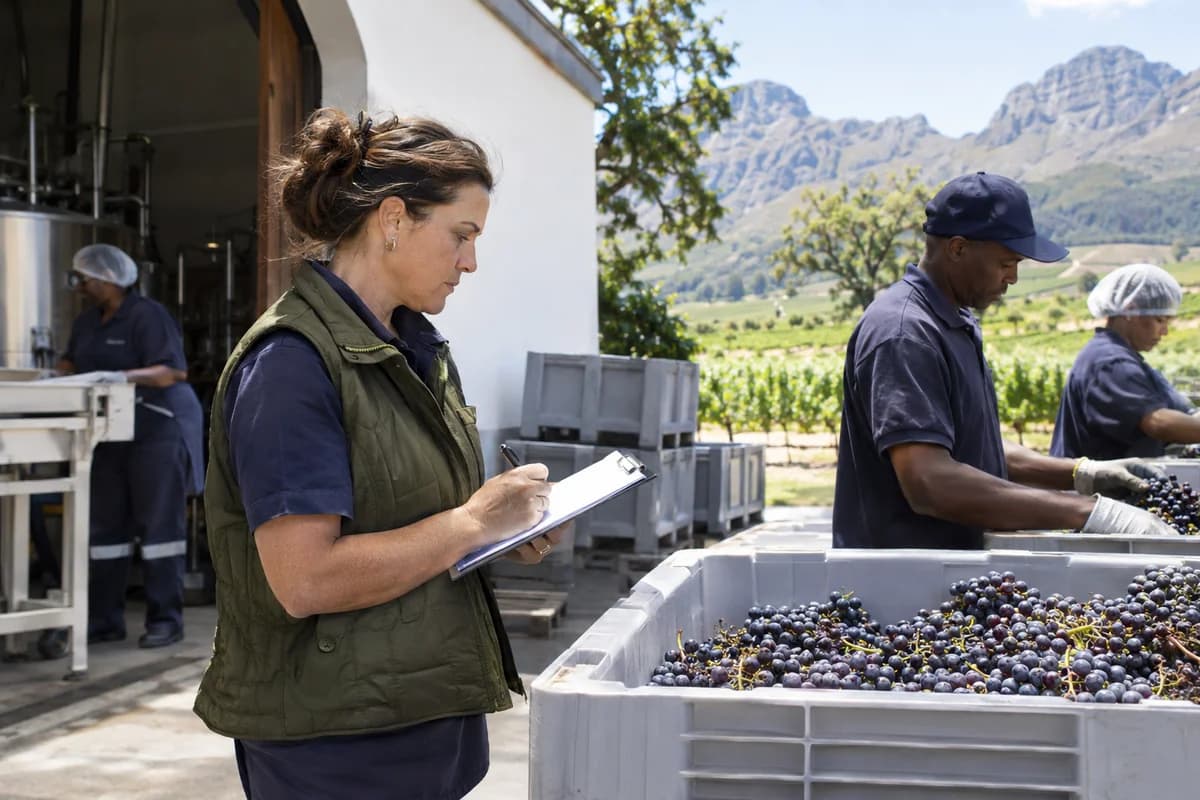
The harbour and the wine lands add another rhythm. Fruit packers and wine estates ship in a tight window each year, and exporters need paperwork that matches every pallet. Film and advertising crews book locations months ahead. Small studios run on laptops.
The districts, business parks and markets that matter in Cape Town.
How Cape Town businesses pick and use software.
Owners of guesthouses, tour firms and restaurants who want bookings, rosters and supplier orders in one place.
Wine estates and fruit exporters who must tie each batch to a buyer and a shipping document before the truck leaves for the quayside.
Where Cape Town businesses lose time and money.
Seasonal staffing
Hospitality hires extra hands for summer, and rosters, tips and leave must follow the headcount as it climbs and falls through the year.
Tasting rooms and cellar stock
Estates sell wine at the cellar door, by club and in bulk. Each channel draws on the same stock.
Export paperwork per pallet
Packers ship fruit to distant buyers under tight clocks, and every pallet needs a record that travels with it from the shed to the quayside.
Crew and location bookings
Production companies juggle vehicles, permits and day rates across short shoots.
What we would build for Cape Town businesses.
Usually in this order, starting with whatever the audit ranks first.
Web and Mobile Application Development
Web and mobile apps for customers, field staff and dealers, built to work on ordinary phones.
Learn moreE-Commerce and Digital Commerce
An online store or B2B order portal wired to your stock, billing and dispatch.
Learn moreWhatsApp Business API and Chatbots
WhatsApp Business API work covers number onboarding, template approval, opt-in records and a chatbot with human handover, all set up under the client’s own Meta account. It connects WhatsApp to a CRM, billing or booking system, so every message is sent from an existing record and every reply is written back. It suits businesses that already take orders, payments or bookings in chat.
Learn moreUI/UX Design and Prototyping
Prototypes tested with the people doing the work, including corrections, missing information and everyday devices.
Learn moreReady products that fit Cape Town businesses.
Each one is adapted to how your business works before it goes live, and anything your trade needs that it lacks is added then. You are not paying to build the basics again.
Winery Management Software
Harvest intake, vintage and lot records, tank and barrel register, bottling, cellar stock, cellar door, wine club and trade orders for wineries.
Learn moreTour Operator Management Software
Itineraries, group departures, vendor bookings, vouchers, per-passenger costing, guest payments and vendor payables for tour operators running fixed departures and custom trips.
Learn moreHotel Management Software
A property management system for room bookings, the reservation chart, front desk, housekeeping, rate plans, guest folios and banquet hall bookings in hotels and resorts.
Learn moreHow the work runs from Bengaluru for Cape Town.
- 1
The audit, by call
A screen-share and a look at the sheets, accounting reports and WhatsApp groups your team uses. No travel needed.
- 2
A written proposal
Scope, what we build first and the cost, agreed in writing before anything starts.
- 3
Build in short rounds
Working screens shared every few weeks. Your team tests them from your own office.
- 4
Go-live, in person when it helps
For data migration and training we can come to Cape Town. Travel is agreed in advance.
- 5
Support online
Fixes, changes and hosting handled remotely by the same team that built it.
The work we have published.
We don’t claim Cape Town clients we don’t have. These are systems our team built; the way we work is the same wherever you are.
PetSeva: matching owners to the right vet, at any hour
A two-sided veterinary platform where vets are searchable by specialisation and bookable outside clinic hours. It now carries more than 2,000 veterinary doctors.
Read the case study Paying guest accommodationSAM Atithi Pavathi: bed-level occupancy as the source of truth
PG management software where allocation, rates and invoices are derived from bed-level occupancy and not maintained in parallel spreadsheets.
Read the case study School transport servicesSAM Tours: school transport on a single ledger
Registration, fee collection, routing and finance write to the same records, closing the gap between journeys run and fees collected.
Read the case study Microfinance and Self Help GroupsVikasa RDO: making SHG loan recovery auditable
Loan proposals, recoveries and commissions sit on one record, with a person attached to every state change, so a business handling a bank’s money can show where each rupee went.
Read the case studyMake the scope specific to your business.
Work through a real example from your operation and agree the handoffs, controls and support the project needs.
Tasting rooms and cellar stock
What happens to movements entered while a count is being checked?
For “Tasting rooms and cellar stock”, choose a count date and trace the movements around it. Agree who investigates a difference before an adjustment changes the available balance.
Background reading: ERPNext: stock reconciliation
Crew and location bookings
What becomes available when a booking is moved or cancelled?
Use “Crew and location bookings” to move a booking, then cancel a second example. Check the released slot, the person or resource still assigned, and any amount left to settle before accepting the revised schedule.
Background reading: ERPNext: appointment records
Questions Cape Town owners ask before they call.
Can a winery sell at the cellar door and online from one stock?
Yes. Cellar door sales, club orders and online orders can draw on one stock count, and excise and VAT settings are confirmed with your accountant before launch.
How do you work across the time gap with Cape Town?
Calls run in your morning and our midday, because India is ahead of the Cape. Urgent matters go by WhatsApp.
What happens after I share my requirements?
We review your brief and clarify the work with you. We then look at the software, spreadsheets and WhatsApp groups your business runs on today and write down what works, what slows your team down and what is missing. A demo login, a screen-share or a few screenshots are enough. You get a short written summary ordered by priority, with no obligation to hire us afterwards.
How much will the software cost?
We don’t publish a price, because it depends on what the system has to do. That first review settles the scope, and the cost goes into a written proposal before any work starts.
Industries we build for in Cape Town.
Elsewhere in South Africa.
Tell us what your Cape Town business runs on today.
Send a short note on the spreadsheets, software or WhatsApp groups your team depends on. We reply the same working day.
What happens after you share your requirements
- We review your brief and the systems you already use.
- We clarify the workflow, missing information and the work to consider first.
- The proposed scope sets out the deliverables, responsibilities and dependencies.
- Review the scope and commercial terms before deciding whether to proceed.
Start with your requirements
Describe your current process, the people involved and the change you need. Start with the details you know; we can clarify the rest together.
Share your requirements