Uppsala · CountriesUppsala’s university, hospital and life science firms give it a quiet, research-led economy.
Uppsala is a river town north of Stockholm, built around a cathedral and a university founded in the fifteenth century. An agricultural university, an academic hospital and laboratory companies make research the main employer. Walpurgis Night in late April is the student peak. Shops, cafes and small firms on the Fyris keep Swedish hours and expect invoices and records in Swedish.
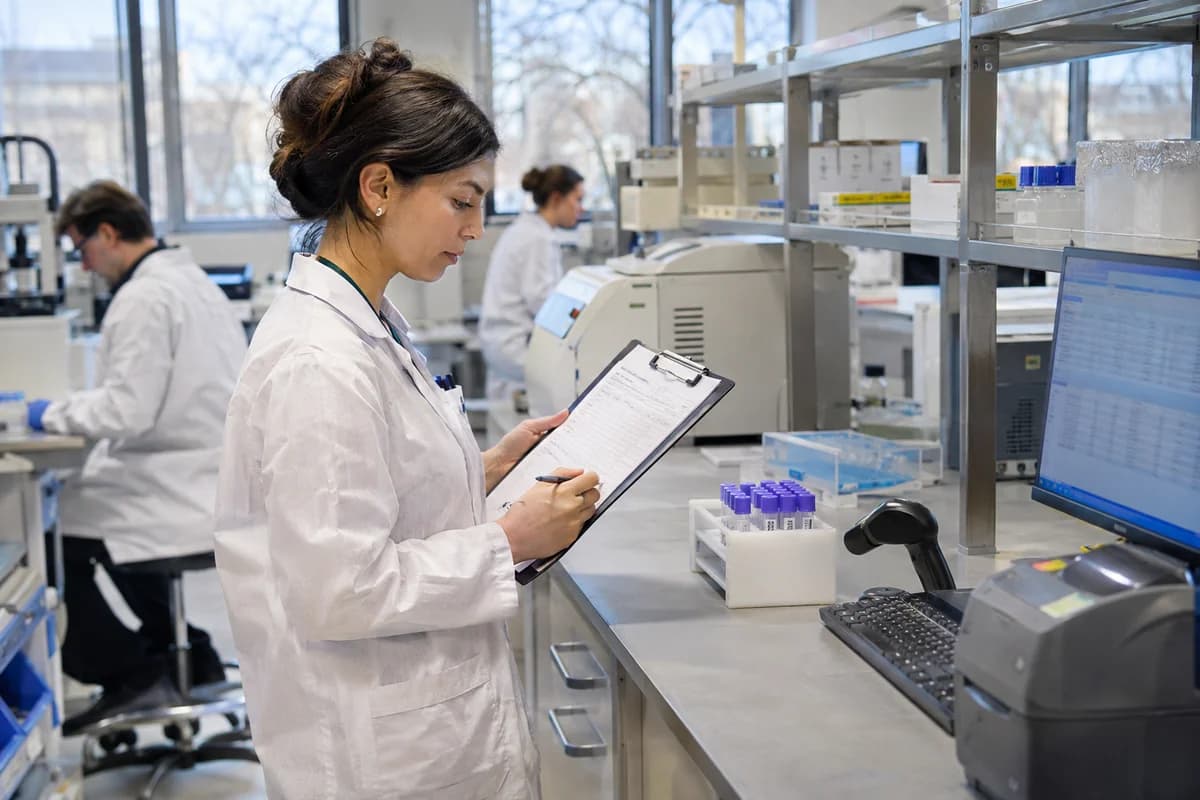
Laboratories run on paper. Samples arrive with forms, instruments need calibration dates, and results go to clinicians or farmers who ask for exact references and expect the same answer a year later. Audits follow a sample from tube to report.
Stockholm lies a short train ride south, so people live in one city and work in the other. We are further away, in Bengaluru, and write specifications that suit a team split across places. Our software does not replace accreditation.
The districts, business parks and markets that matter in Uppsala.
How Uppsala businesses pick and use software.
Laboratory, diagnostics and instrument firms that must trace samples, calibration and reagent lots for audits.
Landlords, cafes and bookshops in a student town, whose trade follows the term calendar.
Where Uppsala businesses lose time and money.
Calibration dates in a drawer
An instrument is used after its calibration lapsed, and the results are questioned. A schedule that flags each device before the date passes protects the data.
Reagents past their expiry
Labs keep lots spread across freezers. A shelf record with expiry dates warns the team a month before a lot becomes waste, which saves both money and an awkward batch of repeat experiments.
Room contracts every term
Rooms change hands each term. Contracts, deposits and key returns pile up in August. One tenancy register keeps them straight.
What we would build for Uppsala businesses.
Usually in this order, starting with whatever the audit ranks first.
Data Engineering and Business Intelligence
Dashboards that answer the owner’s Monday questions without anyone building an Excel sheet first.
Learn moreQA and Software Testing
Testing on the phones, browsers and patchy networks your customers and staff actually use.
Learn moreGlobal Compliance and Localisation
Software has to change for each country. Currency tables, VAT and sales tax codes, invoice layouts, translation files, storage regions and consent records are built as configuration that your team can edit without code changes. The legal question stays with your adviser.
Learn moreData Migration and Moving Off Spreadsheets
Data migration and spreadsheet replacement covers auditing existing files, cleaning and deduplicating records, loading them into a new system and reconciling the loaded result against known totals. Both systems then run side by side before cutover. Originals stay untouched.
Learn moreReady products that fit Uppsala businesses.
Each one is adapted to how your business works before it goes live, and anything your trade needs that it lacks is added then. You are not paying to build the basics again.
Diagnostic Equipment Manufacturer Management Software
PCB and sensor lots, firmware images, heat chamber hours, calibration points, installation reports and replaced pumps or lamps, kept by serial for diagnostic equipment makers.
Learn morePathology Lab Management Software
Registration, sample barcodes, home collection, worklists, result entry with reference ranges, pathologist sign-off, report delivery and B2B billing for pathology labs.
Learn moreEnvironmental Testing Laboratory Management Software
Sampling schedules, chain of custody, test orders, batches, quality controls, instrument register, certificates of analysis and invoicing for environmental testing laboratories.
Learn moreHow the work runs from Bengaluru for Uppsala.
- 1
The audit, by call
A screen-share and a look at the sheets, accounting reports and WhatsApp groups your team uses. No travel needed.
- 2
A written proposal
Scope, what we build first and the cost, agreed in writing before anything starts.
- 3
Build in short rounds
Working screens shared every few weeks. Your team tests them from your own office.
- 4
Go-live, in person when it helps
For data migration and training we can come to Uppsala. Travel is agreed in advance.
- 5
Support online
Fixes, changes and hosting handled remotely by the same team that built it.
The work we have published.
We don’t claim Uppsala clients we don’t have. These are systems our team built; the way we work is the same wherever you are.
PetSeva: matching owners to the right vet, at any hour
A two-sided veterinary platform where vets are searchable by specialisation and bookable outside clinic hours. It now carries more than 2,000 veterinary doctors.
Read the case study Paying guest accommodationSAM Atithi Pavathi: bed-level occupancy as the source of truth
PG management software where allocation, rates and invoices are derived from bed-level occupancy and not maintained in parallel spreadsheets.
Read the case study School transport servicesSAM Tours: school transport on a single ledger
Registration, fee collection, routing and finance write to the same records, closing the gap between journeys run and fees collected.
Read the case study Microfinance and Self Help GroupsVikasa RDO: making SHG loan recovery auditable
Loan proposals, recoveries and commissions sit on one record, with a person attached to every state change, so a business handling a bank’s money can show where each rupee went.
Read the case studyMake the scope specific to your business.
Work through a real example from your operation and agree the handoffs, controls and support the project needs.
Reagents past their expiry
How is an expired or held lot kept out of an ordinary issue?
Use “Reagents past their expiry” to compare a usable lot with one awaiting a decision. Agree how the team identifies the affected quantity before picking or issuing it.
Background reading: ERPNext: batch records
Ultuna and the farmland research
Which observation would change the proposed scope?
For “Ultuna and the farmland research”, observe someone completing the task with a representative example. Record where they stop, ask another person or re-enter information, then choose the smallest change whose result the team can verify.
Background reading: GOV.UK: researching user needs
Questions Uppsala owners ask before they call.
Can reagent lots and expiry dates be tracked?
Yes. Each lot has a record with supplier, receipt date, storage place and expiry, and the system lists what runs out soon. Quality procedures stay yours.
Where can the data be hosted?
That choice is made with your data protection adviser, and the system can run in an EU region of the cloud provider you pick.
What happens after I share my requirements?
We review your brief and clarify the work with you. We then look at the software, spreadsheets and WhatsApp groups your business runs on today and write down what works, what slows your team down and what is missing. A demo login, a screen-share or a few screenshots are enough. You get a short written summary ordered by priority, with no obligation to hire us afterwards.
How much will the software cost?
We don’t publish a price, because it depends on what the system has to do. That first review settles the scope, and the cost goes into a written proposal before any work starts.
Industries we build for in Uppsala.
Elsewhere in Sweden.
Tell us what your Uppsala business runs on today.
Send a short note on the spreadsheets, software or WhatsApp groups your team depends on. We reply the same working day.
What happens after you share your requirements
- We review your brief and the systems you already use.
- We clarify the workflow, missing information and the work to consider first.
- The proposed scope sets out the deliverables, responsibilities and dependencies.
- Review the scope and commercial terms before deciding whether to proceed.
Start with your requirements
Describe your current process, the people involved and the change you need. Start with the details you know; we can clarify the rest together.
Share your requirements