Taichung · CountriesTaichung’s machine tool builders, precision shops and bicycle suppliers cut metal for buyers on every continent.
Taichung and its neighbouring towns lie at the heart of Taiwan’s machine tool and precision parts trade. Bicycle component makers follow close behind. Shops grind, mill and turn parts to tight tolerances and ship them abroad, and GullySystem in Bengaluru writes job tracking and quality tools for such shops and backs them from afar.
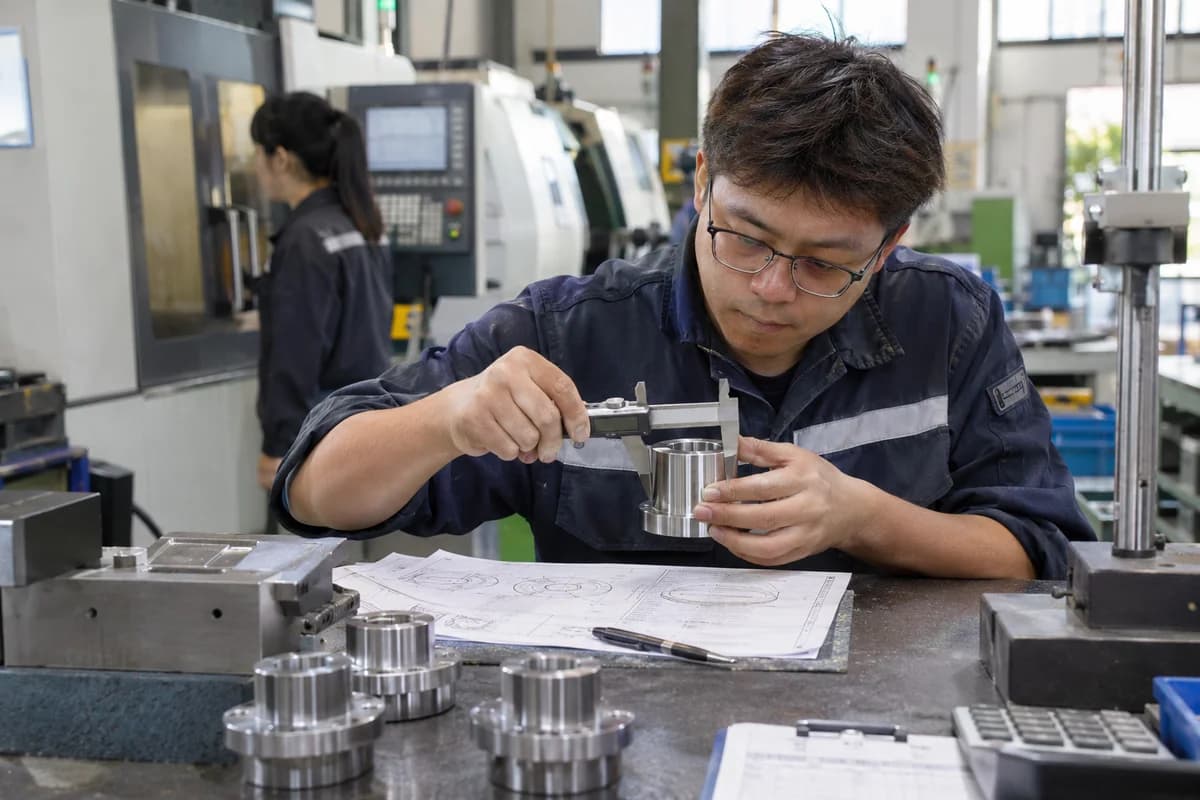
Central Taiwan packs machine tool builders, spindle makers, gear cutters and finishing shops into a few industrial districts, so a builder buys castings and bearings from neighbours within a short drive. One late supplier stops an assembly line. Lead times are measured in days.
Bicycle frames, gears and hubs come from the same belt. The city has hosted the Taiwan machine tool show. A foreman’s day starts just ahead of ours, so calls rarely run late.
The districts, business parks and markets that matter in Taichung.
How Taichung businesses pick and use software.
Shop managers at precision grinding and milling firms who juggle dozens of small jobs, each with its own drawing revision, tolerance sheet and delivery date.
Production planners at machine builders who wait on castings, ball screws and finished spindles from several local subcontractors.
Where Taichung businesses lose time and money.
Small jobs lose their paperwork
A shop may run dozens of jobs a day. Barcoded job travellers that log each machine and each operator show where a job is stuck, and which drawing revision it was cut to, without anyone leaving the desk.
Subcontractor lead times are guesses
A builder sends castings out for grinding and waits for a phone call. A shared job board shows true dates.
Inspection results sit on paper
Readings are handwritten and filed in binders. Entering them at the gauge and attaching them to the lot lets a customer’s query be answered from one record, with no search through folders.
What we would build for Taichung businesses.
Usually in this order, starting with whatever the audit ranks first.
ERP, CRM and Business Software Implementation
One record of stock, orders, customers and accounts, set up so your team opens it every day.
Learn moreAPI and System Integration
Connections between existing tools, with record ownership, duplicate handling and reconciliation agreed for each flow.
Learn moreData Migration and Moving Off Spreadsheets
Data migration and spreadsheet replacement covers auditing existing files, cleaning and deduplicating records, loading them into a new system and reconciling the loaded result against known totals. Both systems then run side by side before cutover. Originals stay untouched.
Learn moreIoT and Edge Computing
Machine and sensor readings connected to office records, with buffering limits and recovery after a lost connection defined.
Learn moreReady products that fit Taichung businesses.
Each one is adapted to how your business works before it goes live, and anything your trade needs that it lacks is added then. You are not paying to build the basics again.
CNC Milling Shop Management Software
Quotes with programming time, programme revisions, fixture register, plate stock, operation routing, inspection reports and outside finishing for CNC milling shops.
Learn morePrecision Grinding Shop Management Software
Quotes, blank receipt, grinder loading, wheel settings, gauge readings, calibration, outside processes and delivery notes for precision grinding shops.
Learn moreJig and Fixture Maker Management Software
Fixture projects linked to part revisions, parts lists, build hours, validation readings, buyer sign-off, modifications and gauge calibration for jig and fixture makers.
Learn moreHow the work runs from Bengaluru for Taichung.
- 1
The audit, by call
A screen-share and a look at the sheets, accounting reports and WhatsApp groups your team uses. No travel needed.
- 2
A written proposal
Scope, what we build first and the cost, agreed in writing before anything starts.
- 3
Build in short rounds
Working screens shared every few weeks. Your team tests them from your own office.
- 4
Go-live, in person when it helps
For data migration and training we can come to Taichung. Travel is agreed in advance.
- 5
Support online
Fixes, changes and hosting handled remotely by the same team that built it.
The work we have published.
We don’t claim Taichung clients we don’t have. These are systems our team built; the way we work is the same wherever you are.
PetSeva: matching owners to the right vet, at any hour
A two-sided veterinary platform where vets are searchable by specialisation and bookable outside clinic hours. It now carries more than 2,000 veterinary doctors.
Read the case study Paying guest accommodationSAM Atithi Pavathi: bed-level occupancy as the source of truth
PG management software where allocation, rates and invoices are derived from bed-level occupancy and not maintained in parallel spreadsheets.
Read the case study School transport servicesSAM Tours: school transport on a single ledger
Registration, fee collection, routing and finance write to the same records, closing the gap between journeys run and fees collected.
Read the case study Microfinance and Self Help GroupsVikasa RDO: making SHG loan recovery auditable
Loan proposals, recoveries and commissions sit on one record, with a person attached to every state change, so a business handling a bank’s money can show where each rupee went.
Read the case studyMake the scope specific to your business.
Work through a real example from your operation and agree the handoffs, controls and support the project needs.
Inspection results sit on paper
Who decides whether a failed result blocks the next step?
For “Inspection results sit on paper”, bring an accepted result and a failed one. Agree who can authorise an exception and what evidence must accompany that decision.
Background reading: ERPNext: inspection criteria
Questions Taichung owners ask before they call.
Can the software track a part through several subcontractors?
Yes. Each job records where it was sent, when it left and when it came back, and subcontractors update status through a simple page. The planner sees late jobs at once.
Can measurements be entered at the machine?
Yes. A tablet or gauge export attaches readings to the job. Out of tolerance values raise a flag. The report for the buyer prints from that record, with every reading listed.
What happens after I share my requirements?
We review your brief and clarify the work with you. We then look at the software, spreadsheets and WhatsApp groups your business runs on today and write down what works, what slows your team down and what is missing. A demo login, a screen-share or a few screenshots are enough. You get a short written summary ordered by priority, with no obligation to hire us afterwards.
How much will the software cost?
We don’t publish a price, because it depends on what the system has to do. That first review settles the scope, and the cost goes into a written proposal before any work starts.
Industries we build for in Taichung.
Elsewhere in Taiwan.
Tell us what your Taichung business runs on today.
Send a short note on the spreadsheets, software or WhatsApp groups your team depends on. We reply the same working day.
What happens after you share your requirements
- We review your brief and the systems you already use.
- We clarify the workflow, missing information and the work to consider first.
- The proposed scope sets out the deliverables, responsibilities and dependencies.
- Review the scope and commercial terms before deciding whether to proceed.
Start with your requirements
Describe your current process, the people involved and the change you need. Start with the details you know; we can clarify the rest together.
Share your requirements