Machine shop, fastener and electronics software for Taiwanese makers, written and supported from Bengaluru.
Taiwan’s smaller firms cut metal on machine tools, forge fasteners and assemble electronics for foreign brands, then ship to buyers on every continent. Orders are small. Drawings change from one order to the next. Export paperwork never stops. Shop floor and order software for these routines is written in Bengaluru by GullySystem and supported remotely, with no office on the island.
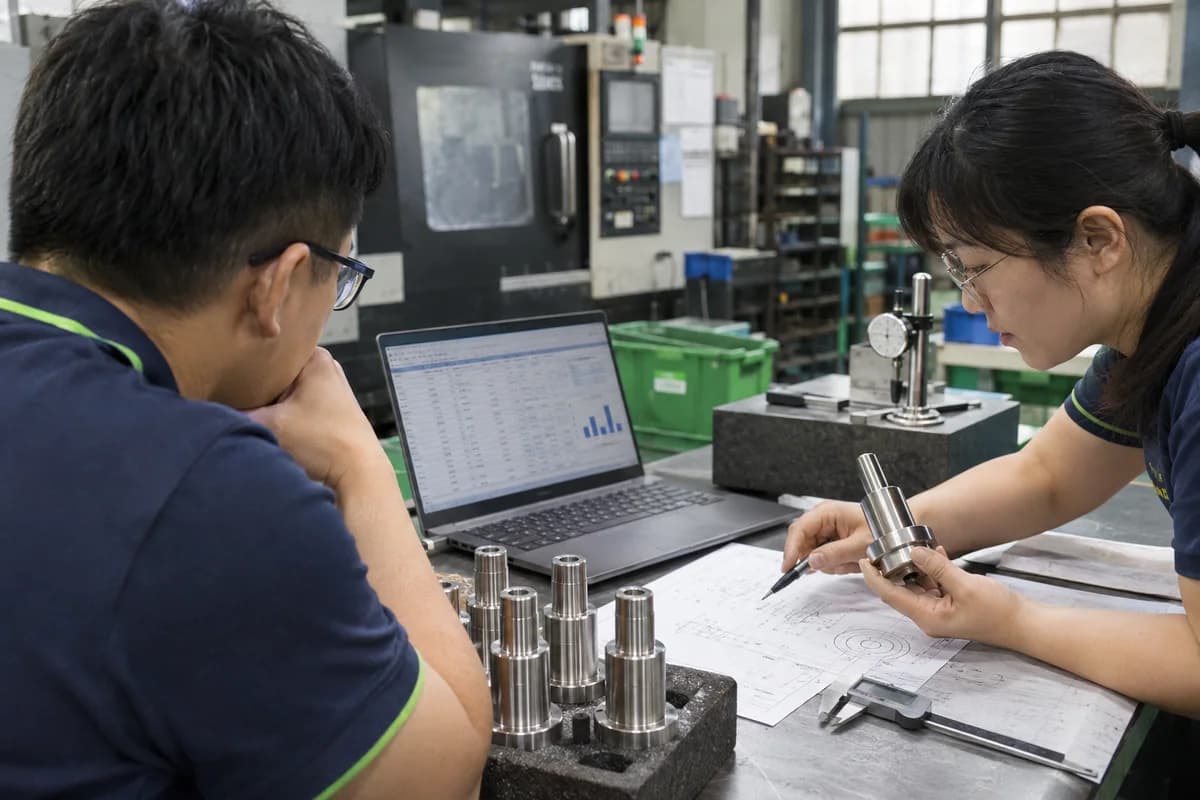
Working with a team in India from Taiwan.
Taiwan’s manufacturing runs on small family firms. They supply the bigger names. A machining shop in the middle of the island may cut spindles for one buyer and gear blanks for another in the same week, each to its own drawing. Customers abroad ask for inspection reports with every shipment.
Our team sits in Nagarbhavi, Bengaluru, and works from a distance. Taipei, Taichung, Kaohsiung and the towns between are served the same way. Taiwan has none of our customers, partners or licences, a point we state in every proposal. A machine-tool shop, a fastener maker and an electronics assembler keep separate drawings, so every routine is built on its own and checked against sample data. Each order changes the drawing.
What changes when your business is in Taiwan.
Hours, money, language and data are decided with you at the start, not discovered later.
What the software has to fit.
The filing cycles, payment habits and licences a small business there already works around.
Trades we write for in Taiwan.
Products that fit them.
Capabilities often asked for.
What we would build for Taiwan businesses.
Usually in this order, starting with whatever the audit ranks first.
ERP, CRM and Business Software Implementation
One record of stock, orders, customers and accounts, set up so your team opens it every day.
Learn moreAPI and System Integration
Connections between existing tools, with record ownership, duplicate handling and reconciliation agreed for each flow.
Learn moreGlobal Compliance and Localisation
Software has to change for each country. Currency tables, VAT and sales tax codes, invoice layouts, translation files, storage regions and consent records are built as configuration that your team can edit without code changes. The legal question stays with your adviser.
Learn moreData Migration and Moving Off Spreadsheets
Data migration and spreadsheet replacement covers auditing existing files, cleaning and deduplicating records, loading them into a new system and reconciling the loaded result against known totals. Both systems then run side by side before cutover. Originals stay untouched.
Learn moreMake the scope specific to your business.
Work through a real example from your operation and agree the handoffs, controls and support the project needs.
Uniform invoices and business tax
Can you explain the balance from its original documents?
Select a partly settled example in “Uniform invoices and business tax”. Ask for the invoice, allocated receipts and remaining balance to be shown together before agreeing the opening figures.
Background reading: ERPNext: outstanding invoices
Machine tools and precision parts
Which version applies to work that has already started?
Use a revised example from “Machine tools and precision parts” during a scoped walkthrough. Identify work still using the earlier version before deciding which jobs should change.
Background reading: Odoo: controlled product changes
Questions from businesses in Taiwan.
Do you have an office in Taiwan?
No. No work is done outside Bengaluru. Should a project ever need a person on site, the proposal names it first.
Can the software print documents in Traditional Chinese?
Yes. Traditional Chinese, English or both can appear on screens, labels, quotes and inspection reports. We ask a Chinese reader on your team to review the final text, since native judgement beats ours.
Can it follow a drawing revision through the shop?
Yes. Each job records the drawing and revision it was cut to, and operators see only the current sheet. Older revisions stay on file for audits, so a customer’s question about a past lot can be answered.
Can you connect to our existing accounting package?
Often, yes. We look at what export options or interfaces the package offers and propose a plan before work starts. Where none exist, a scheduled file exchange is the usual fallback.
Will you handle uniform invoice rules for us?
We set up invoice fields and layouts and can connect to services your accountant chooses. Your accountant decides which sales fall under the rules.
Can one customer have several drawings on file?
Yes, and each is tracked. A customer record lists its parts, and each part lists its drawing revisions, material and inspection steps. A buyer who reorders a spindle after a year gets the same sheet, plus any revision made since then.
Can we start with just one routine?
Yes, one is enough to begin. A job card, a quote or a packing list can go first. Your team uses it for a while before we add the next one, and the rest of your shop keeps working the old way until you are ready.
Tell us what you run.
Share your requirements and an engineer will read them before getting in touch, at an hour that suits your day.
What happens after you share your requirements
- We review your brief and the systems you already use.
- We clarify the workflow, missing information and the work to consider first.
- The proposed scope sets out the deliverables, responsibilities and dependencies.
- Review the scope and commercial terms before deciding whether to proceed.
Start with your requirements
Describe your current process, the people involved and the change you need. Start with the details you know; we can clarify the rest together.
Share your requirements