Gaziantep · CountriesGaziantep spins yarn, weaves carpets and bakes pistachio baklava in one of Turkey’s oldest trading cities.
Gaziantep is a city in south-eastern Turkey, close to the Syrian border. Its factories spin yarn and make carpets and plastics, its pistachio groves feed famous baklava bakeries, and its coppersmiths still hammer pots in the old bazaar. Invoices are in Turkish.
Antep has traded for thousands of years. Caravans once met here, and trucks now do the same, while factories in the industrial zones export textiles across the region.
Bengaluru runs ahead of Gaziantep on the clock, which still leaves a long shared afternoon. We schedule calls for your morning and send written follow-ups for the details. No Turkish branch or client stands behind this page.
The districts, business parks and markets that matter in Gaziantep.
How Gaziantep businesses pick and use software.
Spinning mills and carpet makers who plan by lot, shade and delivery date.
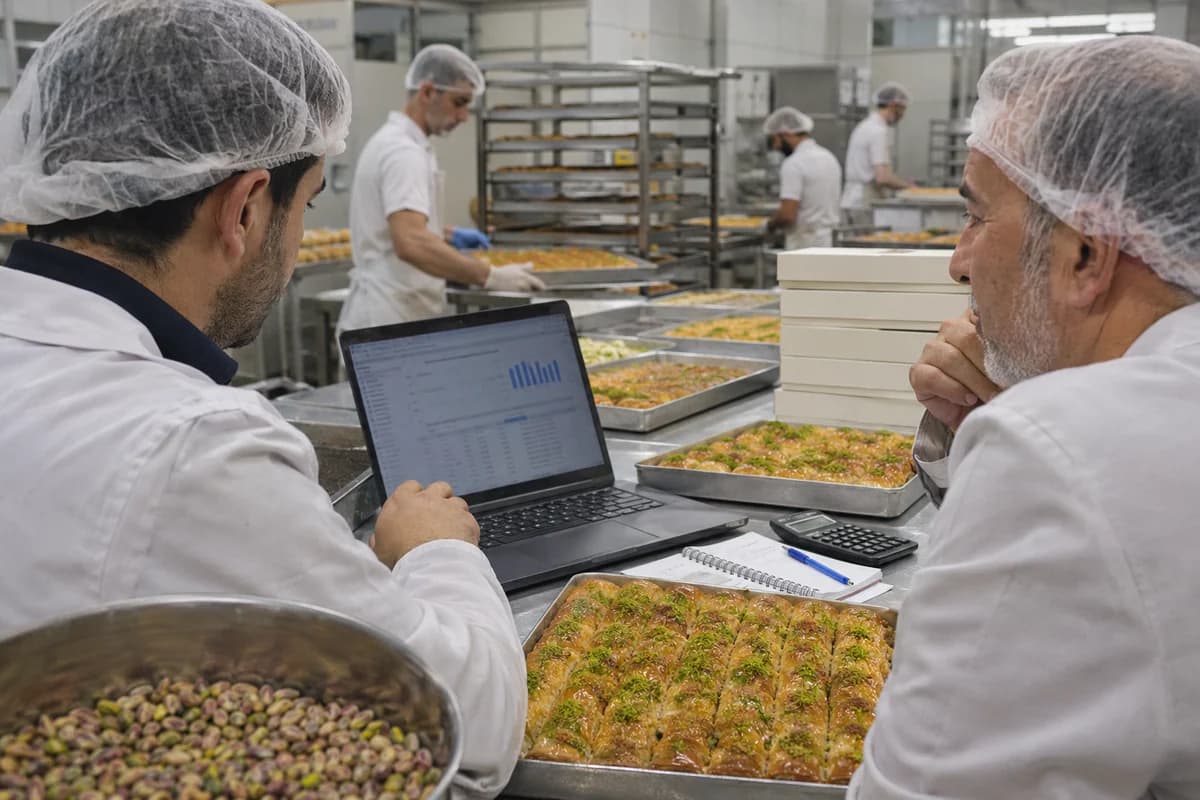
Baklava bakeries that ship fresh trays to shops and gift buyers across the country.
Spice and dried-fruit dealers who sell weighed packs to retailers.
Where Gaziantep businesses lose time and money.
Colour lots in yarn and carpet
A shade dyed last month can differ from today’s, and a dealer who reorders cannot tell which roll will match the first order. Lot records on every roll let a dealer pair a reorder with the right batch. Returns drop.
Fresh trays with a short life
A bakery bakes in the evening and ships overnight, so orders, trays and courier slots must agree by the time the ovens cool. A single order board for the evening shift keeps them aligned. Couriers wait less.
Small packs
A dealer sells the same nuts in three weights and two prints, and a pack list tied to stock avoids selling what is not packed yet. Shelves stay honest. Customers see accurate counts.
What we would build for Gaziantep businesses.
Usually in this order, starting with whatever the audit ranks first.
ERP, CRM and Business Software Implementation
One record of stock, orders, customers and accounts, set up so your team opens it every day.
Learn moreE-Commerce and Digital Commerce
An online store or B2B order portal wired to your stock, billing and dispatch.
Learn moreBusiness Process Automation
Approvals, reminders and reports triggered by agreed rules, with exceptions assigned to a responsible person.
Learn moreWeb and Mobile Application Development
Web and mobile apps for customers, field staff and dealers, built to work on ordinary phones.
Learn moreReady products that fit Gaziantep businesses.
Each one is adapted to how your business works before it goes live, and anything your trade needs that it lacks is added then. You are not paying to build the basics again.
Yarn Manufacturer Management Software
Bale lots, mixing plans, department waste, ring frame allocation, lab readings, machine stoppages and cone packing for spinning mills.
Learn moreBakery Product Manufacturer Management Software
Standing orders, bake plans, dough batches, ingredient lots, allergen changeovers, wrapping, route loading and returns for bakery product manufacturers.
Learn moreSpice Manufacturer Management Software
Coriander and chilli lot intake, moisture and colour grade, destoner loss, pulveriser yield by mesh, spice blend recipes, pouch batch codes and buyer lot sheets.
Learn moreHow the work runs from Bengaluru for Gaziantep.
- 1
The audit, by call
A screen-share and a look at the sheets, accounting reports and WhatsApp groups your team uses. No travel needed.
- 2
A written proposal
Scope, what we build first and the cost, agreed in writing before anything starts.
- 3
Build in short rounds
Working screens shared every few weeks. Your team tests them from your own office.
- 4
Go-live, in person when it helps
For data migration and training we can come to Gaziantep. Travel is agreed in advance.
- 5
Support online
Fixes, changes and hosting handled remotely by the same team that built it.
The work we have published.
We don’t claim Gaziantep clients we don’t have. These are systems our team built; the way we work is the same wherever you are.
PetSeva: matching owners to the right vet, at any hour
A two-sided veterinary platform where vets are searchable by specialisation and bookable outside clinic hours. It now carries more than 2,000 veterinary doctors.
Read the case study Paying guest accommodationSAM Atithi Pavathi: bed-level occupancy as the source of truth
PG management software where allocation, rates and invoices are derived from bed-level occupancy and not maintained in parallel spreadsheets.
Read the case study School transport servicesSAM Tours: school transport on a single ledger
Registration, fee collection, routing and finance write to the same records, closing the gap between journeys run and fees collected.
Read the case study Microfinance and Self Help GroupsVikasa RDO: making SHG loan recovery auditable
Loan proposals, recoveries and commissions sit on one record, with a person attached to every state change, so a business handling a bank’s money can show where each rupee went.
Read the case studyMake the scope specific to your business.
Work through a real example from your operation and agree the handoffs, controls and support the project needs.
Colour lots in yarn and carpet
Which observation would change the proposed scope?
For “Colour lots in yarn and carpet”, observe someone completing the task with a representative example. Record where they stop, ask another person or re-enter information, then choose the smallest change whose result the team can verify.
Background reading: GOV.UK: researching user needs
Questions Gaziantep owners ask before they call.
Can a Gaziantep mill record shade lots for yarn?
Yes. Every lot carries its dye batch and test notes, and reorders show the closest matching lots. We start with one product family and widen it after you have checked the results.
Can a baklava bakery take online orders for next-day delivery?
It can. Orders close at a set hour, and the bakery sees tray counts and courier slots together for the day, so late orders roll to tomorrow cleanly.
What happens after I share my requirements?
We review your brief and clarify the work with you. We then look at the software, spreadsheets and WhatsApp groups your business runs on today and write down what works, what slows your team down and what is missing. A demo login, a screen-share or a few screenshots are enough. You get a short written summary ordered by priority, with no obligation to hire us afterwards.
How much will the software cost?
We don’t publish a price, because it depends on what the system has to do. That first review settles the scope, and the cost goes into a written proposal before any work starts.
Industries we build for in Gaziantep.
Tell us what your Gaziantep business runs on today.
Send a short note on the spreadsheets, software or WhatsApp groups your team depends on. We reply the same working day.
What happens after you share your requirements
- We review your brief and the systems you already use.
- We clarify the workflow, missing information and the work to consider first.
- The proposed scope sets out the deliverables, responsibilities and dependencies.
- Review the scope and commercial terms before deciding whether to proceed.
Start with your requirements
Describe your current process, the people involved and the change you need. Start with the details you know; we can clarify the rest together.
Share your requirements