Order, production and booking software for Turkish clothing, tile, appliance and hotel businesses, supported from Bengaluru.
Turkey sews clothing for European shops, weaves towels and bedding, fires wall tiles and builds washing machines. Hotels fill the Aegean and Mediterranean coasts from spring to autumn, when guests from across Europe book rooms months ahead through agents, tour operators and direct sites. Exporting firms sell abroad in euros and spend at home in lira. GullySystem writes order, production and booking software in Bengaluru and looks after it from a distance.
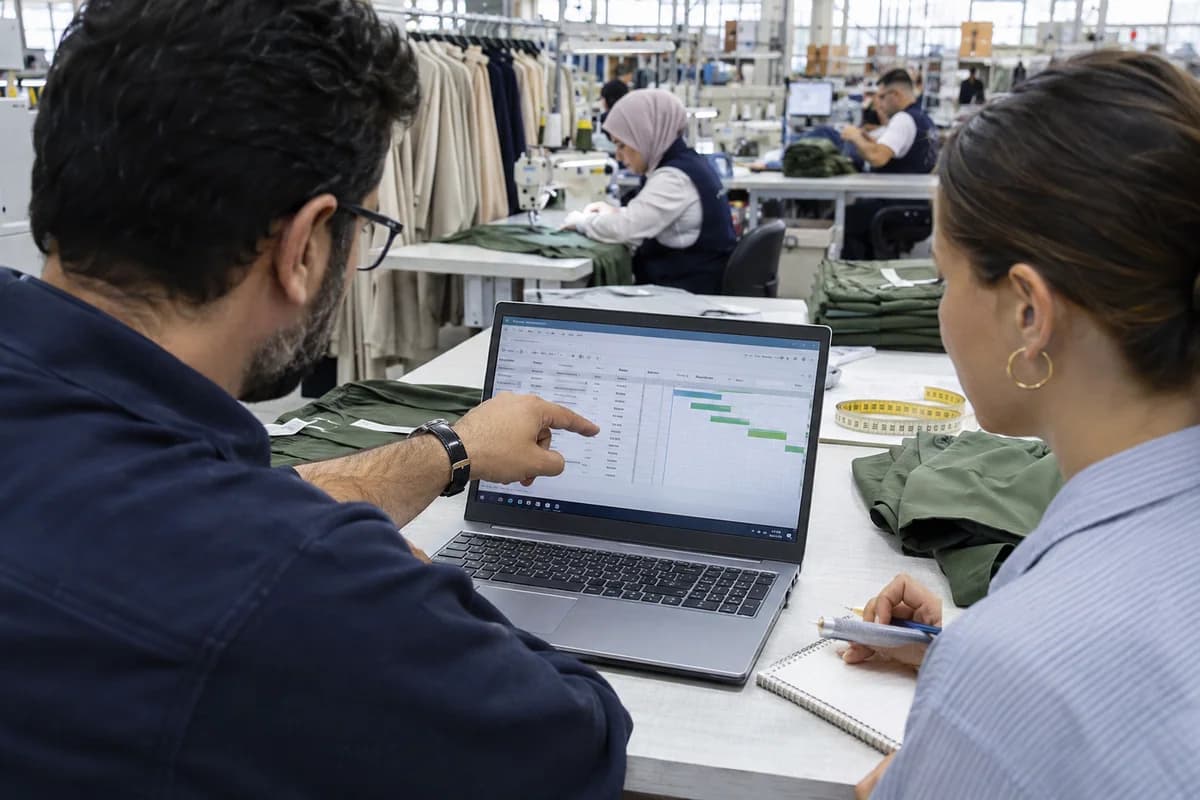
Working with a team in India from Turkey.
Turkish makers sit close to their European buyers. A garment factory can cut, sew and ship to a shop in Germany within days, so late changes to a style are normal. Orders arrive in euros while wages and fabric run in lira, so a quote made in spring can turn into a loss before the goods ship.
Our team is in Nagarbhavi, Bengaluru, and Turkey is served from there. No one of ours is stationed in the country. We name no Turkish customers or partners because we have none, and that is stated before any agreement is drawn up.
What changes when your business is in Turkey.
Hours, money, language and data are decided with you at the start, not discovered later.
What the software has to fit.
The filing cycles, payment habits and licences a small business there already works around.
Trades we write for in Turkey.
Products that fit them.
Capabilities often asked for.
What we would build for Turkey businesses.
Usually in this order, starting with whatever the audit ranks first.
ERP, CRM and Business Software Implementation
One record of stock, orders, customers and accounts, set up so your team opens it every day.
Learn moreAPI and System Integration
Connections between existing tools, with record ownership, duplicate handling and reconciliation agreed for each flow.
Learn moreGlobal Compliance and Localisation
Software has to change for each country. Currency tables, VAT and sales tax codes, invoice layouts, translation files, storage regions and consent records are built as configuration that your team can edit without code changes. The legal question stays with your adviser.
Learn moreWhatsApp Business API and Chatbots
WhatsApp Business API work covers number onboarding, template approval, opt-in records and a chatbot with human handover, all set up under the client’s own Meta account. It connects WhatsApp to a CRM, billing or booking system, so every message is sent from an existing record and every reply is written back. It suits businesses that already take orders, payments or bookings in chat.
Learn moreMake the scope specific to your business.
Work through a real example from your operation and agree the handoffs, controls and support the project needs.
Invoices and KDV
Can you explain the balance from its original documents?
Select a partly settled example in “Invoices and KDV”. Ask for the invoice, allocated receipts and remaining balance to be shown together before agreeing the opening figures.
Background reading: ERPNext: outstanding invoices
Messaging habits
How does a stop request affect messages already waiting to be sent?
For “Messaging habits”, check the intended recipient and permission before sending a test message. Agree how staff record a withdrawal and prevent a queued follow-up from going out.
Background reading: WhatsApp: permission and opt-outs
Questions from businesses in Turkey.
Do you have an office in Turkey?
No. Everyone here works in Bengaluru, and Turkish firms are helped from afar. Should a job need someone physically present, we tell you at the first call.
Can the software show Turkish text and lira amounts?
Yes. Turkish letters, including the dotted and dotless i, are sorted and printed correctly, and amounts can be held in lira, euro or both. We ask a Turkish colleague of yours to review the final wording.
Can you connect to e-Fatura and e-Arşiv?
We can connect to whichever approved integrator your accountant uses, once the format and rules are agreed with them. Giving tax advice is outside our work.
How do meetings work when our offices are in Turkey and India?
By scheduled video calls in the Turkish morning, with written notes after each one. Questions between calls go by email or WhatsApp, and urgent faults are answered the same day.
Can a small workshop afford this kind of project?
The first step is small, such as replacing one spreadsheet that runs orders or stock. We quote that piece in writing, and you decide whether to go further once it works.
Can a tile plant track shade and size per batch?
Yes, per firing batch. Each batch records its shade code, size and grade. A pallet shipped to a customer carries those codes, so a builder who needs more of the same shade can be offered the matching batch.
Can returns from a buyer be traced to a lot?
Yes, for parts and garments alike. A return is entered against its lot, and the screen lists the other orders that shared that material or batch. Your team then decides whom to call first and what to say.
Tell us what you run.
Share your requirements and an engineer will read them before getting in touch, at an hour that suits your day.
What happens after you share your requirements
- We review your brief and the systems you already use.
- We clarify the workflow, missing information and the work to consider first.
- The proposed scope sets out the deliverables, responsibilities and dependencies.
- Review the scope and commercial terms before deciding whether to proceed.
Start with your requirements
Describe your current process, the people involved and the change you need. Start with the details you know; we can clarify the rest together.
Share your requirements