Ho Chi Minh City · CountriesHo Chi Minh City trades, ships, codes and eats at a pace few regional cities match.
Ho Chi Minh City is the commercial heart of southern Vietnam. Cholon’s wholesalers sell to the whole delta, Cat Lai handles most of the country’s containers, and software teams work in Quang Trung and the hi-tech park. Cafés and restaurants fill every street. Bengaluru is an hour and a half behind, so calls share most of the day.
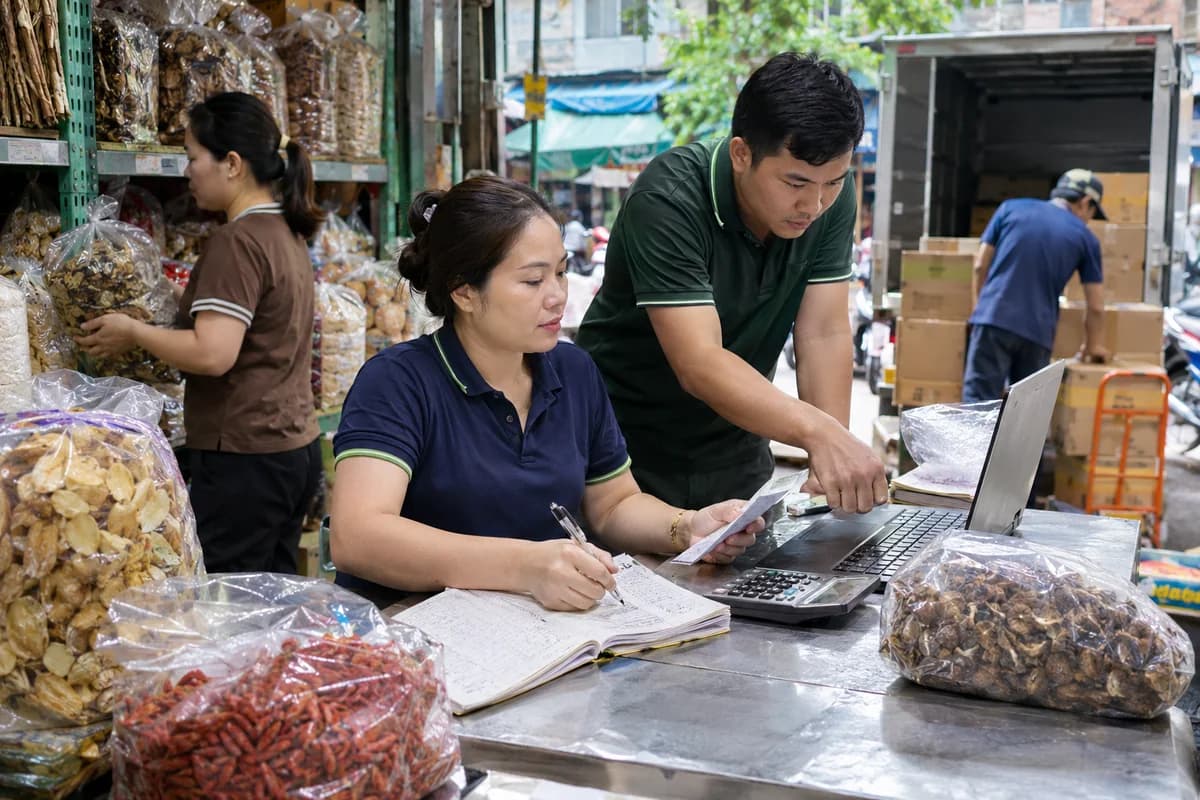
Cholon is the old Chinese quarter, and its markets, such as Binh Tay, supply shopkeepers from towns across the Mekong Delta. Wholesalers there sell dry goods, herbs, hardware and household items by the case to shop owners who travel in from towns across the delta, load their vans before sunrise and drive home. Credit between traders runs on trust and a handwritten book. Stalls open before six. Rain floods the lanes. A few unpaid weeks can cost a whole season.
Factories in Binh Duong and Dong Nai, an hour or two from the city, ship through the container terminals on the Saigon River. Forwarders, customs agents and truckers work out of the city to serve them. The software scene is just as busy. Outsourcing teams in Quang Trung Software City and the hi-tech park in Thu Duc write code for clients abroad, and they need clean project and billing records. Motorbikes carry everything. Nobody here sits still.
The districts, business parks and markets that matter in Ho Chi Minh City.
How Ho Chi Minh City businesses pick and use software.
Wholesalers in Cholon who sell on credit to shop owners
Software outsourcing firms billing overseas clients
Restaurant groups across District 1 and the suburbs
Where Ho Chi Minh City businesses lose time and money.
Credit books in notebooks
A wholesaler lends goods to dozens of shops. Who owes what lives in a notebook, and one lost page means weeks of phone calls.
Billing by milestone and hour
Outsourcing firms mix fixed-price projects with time-based work. Hours logged in one tool and invoices drawn in another seldom agree on the last day of the month.
Menus and stock across branches
A restaurant group keeps changing menus and suppliers. Branch managers order from memory, and food cost surprises show up late.
What we would build for Ho Chi Minh City businesses.
Usually in this order, starting with whatever the audit ranks first.
Custom Software and Product Engineering
Software built around how your business actually runs, when nothing off the shelf fits without workarounds.
Learn moreBusiness Process Automation
Approvals, reminders and reports triggered by agreed rules, with exceptions assigned to a responsible person.
Learn moreGlobal Compliance and Localisation
Software has to change for each country. Currency tables, VAT and sales tax codes, invoice layouts, translation files, storage regions and consent records are built as configuration that your team can edit without code changes. The legal question stays with your adviser.
Learn moreReady products that fit Ho Chi Minh City businesses.
Each one is adapted to how your business works before it goes live, and anything your trade needs that it lacks is added then. You are not paying to build the basics again.
Software Development Company Management Software
Statements of work, project plans, timesheets, bench allocation, change requests, milestone and time-and-materials invoices and margin for software development companies.
Learn moreWholesale and B2B Ordering Software
A dealer login with its own rates and schemes, live stock, credit checks, picking and dispatch, part loads, returns and repeat orders.
Learn moreRestaurant Management System
Table and counter orders, kitchen tickets (KOT), menu and recipe stock, platform orders, POS billing with tax and day close for restaurants.
Learn moreHow the work runs from Bengaluru for Ho Chi Minh City.
- 1
The audit, by call
A screen-share and a look at the sheets, accounting reports and WhatsApp groups your team uses. No travel needed.
- 2
A written proposal
Scope, what we build first and the cost, agreed in writing before anything starts.
- 3
Build in short rounds
Working screens shared every few weeks. Your team tests them from your own office.
- 4
Go-live, in person when it helps
For data migration and training we can come to Ho Chi Minh City. Travel is agreed in advance.
- 5
Support online
Fixes, changes and hosting handled remotely by the same team that built it.
The work we have published.
We don’t claim Ho Chi Minh City clients we don’t have. These are systems our team built; the way we work is the same wherever you are.
PetSeva: matching owners to the right vet, at any hour
A two-sided veterinary platform where vets are searchable by specialisation and bookable outside clinic hours. It now carries more than 2,000 veterinary doctors.
Read the case study Paying guest accommodationSAM Atithi Pavathi: bed-level occupancy as the source of truth
PG management software where allocation, rates and invoices are derived from bed-level occupancy and not maintained in parallel spreadsheets.
Read the case study School transport servicesSAM Tours: school transport on a single ledger
Registration, fee collection, routing and finance write to the same records, closing the gap between journeys run and fees collected.
Read the case study Microfinance and Self Help GroupsVikasa RDO: making SHG loan recovery auditable
Loan proposals, recoveries and commissions sit on one record, with a person attached to every state change, so a business handling a bank’s money can show where each rupee went.
Read the case studyMake the scope specific to your business.
Work through a real example from your operation and agree the handoffs, controls and support the project needs.
Billing by milestone and hour
Can you explain the balance from its original documents?
Select a partly settled example in “Billing by milestone and hour”. Ask for the invoice, allocated receipts and remaining balance to be shown together before agreeing the opening figures.
Background reading: ERPNext: outstanding invoices
Menus and stock across branches
What happens to movements entered while a count is being checked?
For “Menus and stock across branches”, choose a count date and trace the movements around it. Agree who investigates a difference before an adjustment changes the available balance.
Background reading: ERPNext: stock reconciliation
Questions Ho Chi Minh City owners ask before they call.
Can a wholesaler track credit shop by shop?
Yes. Each shop can have a ledger with credit limits, due dates and payments received, plus reminders you approve. Your team sets the credit rules.
Will Vietnamese names and addresses print correctly?
We test invoices and exports with real Vietnamese names, since accent marks break print files. Your staff sign off on the layouts before launch.
What happens after I share my requirements?
We review your brief and clarify the work with you. We then look at the software, spreadsheets and WhatsApp groups your business runs on today and write down what works, what slows your team down and what is missing. A demo login, a screen-share or a few screenshots are enough. You get a short written summary ordered by priority, with no obligation to hire us afterwards.
How much will the software cost?
We don’t publish a price, because it depends on what the system has to do. That first review settles the scope, and the cost goes into a written proposal before any work starts.
Industries we build for in Ho Chi Minh City.
Elsewhere in Vietnam.
Tell us what your Ho Chi Minh City business runs on today.
Send a short note on the spreadsheets, software or WhatsApp groups your team depends on. We reply the same working day.
What happens after you share your requirements
- We review your brief and the systems you already use.
- We clarify the workflow, missing information and the work to consider first.
- The proposed scope sets out the deliverables, responsibilities and dependencies.
- Review the scope and commercial terms before deciding whether to proceed.
Start with your requirements
Describe your current process, the people involved and the change you need. Start with the details you know; we can clarify the rest together.
Share your requirements