Business software for Vietnamese exporters, factories and cafés that work in Vietnamese and English.
Vietnam sews clothes, builds furniture, assembles electronics, farms fish and grows coffee for buyers across the world. Our Bengaluru team has no office there and serves clients by video, email and WhatsApp. Software covers orders, production, shipments, bookings and invoices, with Vietnamese labels where staff need them.
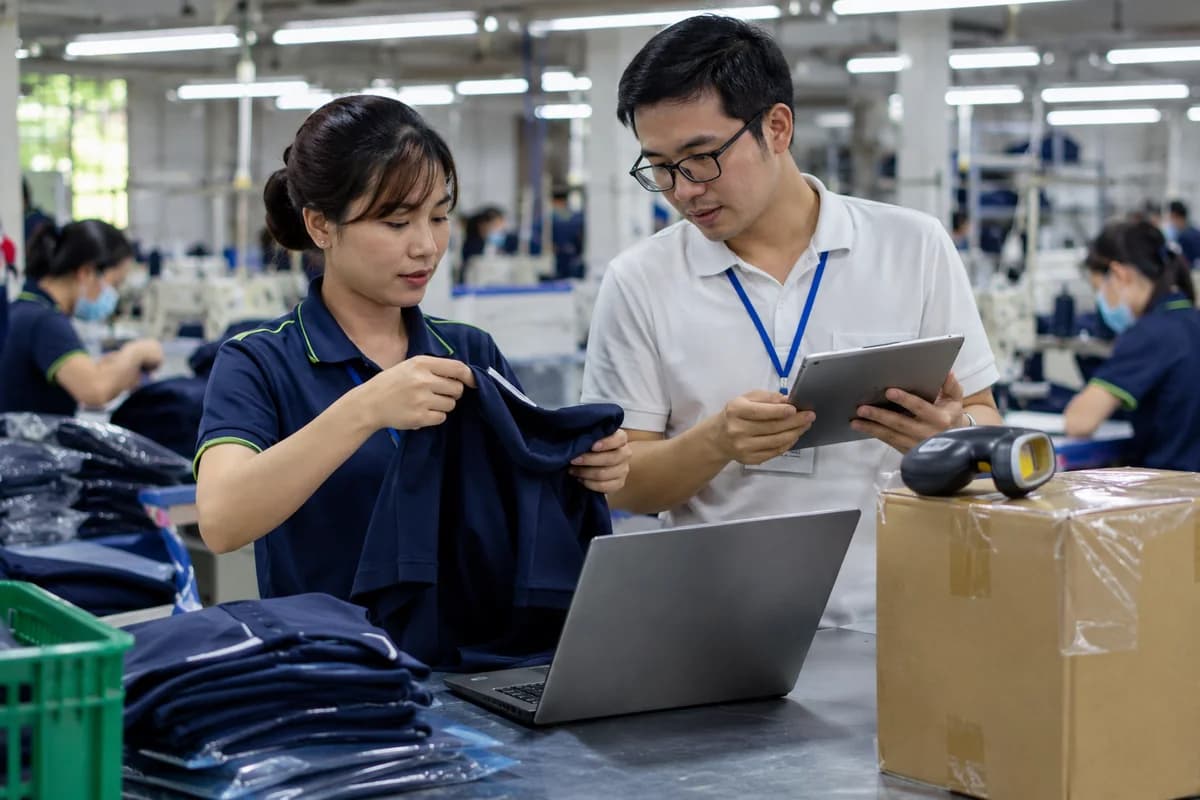
Working with a team in India from Vietnam.
Vietnam is a country of exporters and busy street-level trade. Garment lines in the south, furniture yards near Ho Chi Minh City and electronics plants in the north all ship to foreign buyers. Alongside them sit cafés, restaurants, hotels and thousands of small shops. Orders live in Excel and chat.
Our company sits in Bengaluru, and Vietnam has no office of ours and no staff on the ground. Every meeting is a video call, and we say so before a quote is written, so nobody budgets for a site visit that will not happen. We hold no licence in Vietnam. No customers or partners there can be pointed to.
What changes when your business is in Vietnam.
Hours, money, language and data are decided with you at the start, not discovered later.
What the software has to fit.
The filing cycles, payment habits and licences a small business there already works around.
Trades we write for in Vietnam.
Products that fit them.
Capabilities often asked for.
Cities we write software for in Vietnam.
What we would build for Vietnam businesses.
Usually in this order, starting with whatever the audit ranks first.
Global Compliance and Localisation
Software has to change for each country. Currency tables, VAT and sales tax codes, invoice layouts, translation files, storage regions and consent records are built as configuration that your team can edit without code changes. The legal question stays with your adviser.
Learn moreAPI and System Integration
Connections between existing tools, with record ownership, duplicate handling and reconciliation agreed for each flow.
Learn moreWhatsApp Business API and Chatbots
WhatsApp Business API work covers number onboarding, template approval, opt-in records and a chatbot with human handover, all set up under the client’s own Meta account. It connects WhatsApp to a CRM, billing or booking system, so every message is sent from an existing record and every reply is written back. It suits businesses that already take orders, payments or bookings in chat.
Learn moreBusiness Process Automation
Approvals, reminders and reports triggered by agreed rules, with exceptions assigned to a responsible person.
Learn moreMake the scope specific to your business.
Work through a real example from your operation and agree the handoffs, controls and support the project needs.
VAT and e-invoices
Can you explain the balance from its original documents?
Select a partly settled example in “VAT and e-invoices”. Ask for the invoice, allocated receipts and remaining balance to be shown together before agreeing the opening figures.
Background reading: ERPNext: outstanding invoices
Payments and personal data
Can the same receipt be allocated without counting the money twice?
Take an unallocated amount in “Payments and personal data” and apply it to the intended balance. Review the remaining amount and the original receipt reference together.
Background reading: ERPNext: payment allocation
Questions from businesses in Vietnam.
Do you have an office or staff in Vietnam?
No. Our work is done from Bengaluru, for every client, by video, email and WhatsApp, and someone on your team owns decisions and reviews each stage. No customers or partners in Vietnam are claimed.
Can screens and invoices show Vietnamese and English?
Yes. Labels, print layouts and exports can carry both languages, and we test with real Vietnamese names, because accent marks can break print files. Your team confirms the wording before launch.
Will you handle Vietnamese e-invoice rules?
The fields and layout your accountant specifies get built, but rules change, so confirm the requirement with your accountant before we begin. Connection to an approved invoice provider is scoped during planning.
Can customers be reached on Zalo?
Our messaging work is built on the WhatsApp Business platform, and Zalo has its own access terms, so we check what is possible before a quote. If it is not, email and WhatsApp still work.
Can one order hold dong and dollar amounts?
Yes. Each order keeps its selling currency and shows a dong total for the books, and the rate source is agreed with your accountant, so nothing is fixed in the code.
How do calls fit around Tet and local holidays?
We plan around them. No go-live is set near Tet, and the project plan marks the closed days. Support hours and response times are fixed in the plan before launch.
What should we bring to the first call?
Bring a recent order, its packing list and an invoice. Real papers show us where the work is slow. One shipped container makes a good sample. We also ask what your buyers complain about, since complaints point at the missing record.
Can a café track recipes and stock?
Yes, per recipe. A recipe lists each ingredient and its quantity, and every sale draws stock down by that amount. A weekly count shows the gap between what should be left and what is on the shelf.
Tell us what you run.
Share your requirements and an engineer will read them before getting in touch, at an hour that suits your day.
What happens after you share your requirements
- We review your brief and the systems you already use.
- We clarify the workflow, missing information and the work to consider first.
- The proposed scope sets out the deliverables, responsibilities and dependencies.
- Review the scope and commercial terms before deciding whether to proceed.
Start with your requirements
Describe your current process, the people involved and the change you need. Start with the details you know; we can clarify the rest together.
Share your requirements