Software Solutions for Restaurant and Hospitality Suppliers
Restaurants, hotels and caterers buy in two modes. A new opening needs a full fit-out quoted line by line. Daily trade needs consumables, tableware and linen replaced to a par level. Suppliers who serve both modes need quotes, repeat orders and delivery dates to sit in one system. This page explains the trade and the software behind it.
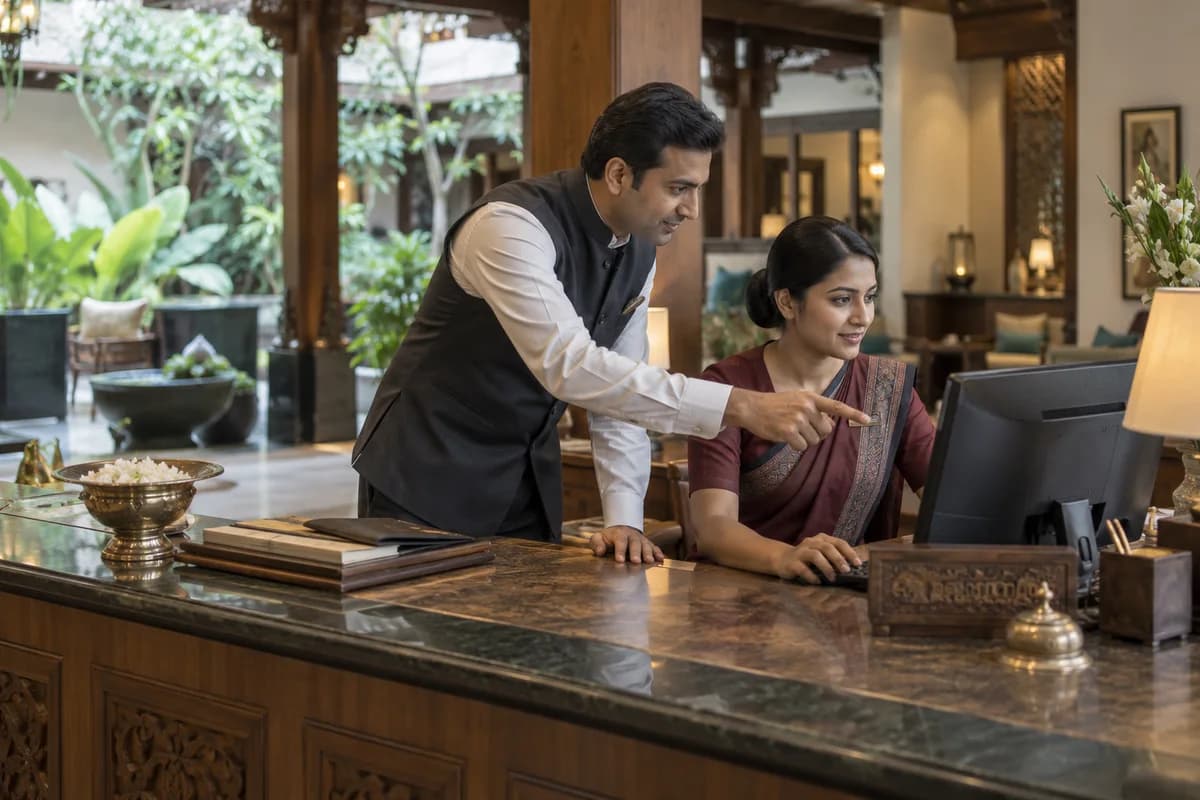
Supply kitchens and hotels from one catalogue, whether they are opening or restocking.
A restaurant that opens in six weeks needs a kitchen, a stock of crockery and every disposable on the menu delivered in the right order. A hotel that is already open needs amenities and linen replaced before the housekeeping shelves run empty.
The supplier sells to both, with very different paperwork. One is a quotation with site details and an installation date. The other is a standing list, reordered by a storekeeper, and billed on account.
Equipment dealers and fabricators
These sellers quote kitchens as a list of machines and fabricated units, then install and service them. Orders are large, infrequent and driven by a site plan.
Consumables and disposables distributors
A distributor supplies packaging, foil, napkins, gloves and cleaning stock to many small venues on repeat. Value per order is modest, and frequency is high.
Hotel and tableware suppliers
Linen, amenities, crockery and glassware go to hotels and restaurants, often with breakage replacement and pattern matching across years.
Online sellers to small venues
A café or cloud kitchen buys a few items by card, wants delivery within days and has no purchasing department.
The workflow for restaurant & hospitality supplies.
- 1
Capturing the venue and its needs
The supplier records who is buying, for which site and whether it is a new opening or a replacement. A fit-out enquiry also records the menu type and the covers.
- 2
Quoting or listing
Equipment is quoted from a list with site requirements. Consumables are picked from a catalogue at the buyer’s own rates.
- 3
Approval on the buyer’s side
A chef proposes, a purchase manager or owner approves, and the order carries that approval, with a purchase order number where the buyer uses one.
- 4
Scheduling delivery or installation
Consumables go on a delivery round. Equipment is booked with a date for delivery, installation and commissioning, which depends on the site being ready.
- 5
Billing and credit
The bill goes to the legal entity, often a company behind several outlets. Credit terms and part payments follow the agreement.
- 6
Replacement and aftercare
Breakage, short supply and warranty calls are logged against the original order, so the next purchase is informed by them.
The challenges, and what they cost.
What is specific to this trade.
These are requirements we would confirm in discovery. They describe what the solution may need to handle. They are not features that already exist.
- Equipment specifications held as fields, with site requirements recorded beside them
- Quotations with options, delivery and installation priced together
- Outlets under one billing entity, with approval steps
- Par levels and standing orders per outlet
- Sets, patterns and continuity for tableware and linen
What we would build for restaurant & hospitality supplies.
Chosen from the commerce capabilities this business needs, not a list of everything.
Who works in the system, and what each can do.
What it would connect to.
An integration is confirmed only after its API, access and scope are checked. A connection that updates on a schedule is described as scheduled, not real-time.
- GullySystem’s distributor ordering software, which supplies customer logins, price lists, credit holds and dispatch
- Card and UPI payment for small venues, through the gateway you choose
- Transport and courier services, after a check of what each exposes to partners
- Accounting software, through an import file or a connection agreed later
- WhatsApp order updates, if you run a Business account
How the work runs, and what we need from you.
What you provide
- Your catalogue, with specifications and pack sizes as you hold them
- A sample of recent quotes and repeat orders
- Your outlets and billing entities for the largest customers
Separate the two modes
We start by splitting what is quoted from what is reordered, since each follows a different path through the system.
Start with repeat customers
Standing lists and par levels are loaded for a handful of customers, so the pattern is proved on real orders.
Add quotation next
The quote builder follows, using equipment you have recently sold as test cases.
What you receive.
- A catalogue structure with specification fields
- Quotation, repeat order and par-level flows
- Outlet and approval structures for your larger customers
- A claims and replacement process
- Written coaching for sales staff and the order desk
How progress is judged.
Measures are agreed against your own baseline. We do not promise a result in advance.
- Repeat orders placed by message instead of the system
- Quotations that were never followed up
- Breakage claims with no link to the original order
Selling at home and abroad.
The kinds of restaurant & hospitality supplies business we cover.
Commercial Kitchen Equipment
Quote the kitchen, check the site, then book delivery and installation.
Learn moreCatering Supplies
Size each order to the guest count and deliver it for the event date.
Learn moreHotel Supplies
Reorder amenities and linen to each property’s par level.
Learn moreRestaurant Tableware
Keep every pattern in stock for the day a plate breaks.
Learn moreHospitality Supplies E-commerce & Ordering Software
Existing product, extended
The wholesale ordering product from GullySystem already runs customer logins, price lists, credit holds, dispatch and returns. Quotations, outlet structures and par-level lists are layered on it and scoped for each supplier.
Read about the softwareExisting GullySystem products that apply
Related services
Selling in a shop as well?
Questions about restaurant & hospitality supplies e-commerce.
Can it replace our billing software?
Possibly, in part. If you adopt the wholesale ordering product, orders, dispatch and statements run in it. With other billing software, we first find out what that software can share.
Does it plan the kitchen layout?
No. A layout is drawn by a designer or by you. The system holds the equipment list, the site requirements and the quote that results.
Can a hotel group order for all its properties?
Yes, where its properties are set up as outlets under one account. Approvals and billing can follow the group’s structure, and the rules are agreed with you.
Can small cafés buy without an account?
Yes, through a simple store with card payment. It runs beside the account customers and keeps its own prices.
Talk through your commerce requirement.
Describe what you sell, where you sell it and what is slowing you down. An engineer will reply within one business day.
- No obligation
- A reply within one business day
- Your details stay private