Business software for Bangladesh factories, exporters and lenders that work in Bangla and English.
Bangladesh runs on garments, textiles, mobile payments and a thick web of small traders. Owners juggle VAT, buyer audits and export paperwork all at once. GullySystem, in Bengaluru, supports companies there remotely, with software for orders, production, shipments, loans and invoices.
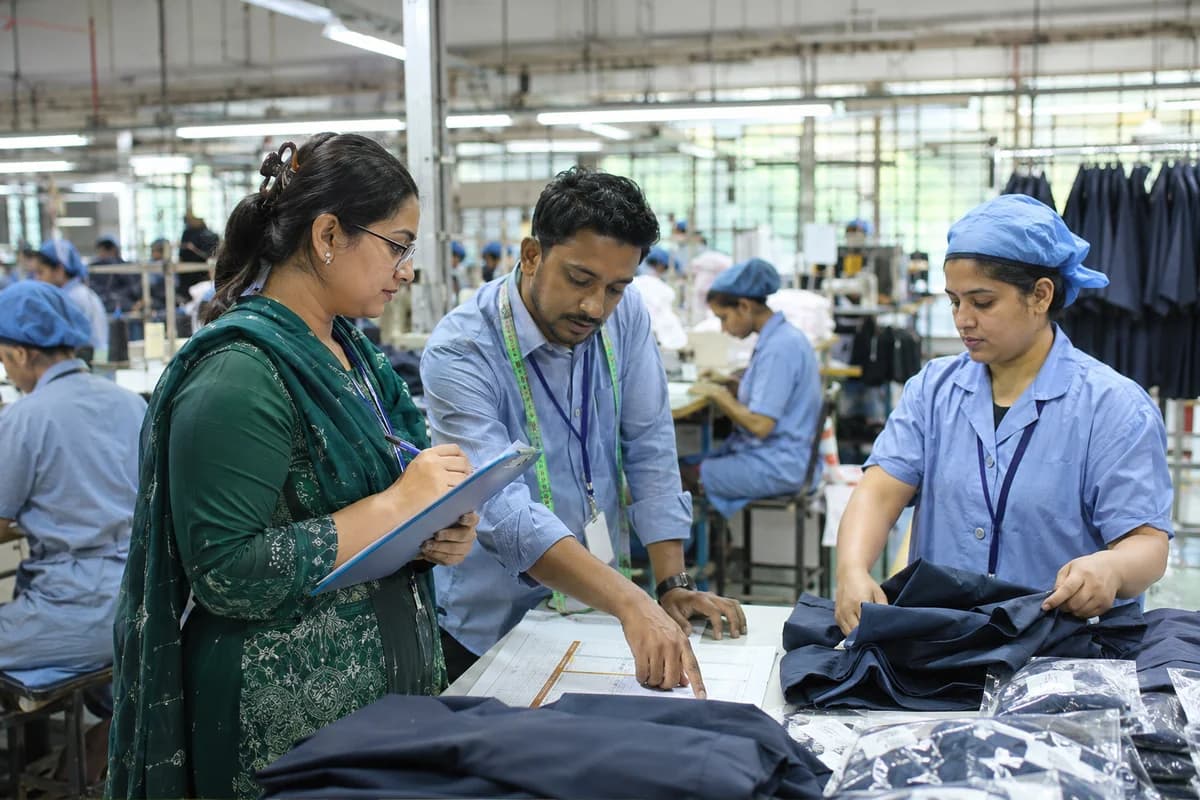
Working with a team in India from Bangladesh.
Much of the economy sits around Dhaka, Chattogram and Gazipur. Garment units ship to overseas buyers, while smaller firms sell fish, packaged food, medicines and parcels at home and still keep orders in notebooks and spreadsheets. Buyers, banks and auditors now ask for cleaner records.
Our people sit in Bengaluru. Bangladesh has no office of ours. Sessions happen on video, by email and on WhatsApp. We have no customers, partners or projects in the country to point to, and we hold no local licence. What we offer is software built around your rules and checked against your own papers.
What changes when your business is in Bangladesh.
Hours, money, language and data are decided with you at the start, not discovered later.
What the software has to fit.
The filing cycles, payment habits and licences a small business there already works around.
Trades we write for in Bangladesh.
Products that fit them.
Capabilities often asked for.
Cities we write software for in Bangladesh.
What we would build for Bangladesh businesses.
Usually in this order, starting with whatever the audit ranks first.
ERP, CRM and Business Software Implementation
One record of stock, orders, customers and accounts, set up so your team opens it every day.
Learn moreWhatsApp Business API and Chatbots
WhatsApp Business API work covers number onboarding, template approval, opt-in records and a chatbot with human handover, all set up under the client’s own Meta account. It connects WhatsApp to a CRM, billing or booking system, so every message is sent from an existing record and every reply is written back. It suits businesses that already take orders, payments or bookings in chat.
Learn moreAPI and System Integration
Connections between existing tools, with record ownership, duplicate handling and reconciliation agreed for each flow.
Learn moreData Migration and Moving Off Spreadsheets
Data migration and spreadsheet replacement covers auditing existing files, cleaning and deduplicating records, loading them into a new system and reconciling the loaded result against known totals. Both systems then run side by side before cutover. Originals stay untouched.
Learn moreMake the scope specific to your business.
Work through a real example from your operation and agree the handoffs, controls and support the project needs.
Currency, tax and invoices
Can you explain the balance from its original documents?
Select a partly settled example in “Currency, tax and invoices”. Ask for the invoice, allocated receipts and remaining balance to be shown together before agreeing the opening figures.
Background reading: ERPNext: outstanding invoices
Buyer orders and the factory floor
Does each sellable combination have the right stock and price?
Choose an example from “Buyer orders and the factory floor” with more than one option. Check the selected combination, item identifier, available quantity and price through to the order, including a combination that should not be sold.
Background reading: Shopify: product variants
Questions from businesses in Bangladesh.
Can screens and invoices be in Bangla?
Yes. Screens, printed invoices and customer messages can run in Bangla, English or both. We test the printed layout on your own documents before anything goes to a customer. Our project team works in English, so you supply the Bangla wording or sign off on it before any customer sees a printed page or a message.
Does the time difference cause problems?
Hardly at all. Dhaka is thirty minutes ahead of us, so calls fit almost any hour of your day, and your Friday holiday and Eid breaks are built into the plan.
Can one system hold taka and dollar invoices?
It can. Currency and tax settings are held per business, and the layout follows what your accountant wants to see. Exchange-rate handling is agreed with them before launch, because rates are never hard-coded into the software.
You have no office in Dhaka. Is that a problem?
Everything runs by video and shared screen, so no visit is needed, and each project has its own signed scope that is written out before work begins. If a handover would benefit from a visit, we agree that separately.
Do you have clients in Bangladesh already?
No, and we do not claim any. Our base is Bengaluru, and the work is remote. We show you screens built on your own orders and papers, and you judge the fit from those.
What stays with us if the engagement ends?
Code and data both. Records come out as plain files for whatever you use next. The same team that built it answers support.
Can a parcel seller track cash on delivery?
Yes, parcel by parcel. Each parcel records its courier, its price and whether the buyer pays on delivery. A courier settlement is matched against those parcels.
Tell us what you run.
Share your requirements and an engineer will read them before getting in touch, at an hour that suits your day.
What happens after you share your requirements
- We review your brief and the systems you already use.
- We clarify the workflow, missing information and the work to consider first.
- The proposed scope sets out the deliverables, responsibilities and dependencies.
- Review the scope and commercial terms before deciding whether to proceed.
Start with your requirements
Describe your current process, the people involved and the change you need. Start with the details you know; we can clarify the rest together.
Share your requirements