Lille · CountriesLille is a northern crossroads for distribution, mail order, textiles and a large student population.
Lille lies close to Belgium and sits on rail lines to Paris, London and Brussels. Warehouses and parcel firms serve customers across northern Europe. Roubaix and Tourcoing, next door, built their wealth on textiles and now host fashion and online retail. Universities and a busy trade calendar add more. GullySystem, a Bengaluru company, writes warehouse, order and clothing-trade software.
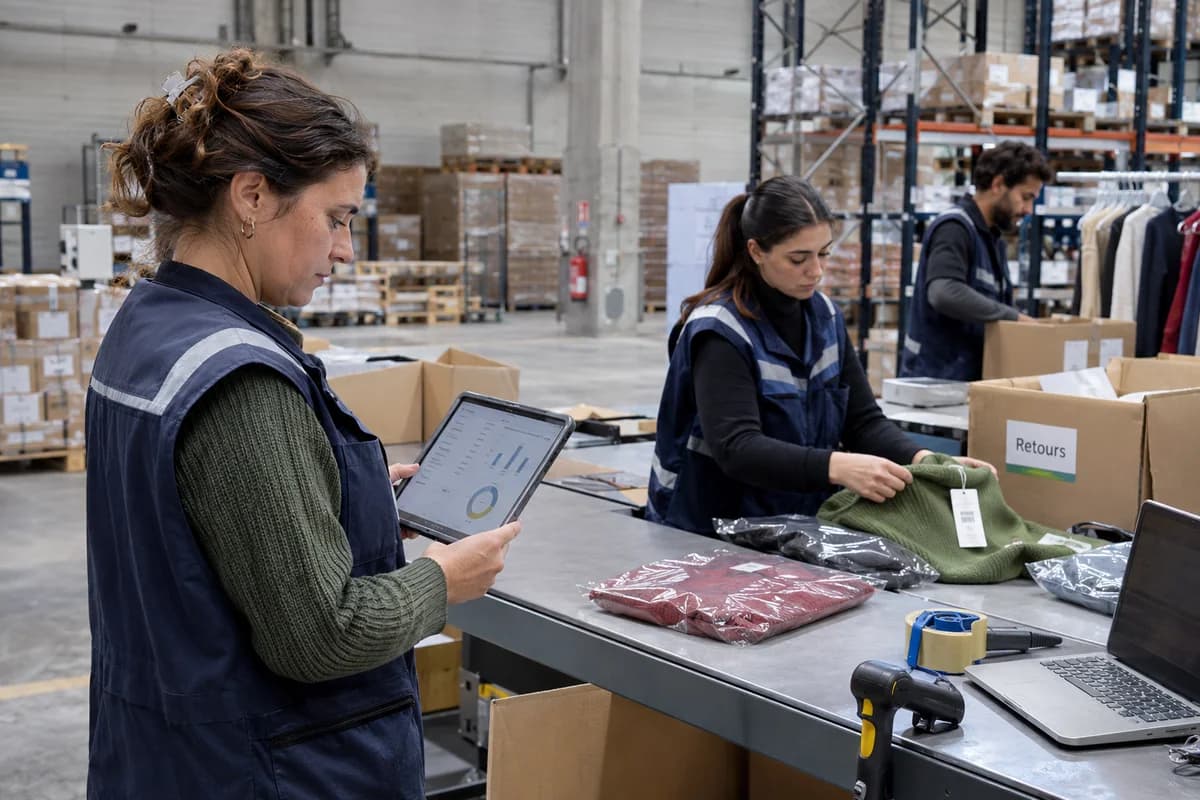
Location is the story in Lille. Trucks reach Belgium, the Netherlands and Paris within hours, so distribution centres and parcel firms cluster around the city. Goods pass quickly. Orders come in the morning and have to leave by evening.
Textiles built the neighbouring towns, and the trade lives on in clothing brands, wholesalers and online sellers, with old mills now holding offices and design studios. Each September the city fills for its large street flea market, which shapes the local retail calendar.
The districts, business parks and markets that matter in Lille.
How Lille businesses pick and use software.
Online clothing sellers that manage returns and stock across sizes, and ship to customers in several countries.
Third-party warehouses that store goods for several clients and must charge each one for space, handling and dispatch.
Where Lille businesses lose time and money.
Returns pile up unrecorded
Parcels come back and sit on a bench. Logging each return against its order puts the item back on sale quickly and settles the refund without a long chain of messages.
Storage charges are calculated at month end
Warehouse operators count pallets and picks at month end. Capturing every movement during the month lets the invoice come straight from the record, with no argument about the totals.
Sizes and colours multiply the stock list
A single style may have dozens of variants in size and colour. A product record built around variants stops the wrong count from reaching the website and the customer.
What we would build for Lille businesses.
Usually in this order, starting with whatever the audit ranks first.
E-Commerce and Digital Commerce
An online store or B2B order portal wired to your stock, billing and dispatch.
Learn moreAPI and System Integration
Connections between existing tools, with record ownership, duplicate handling and reconciliation agreed for each flow.
Learn moreERP, CRM and Business Software Implementation
One record of stock, orders, customers and accounts, set up so your team opens it every day.
Learn moreBusiness Process Automation
Approvals, reminders and reports triggered by agreed rules, with exceptions assigned to a responsible person.
Learn moreReady products that fit Lille businesses.
Each one is adapted to how your business works before it goes live, and anything your trade needs that it lacks is added then. You are not paying to build the basics again.
E-commerce Fulfilment Centre Management Software
Seller stock by bin, order intake, pick and pack, courier manifests, returns grading, cash on delivery remittances and per-seller billing for fulfilment centres.
Learn moreApparel Manufacturer Management Software
Purchase orders by colour and size, fabric and trims, cutting lays, bundle tickets, sewing lines, outside processing, piece-rate pay and packing for garment makers.
Learn moreWarehousing Company Management Software
Client stock by location, inward receipts, putaway, pick lists, dispatch, cycle counts and storage and handling bills for warehousing and 3PL companies.
Learn moreHow the work runs from Bengaluru for Lille.
- 1
The audit, by call
A screen-share and a look at the sheets, accounting reports and WhatsApp groups your team uses. No travel needed.
- 2
A written proposal
Scope, what we build first and the cost, agreed in writing before anything starts.
- 3
Build in short rounds
Working screens shared every few weeks. Your team tests them from your own office.
- 4
Go-live, in person when it helps
For data migration and training we can come to Lille. Travel is agreed in advance.
- 5
Support online
Fixes, changes and hosting handled remotely by the same team that built it.
The work we have published.
We don’t claim Lille clients we don’t have. These are systems our team built; the way we work is the same wherever you are.
PetSeva: matching owners to the right vet, at any hour
A two-sided veterinary platform where vets are searchable by specialisation and bookable outside clinic hours. It now carries more than 2,000 veterinary doctors.
Read the case study Paying guest accommodationSAM Atithi Pavathi: bed-level occupancy as the source of truth
PG management software where allocation, rates and invoices are derived from bed-level occupancy and not maintained in parallel spreadsheets.
Read the case study School transport servicesSAM Tours: school transport on a single ledger
Registration, fee collection, routing and finance write to the same records, closing the gap between journeys run and fees collected.
Read the case study Microfinance and Self Help GroupsVikasa RDO: making SHG loan recovery auditable
Loan proposals, recoveries and commissions sit on one record, with a person attached to every state change, so a business handling a bank’s money can show where each rupee went.
Read the case studyMake the scope specific to your business.
Work through a real example from your operation and agree the handoffs, controls and support the project needs.
Sizes and colours multiply the stock list
Does each sellable combination have the right stock and price?
Choose an example from “Sizes and colours multiply the stock list” with more than one option. Check the selected combination, item identifier, available quantity and price through to the order, including a combination that should not be sold.
Background reading: Shopify: product variants
Returns pile up unrecorded
What returns to stock, and what returns to the customer’s account?
Walk through “Returns pile up unrecorded” using a partly paid sale. Agree the physical return and the financial correction separately, with a reference to the original transaction.
Background reading: ERPNext: returns and credits
Questions Lille owners ask before they call.
Can the system connect to our online shop and our carrier labels?
Connections to common shop platforms and carriers go through their interfaces, where those exist. We check each one before agreeing scope.
Do you work on peak-season loads?
We plan around your busiest weeks. Changes are tested before the peak, and none are released while orders are at their highest.
What happens after I share my requirements?
We review your brief and clarify the work with you. We then look at the software, spreadsheets and WhatsApp groups your business runs on today and write down what works, what slows your team down and what is missing. A demo login, a screen-share or a few screenshots are enough. You get a short written summary ordered by priority, with no obligation to hire us afterwards.
How much will the software cost?
We don’t publish a price, because it depends on what the system has to do. That first review settles the scope, and the cost goes into a written proposal before any work starts.
Industries we build for in Lille.
Elsewhere in France.
Tell us what your Lille business runs on today.
Send a short note on the spreadsheets, software or WhatsApp groups your team depends on. We reply the same working day.
What happens after you share your requirements
- We review your brief and the systems you already use.
- We clarify the workflow, missing information and the work to consider first.
- The proposed scope sets out the deliverables, responsibilities and dependencies.
- Review the scope and commercial terms before deciding whether to proceed.
Start with your requirements
Describe your current process, the people involved and the change you need. Start with the details you know; we can clarify the rest together.
Share your requirements