Latvian timber, food, port and logistics firms get orders, stock and invoices in order from Bengaluru.
Latvia’s forests feed sawmills and wooden house builders, while the ports of Riga, Ventspils and Liepāja handle transit cargo, and food makers, small hotels and software teams add to the mix. Invoices show PVN, and the euro is the currency, and gullySystem, a Bengaluru firm, supports such trades from India. It has no office in Latvia.
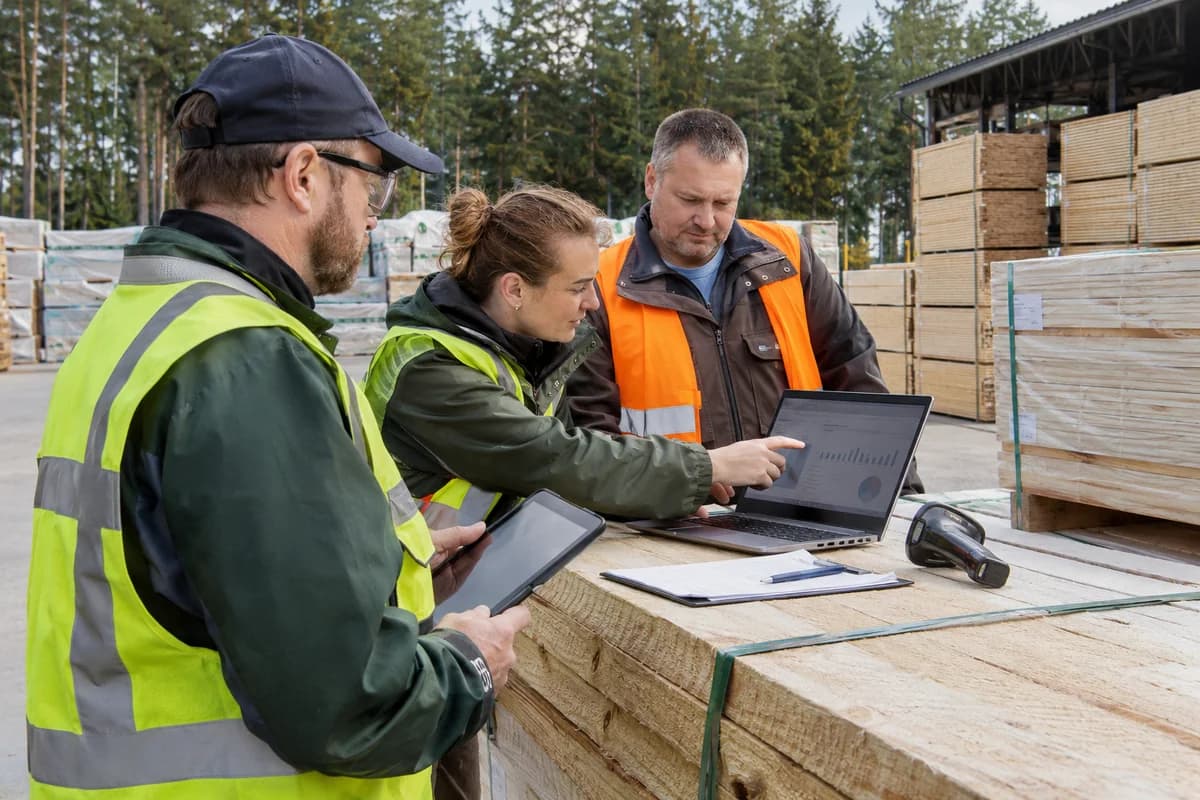
Working with a team in India from Latvia.
Woodland covers much of the country, and wood runs through the economy. A sawmill in Vidzeme sells boards by the cubic metre, a joinery turns pine into doors, and a builder ships panel houses to Scandinavia. Cargo arrives at the Riga port by rail from the east and leaves by sea, and customers speak Latvian, Russian, English and German, so a single week can bring all four.
We work from Nagarbhavi, Bengaluru. Nothing of ours stands in Latvia, and we claim no customer, partner or licence there. Expect screen sharing, clear notes after each call and software that follows your own routine, not a template from another trade.
What changes when your business is in Latvia.
Hours, money, language and data are decided with you at the start, not discovered later.
What the software has to fit.
The filing cycles, payment habits and licences a small business there already works around.
Trades we write for in Latvia.
Products that fit them.
Capabilities often asked for.
Cities we write software for in Latvia.
What we would build for Latvia businesses.
Usually in this order, starting with whatever the audit ranks first.
ERP, CRM and Business Software Implementation
One record of stock, orders, customers and accounts, set up so your team opens it every day.
Learn moreAPI and System Integration
Connections between existing tools, with record ownership, duplicate handling and reconciliation agreed for each flow.
Learn moreBusiness Process Automation
Approvals, reminders and reports triggered by agreed rules, with exceptions assigned to a responsible person.
Learn moreGlobal Compliance and Localisation
Software has to change for each country. Currency tables, VAT and sales tax codes, invoice layouts, translation files, storage regions and consent records are built as configuration that your team can edit without code changes. The legal question stays with your adviser.
Learn moreMake the scope specific to your business.
Work through a real example from your operation and agree the handoffs, controls and support the project needs.
PVN and invoicing
Can you explain the balance from its original documents?
Select a partly settled example in “PVN and invoicing”. Ask for the invoice, allocated receipts and remaining balance to be shown together before agreeing the opening figures.
Background reading: ERPNext: outstanding invoices
Questions from businesses in Latvia.
Does GullySystem have an office or staff in Latvia?
No. Everything runs from Bengaluru, over screen sharing and email. Should a task call for someone at your site, you hear about it before you sign.
Can stock be tracked by cubic metre and grade?
Yes. Units, grades and stack locations can be set to fit your trade. We map your current sheets first, then run a handful of live orders through the new flow.
Can documents be produced in Latvian and Russian?
Yes, in either language or both, plus English. A native reader at your side should approve every template, since endings change with case.
How do you handle personal data under the GDPR?
Servers can sit in the Union, and access follows roles. How long records are kept, and what the consent text says, is for your adviser to decide. We apply both.
What does the time difference mean for support in Latvia?
Latvia is closer to our clock than much of Europe, so live sessions are easy to arrange. Breakdown handling follows a route settled before launch.
Can one system cover a sawmill and its pellet line?
Boards, offcuts and pellets are separate items with their own units, and an offcut can link back to the log batch it came from. We would test the flow on a real production run before widening it. Start with one line.
What happens to our spreadsheets at the start?
Sheets stay open at first. Your staff enter live records in the new screens while a short check compares both sets of totals, and the old sheets are archived, never deleted, once the figures agree. Auditors can still read archived sheets.
Tell us what you run.
Share your requirements and an engineer will read them before getting in touch, at an hour that suits your day.
What happens after you share your requirements
- We review your brief and the systems you already use.
- We clarify the workflow, missing information and the work to consider first.
- The proposed scope sets out the deliverables, responsibilities and dependencies.
- Review the scope and commercial terms before deciding whether to proceed.
Start with your requirements
Describe your current process, the people involved and the change you need. Start with the details you know; we can clarify the rest together.
Share your requirements