St. Gallen · CountriesSt. Gallen’s embroidery makers, textile firms, business school and abbey library work in German.
St. Gallen lies in the north east of Switzerland, near Lake Constance. Its abbey library is a world heritage site, and its business university draws students from abroad. For a century the city was known for fine embroidery, and textile firms still make lace and technical fabrics. Swiss German is spoken, and standard German is written, so every printed page appears in the second.
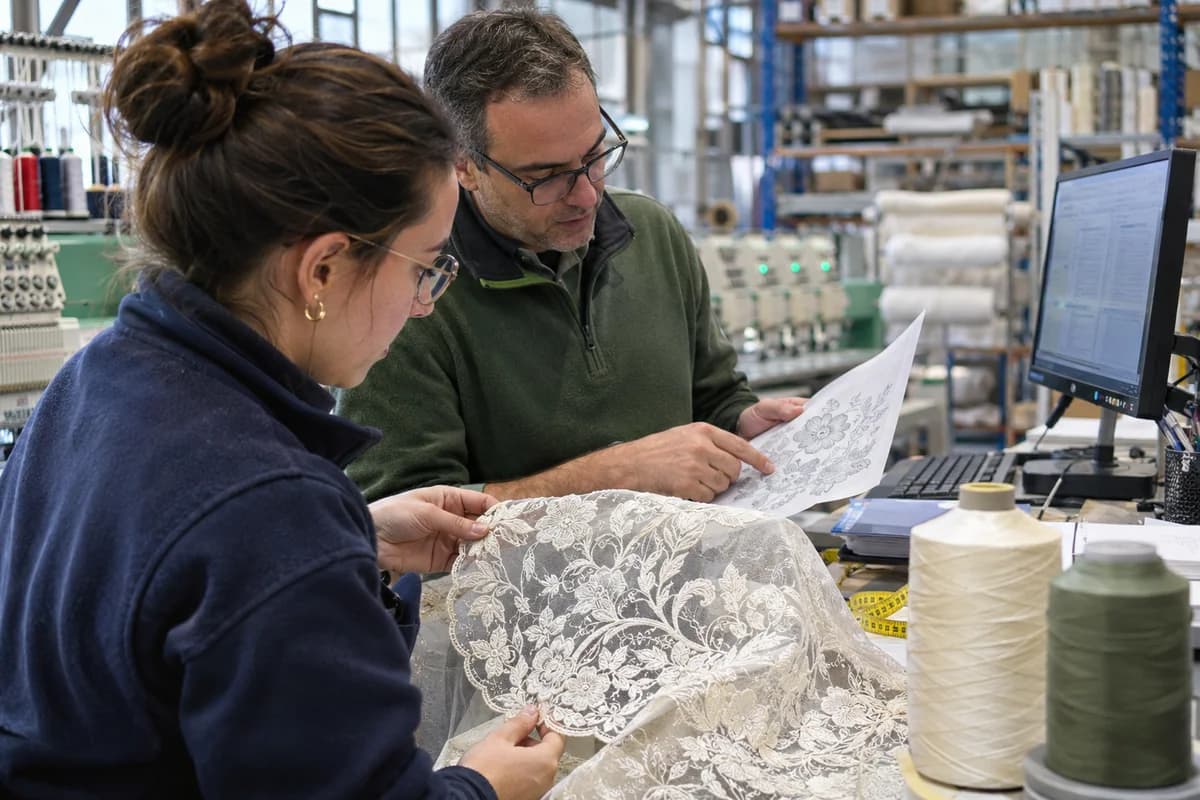
Embroidery made St. Gallen rich. A hundred years ago the city sent lace and stitched cloth to fashion houses across the world, and a textile museum keeps that history. A smaller group of firms still weave and embroider, some for medical and technical use.
The other hallmark is learning. A university focused on business trains managers, and a library founded by monks holds manuscripts over a thousand years old. Hills surround the town, and mist settles in the valley.
The districts, business parks and markets that matter in St. Gallen.
How St. Gallen businesses pick and use software.
Owners of textile and embroidery firms who produce short runs to a buyer’s own design and cannot afford a wasted metre of cloth.
Managers of machine builders who supply customers in neighbouring German speaking countries, with long drawings and a list of options on each order.
Where St. Gallen businesses lose time and money.
Embroidery jobs vary with every design
Each order has stitches, thread colours and a pattern file, and the details live in one person’s head. A job card fixes that.
Technical fabrics need batch records
Medical or industrial buyers ask for the lot, the process and the test result. Searching files takes time. Batch records made at the loom are ready when a buyer calls.
Executive courses mean bookings for small groups
A business school runs short programmes with different fees, dates and rooms, and staff juggle lists. One course record saves hours.
What we would build for St. Gallen businesses.
Usually in this order, starting with whatever the audit ranks first.
ERP, CRM and Business Software Implementation
One record of stock, orders, customers and accounts, set up so your team opens it every day.
Learn moreBusiness Process Automation
Approvals, reminders and reports triggered by agreed rules, with exceptions assigned to a responsible person.
Learn moreIoT and Edge Computing
Machine and sensor readings connected to office records, with buffering limits and recovery after a lost connection defined.
Learn moreData Engineering and Business Intelligence
Dashboards that answer the owner’s Monday questions without anyone building an Excel sheet first.
Learn moreReady products that fit St. Gallen businesses.
Each one is adapted to how your business works before it goes live, and anything your trade needs that it lacks is added then. You are not paying to build the basics again.
Technical Textile Manufacturer Management Software
Customer specifications, roll records, line settings, lab readings, certificates, slitting offcuts and roll packing for technical textile makers.
Learn moreTextile Processor Management Software
Grey lots, process routes, dye recipes, machine batches, shrinkage and loss, rework, chemicals and process billing for textile processing houses.
Learn moreHome Textile Manufacturer Management Software
Buyer programmes, lab dip approvals, fabric lots, sewing and towel lines, set completion, retailer labels and carton packing for home textile makers.
Learn moreHow the work runs from Bengaluru for St. Gallen.
- 1
The audit, by call
A screen-share and a look at the sheets, accounting reports and WhatsApp groups your team uses. No travel needed.
- 2
A written proposal
Scope, what we build first and the cost, agreed in writing before anything starts.
- 3
Build in short rounds
Working screens shared every few weeks. Your team tests them from your own office.
- 4
Go-live, in person when it helps
For data migration and training we can come to St. Gallen. Travel is agreed in advance.
- 5
Support online
Fixes, changes and hosting handled remotely by the same team that built it.
The work we have published.
We don’t claim St. Gallen clients we don’t have. These are systems our team built; the way we work is the same wherever you are.
PetSeva: matching owners to the right vet, at any hour
A two-sided veterinary platform where vets are searchable by specialisation and bookable outside clinic hours. It now carries more than 2,000 veterinary doctors.
Read the case study Paying guest accommodationSAM Atithi Pavathi: bed-level occupancy as the source of truth
PG management software where allocation, rates and invoices are derived from bed-level occupancy and not maintained in parallel spreadsheets.
Read the case study School transport servicesSAM Tours: school transport on a single ledger
Registration, fee collection, routing and finance write to the same records, closing the gap between journeys run and fees collected.
Read the case study Microfinance and Self Help GroupsVikasa RDO: making SHG loan recovery auditable
Loan proposals, recoveries and commissions sit on one record, with a person attached to every state change, so a business handling a bank’s money can show where each rupee went.
Read the case studyMake the scope specific to your business.
Work through a real example from your operation and agree the handoffs, controls and support the project needs.
Executive courses mean bookings for small groups
What becomes available when a booking is moved or cancelled?
Use “Executive courses mean bookings for small groups” to move a booking, then cancel a second example. Check the released slot, the person or resource still assigned, and any amount left to settle before accepting the revised schedule.
Background reading: ERPNext: appointment records
Questions St. Gallen owners ask before they call.
Can design files and thread lists be attached to each job?
Yes. A job card can hold the design file, thread colours and notes, and it prints for the operator. Production decides the fields.
Can batch records be exported?
Yes. One pack per delivery. Customers see what you choose.
What happens after I share my requirements?
We review your brief and clarify the work with you. We then look at the software, spreadsheets and WhatsApp groups your business runs on today and write down what works, what slows your team down and what is missing. A demo login, a screen-share or a few screenshots are enough. You get a short written summary ordered by priority, with no obligation to hire us afterwards.
How much will the software cost?
We don’t publish a price, because it depends on what the system has to do. That first review settles the scope, and the cost goes into a written proposal before any work starts.
Industries we build for in St. Gallen.
Tell us what your St. Gallen business runs on today.
Send a short note on the spreadsheets, software or WhatsApp groups your team depends on. We reply the same working day.
What happens after you share your requirements
- We review your brief and the systems you already use.
- We clarify the workflow, missing information and the work to consider first.
- The proposed scope sets out the deliverables, responsibilities and dependencies.
- Review the scope and commercial terms before deciding whether to proceed.
Start with your requirements
Describe your current process, the people involved and the change you need. Start with the details you know; we can clarify the rest together.
Share your requirements