Beef, dairy, wood pulp, rice and software firms in Uruguay, supported from Bengaluru in Spanish.
Uruguay is cattle country. Ranches ship beef across the world, dairies export milk powder, and mills along the rivers turn eucalyptus into pulp. Rice, soy and Tannat wine add to the list. Montevideo holds the port and a cluster of software exporters. Ranch, dairy and software-firm systems come from GullySystem in Bengaluru, which supports them remotely.
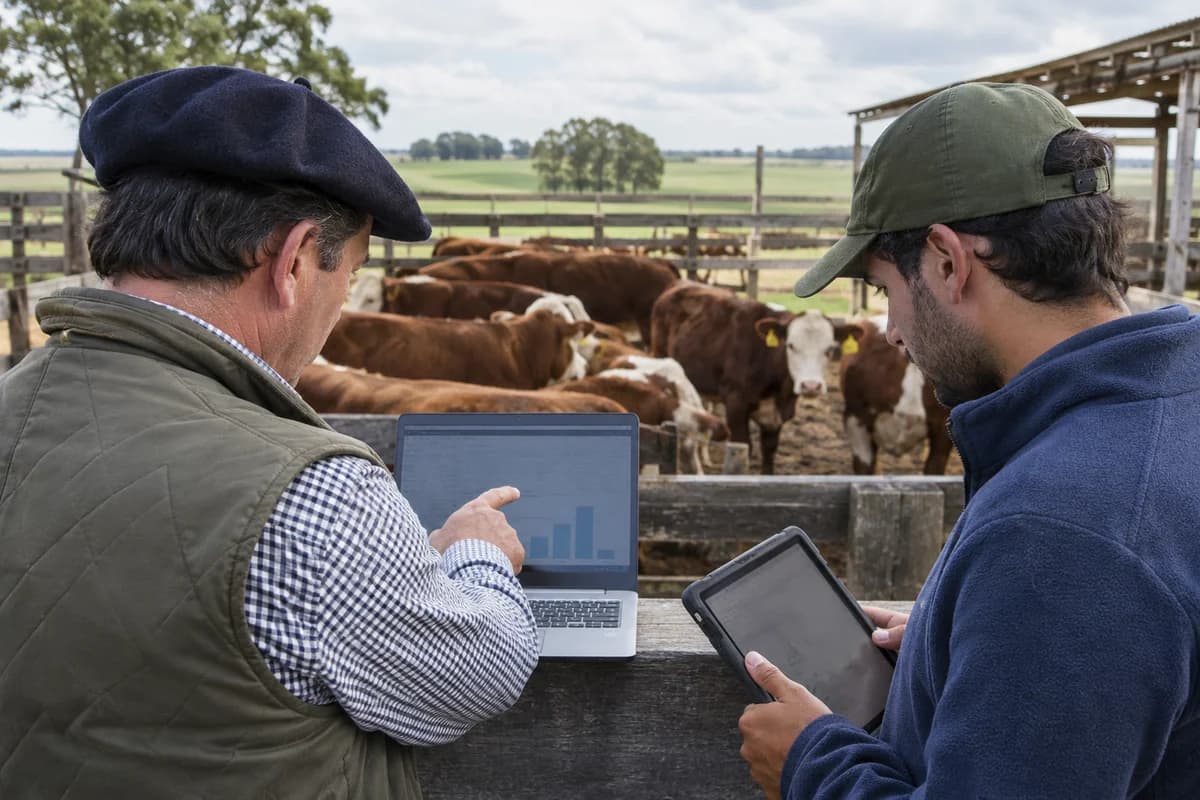
Working with a team in India from Uruguay.
Uruguay is small. It sells most of what it grows to buyers far away, and beef needs animal records that follow a steer from birth to plant, because importers ask for them. Dairies track each cow’s milk and each tanker’s load. Foresters plan planting and cutting years ahead. Land and crop records must outlast any one manager.
Our people are in Nagarbhavi, Bengaluru, and none live in Uruguay. Montevideo, Colonia, Salto, Paysandú and the ranch country of the interior are reached remotely, with scheduled calls and written updates that either side can read when it suits. Nothing of ours, whether customer, partner or licence, exists there. Every proposal repeats that. A cattle ranch, a dairy and a software firm in Montevideo keep separate books, so routines are built singly and checked on sample data. Each estancia keeps its own herd.
What changes when your business is in Uruguay.
Hours, money, language and data are decided with you at the start, not discovered later.
What the software has to fit.
The filing cycles, payment habits and licences a small business there already works around.
Trades we write for in Uruguay.
Products that fit them.
Capabilities often asked for.
Cities we write software for in Uruguay.
What we would build for Uruguay businesses.
Usually in this order, starting with whatever the audit ranks first.
WhatsApp Business API and Chatbots
WhatsApp Business API work covers number onboarding, template approval, opt-in records and a chatbot with human handover, all set up under the client’s own Meta account. It connects WhatsApp to a CRM, billing or booking system, so every message is sent from an existing record and every reply is written back. It suits businesses that already take orders, payments or bookings in chat.
Learn moreAPI and System Integration
Connections between existing tools, with record ownership, duplicate handling and reconciliation agreed for each flow.
Learn moreGlobal Compliance and Localisation
Software has to change for each country. Currency tables, VAT and sales tax codes, invoice layouts, translation files, storage regions and consent records are built as configuration that your team can edit without code changes. The legal question stays with your adviser.
Learn moreData Migration and Moving Off Spreadsheets
Data migration and spreadsheet replacement covers auditing existing files, cleaning and deduplicating records, loading them into a new system and reconciling the loaded result against known totals. Both systems then run side by side before cutover. Originals stay untouched.
Learn moreWeb and Mobile Application Development
Web and mobile apps for customers, field staff and dealers, built to work on ordinary phones.
Learn moreMake the scope specific to your business.
Work through a real example from your operation and agree the handoffs, controls and support the project needs.
IVA and electronic invoices
Can you explain the balance from its original documents?
Select a partly settled example in “IVA and electronic invoices”. Ask for the invoice, allocated receipts and remaining balance to be shown together before agreeing the opening figures.
Background reading: ERPNext: outstanding invoices
Questions from businesses in Uruguay.
Do you have an office in Uruguay?
No. We sit in Bengaluru. Should a project need a visit, the proposal names who would come.
Can the screens be in Uruguayan Spanish?
Yes. Screens and sheets can use Spanish, English or both. Someone on your team signs off the final text.
Can records follow each animal from birth to sale?
Yes. Each animal carries its tag, moves, treatments and weights. One screen answers an importer asking about one animal.
Will the software issue the e-factura the DGI asks for?
We set up invoice fields and can connect to a provider your accountant picks. Your accountant decides which documents each firm must issue.
Can a software firm bill foreign clients from project hours?
Yes. Hours logged against each project produce invoices in the client’s currency, with the rate stored on every document.
Can a dairy pay farmers by milk quality?
Yes, by weight and sample. Each delivery stores a weight and the sample results, and a price rule turns both into an amount owed. Your dairy sets the rule.
What should we bring to the first call?
Bring your current sheets. We ask which report you dread every month and build towards that one first, because the pain shows where the work is slow.
Tell us what you run.
Share your requirements and an engineer will read them before getting in touch, at an hour that suits your day.
What happens after you share your requirements
- We review your brief and the systems you already use.
- We clarify the workflow, missing information and the work to consider first.
- The proposed scope sets out the deliverables, responsibilities and dependencies.
- Review the scope and commercial terms before deciding whether to proceed.
Start with your requirements
Describe your current process, the people involved and the change you need. Start with the details you know; we can clarify the rest together.
Share your requirements