Textile, farm-trade and tourism software for Uzbek mills, bazaars, guesthouses and exporters, written in Bengaluru.
Uzbekistan is a double-landlocked country of cotton fields, silk towns, dried-fruit bazaars and gas wells along the old Silk Road. Mills, farms and tour firms trade in so’m, dollars and sometimes roubles. Papers run in Uzbek and Russian, and invoices carry two currencies. Our Bengaluru team builds stock, production and booking tools for the mills, farms and guesthouses that handle all this by hand.
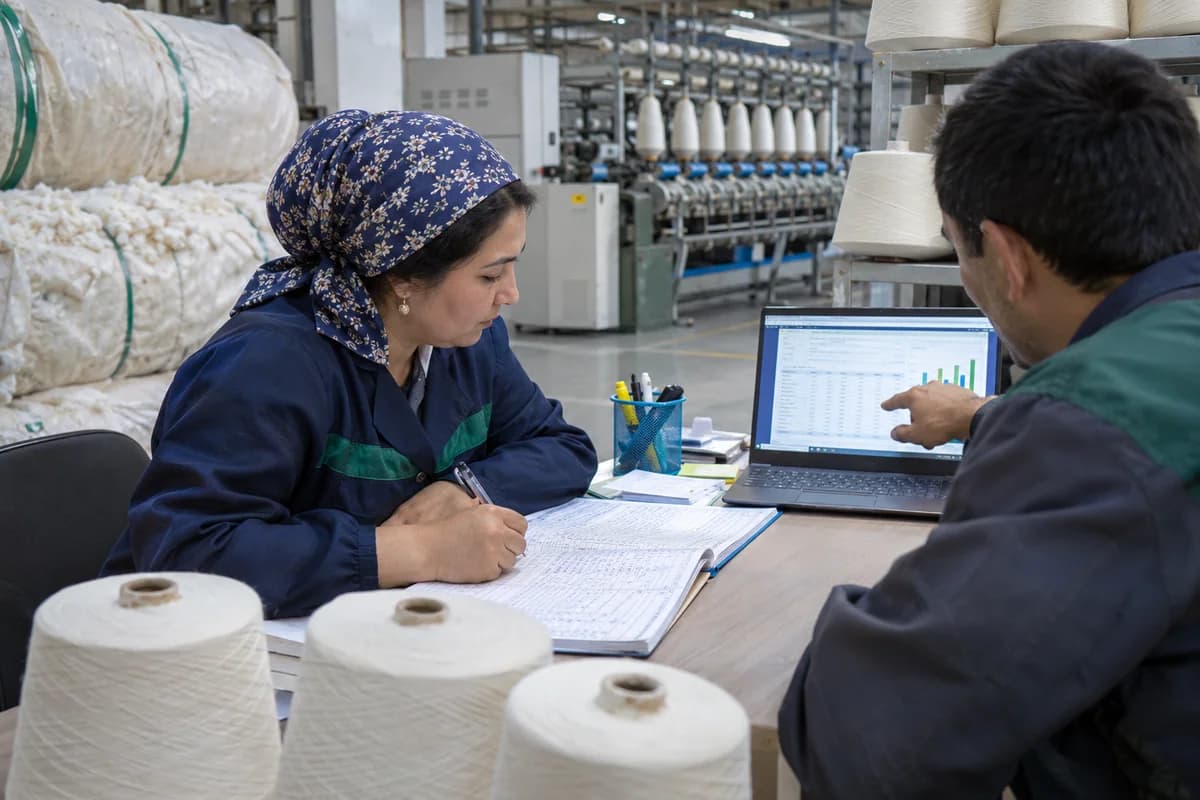
Working with a team in India from Uzbekistan.
Cotton shapes the year. Fields are picked in autumn, ginned, spun and woven, and the yarn and cloth go to garment makers at home and to buyers abroad. A mill that cannot say which bale went into which batch cannot answer a buyer’s question. Paper records leave that question unanswered.
We have no staff in the country. Work happens at our Nagarbhavi desks in Bengaluru. No Uzbek customer or partner is named here, since there is none, and every quote opens by saying that plainly, before any price is discussed.
What changes when your business is in Uzbekistan.
Hours, money, language and data are decided with you at the start, not discovered later.
What the software has to fit.
The filing cycles, payment habits and licences a small business there already works around.
Trades we write for in Uzbekistan.
Products that fit them.
Capabilities often asked for.
What we would build for Uzbekistan businesses.
Usually in this order, starting with whatever the audit ranks first.
ERP, CRM and Business Software Implementation
One record of stock, orders, customers and accounts, set up so your team opens it every day.
Learn moreGlobal Compliance and Localisation
Software has to change for each country. Currency tables, VAT and sales tax codes, invoice layouts, translation files, storage regions and consent records are built as configuration that your team can edit without code changes. The legal question stays with your adviser.
Learn moreWeb and Mobile Application Development
Web and mobile apps for customers, field staff and dealers, built to work on ordinary phones.
Learn moreAPI and System Integration
Connections between existing tools, with record ownership, duplicate handling and reconciliation agreed for each flow.
Learn moreMake the scope specific to your business.
Work through a real example from your operation and agree the handoffs, controls and support the project needs.
Electronic invoices and VAT
Can you explain the balance from its original documents?
Select a partly settled example in “Electronic invoices and VAT”. Ask for the invoice, allocated receipts and remaining balance to be shown together before agreeing the opening figures.
Background reading: ERPNext: outstanding invoices
Questions from businesses in Uzbekistan.
Is anyone of yours based in Uzbekistan?
No. Our whole staff works in Bengaluru, and a task that needs someone on your floor is flagged at the first call.
Can screens and printouts use both Uzbek and Russian?
Yes. Either language or both can appear on the same document. A reader at your firm should check the wording first, since a mistranslated unit can cost a shipment.
Can a mill follow a bale from the gin to a finished roll?
Yes. Each bale gets a number that carries through spinning, weaving and dispatch. A buyer’s question about a roll of cloth can then be followed to the field that grew the cotton.
Can the software send data to the electronic invoice system?
We can send it once your accountant supplies the layout and the signing details. Tax rulings stay with them.
Can a guesthouse take bookings from abroad?
Yes, from any country. A booking page and a shared calendar take requests from visitors, with rates shown in dollars and so’m. The owner confirms each request before the room is held, so nobody arrives to find the bed taken.
Can stock be counted in bales, kilos and metres?
Yes, with the conversion you set. An item can carry more than one unit. Cotton may arrive in bales, be issued in kilos and leave as metres of cloth, and each step keeps its own count.
Tell us what you run.
Share your requirements and an engineer will read them before getting in touch, at an hour that suits your day.
What happens after you share your requirements
- We review your brief and the systems you already use.
- We clarify the workflow, missing information and the work to consider first.
- The proposed scope sets out the deliverables, responsibilities and dependencies.
- Review the scope and commercial terms before deciding whether to proceed.
Start with your requirements
Describe your current process, the people involved and the change you need. Start with the details you know; we can clarify the rest together.
Share your requirements