Keep each panel, transformer, motor or cable run on one record, from drawing to test certificate.
Control panel, switchgear, transformer, motor, cable, luminaire and charger makers build to ratings and routine tests, with orders, bills of materials, winding stages, megger readings and dispatch on one job file. Each role opens only what it needs. Nothing is typed twice.
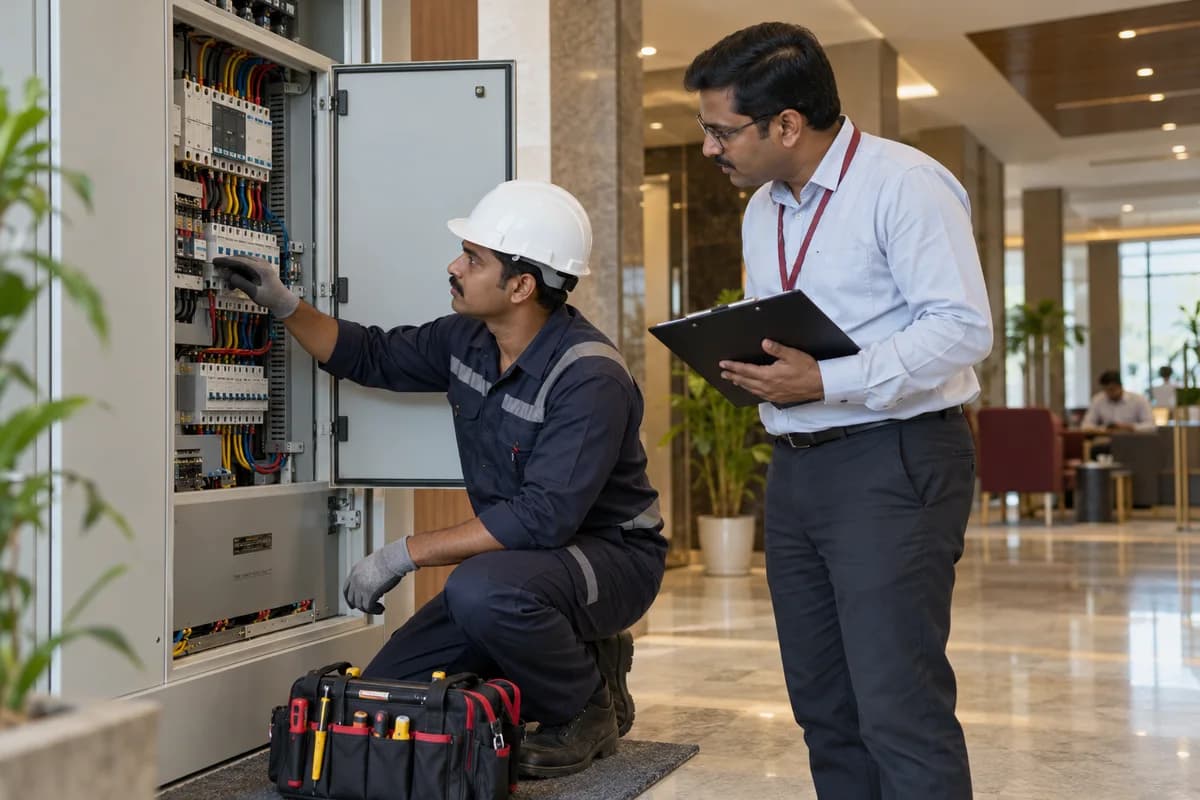
Equipment is built to a rating, and a test proves it. A control panel maker works from a circuit diagram and a bill of contactors, relays, MCBs and terminal blocks, wired with ferruled cable to the colour code on the drawing. A transformer or motor maker winds enamelled copper onto a core to a design, while a switchgear maker assembles busbars, moulded case breakers and sheet steel enclosures. Cable is different. Conductor is drawn, insulated and sheathed in long drum runs.
Most work is made to order, and each order differs from the last in rating, size and finish, which is why no two job cards read alike. Every job has a specification, an approved drawing, a bill of materials and a run of stages such as cutting, winding, wiring, assembly and testing. Customers often want a test report to travel with the unit, signed by the person who ran the test and traceable to the calibrated megger or hipot set used that day. Inspectors ask too. They want proof. Luminaire and EV charger makers sit closer to product work, with firmware, die-cast housings and serial numbers on every unit.
Material is a large share of cost. Electrolytic copper, aluminium, core steel laminations, varnish, sleeving and bought-out components arrive in lots, and prices move between quotation and purchase. One late breaker or core can hold a finished panel while the rest of the job sits wired, ferruled and labelled in the bay, waiting for a single part. Service and spares follow the unit for years. Records must last as long.
Software for each kind of electrical Equipment Manufacturing business.
Control panel manufacturers
Software for control panel builders. It prices boards from the single-line diagram and load list and orders air circuit breakers and variable frequency drives against supplier lead times. It follows each cabinet through busbar fabrication, ferruling, insulation resistance readings and the functional test, with every step signed on the panel record. Every board ships with as-built drawings, rating plate details and a test report, all pulled from the same record the bay worked from.
Learn moreSwitchgear manufacturers
A switchgear order is a drawing before it is a product. The software for switchgear makers holds the single-line diagram, the feeder schedule and the revision that was approved, then carries them through busbar work, wiring, testing and dispatch. Nothing is rebuilt from memory.
Learn morePower distribution equipment manufacturers
Distribution equipment makers build oil-filled transformers, feeder pillars, ring main units and low voltage boards, often to a utility’s specification. The software records CRGO core stock, winding copper, routine test results and inspection calls, then ties each serial number to the order that bought it.
Learn moreTransformer manufacturers
Software for transformer manufacturers. It prices tenders on rating and loss limits and tracks core steel and winding wire. Each unit is followed through drying, tanking and test, then ships with a plate, a test report and a warranty record.
Learn moreElectric motor manufacturers
Electric motor works build to a frame size, a rating and a winding. The software plans stator and rotor batches, tracks wire, lamination and bearing lots, and records bench tests for each motor. Every motor ships with a nameplate, a test certificate and a warranty record that trace back to what built it.
Learn moreCable and wire manufacturers
A cable plant turns metal rod into insulated conductor in several linked stages. The software for cable and wire makers follows each drum through drawing, stranding, extrusion and winding, and keeps the copper weight, the test results and the cut lengths together.
Learn moreIndustrial lighting manufacturers
Industrial luminaires are assembled from housings, LED boards, drivers and lenses that arrive from different suppliers. The software for lighting manufacturers records each component lot, the burn-in result and the lumen and wattage specification, then follows the fitting to the project it was built for.
Learn moreEV charger manufacturers
This software suits EV charger makers and assembly plants. It holds variants by connector and power rating and tracks power modules and boards by lot. End-of-line tests are saved with the firmware loaded, and each charger keeps its service history.
Learn moreWhere these businesses lose time and money.
What we build across electrical Equipment Manufacturing.
Ready products that fit electrical Equipment Manufacturing.
Each one is adapted to how your business works before it goes live, and anything your trade needs that it lacks is added then. You are not paying to build the basics again.
Control Panel Manufacturer Management Software
Panel quotations from load lists, schematic revisions, MCCB and VFD orders, ferruling jobs, megger test sheets and as-built sets for control panel builders.
Learn moreTransformer Manufacturer Management Software
Tenders, design sheets, core steel lots, winding wire, build stages, loss tests, inspection calls and warranty records for transformer manufacturers.
Learn moreElectric Motor Manufacturer Management Software
Frame and rating variants, winding lots, die-cast rotor batches, wire and bearing stock, bench test certificates, serials and returns for electric motor makers.
Learn moreThe services behind it.
ERP, CRM and Business Software Implementation
One record of stock, orders, customers and accounts, set up so your team opens it every day.
Learn moreBusiness Process Automation
Approvals, reminders, follow-ups and reports that run on their own instead of on someone remembering.
Learn moreIoT and Edge Computing
Machines, meters and sensors feeding the same system your office uses, even when the network drops.
Learn moreData Migration and Moving Off Spreadsheets
Data migration and spreadsheet replacement covers auditing existing files, cleaning and deduplicating records, loading them into a new system and reconciling the loaded result against known totals. Both systems then run side by side before cutover. Originals stay untouched.
Learn moreAPI and System Integration
Accounting software, WhatsApp, payment gateways, tax portals and your own apps sharing one set of numbers.
Learn moreWritten for electrical Equipment Manufacturing.
Practical notes on running the business, not product marketing.
Control panel manufacturing software: from order to dispatch
Follow a control panel job from order to dispatch and see which record each stage needs: BOM, wire list, test sheet, nameplate and packing list.
Learn moreElectrical equipment manufacturing ERP: what to look for
What an ERP must handle for rated, tested, project based electrical products: drawing revisions, test records, bought out parts and copper cost swings.
Learn moreDrawing changed after BOM release: how panels get built wrong
How a late drawing revision leaves the wiring crew on an old BOM, and how revision locks, change notes and a stores block stop wrongly built panels.
Learn moreTransformer routine test record template: ratio, insulation, loss
A test sheet layout for transformer routine tests: turns ratio, winding resistance, insulation resistance and loss readings tied to the serial number.
Learn moreQuestions electrical Equipment Manufacturing businesses ask.
Does it design panels or windings?
No. Design stays in your CAD tools, and the software holds the approved drawing, the bill that comes from it and the stages that follow. Winding data sheets and panel layouts are attached as files to the job.
Can it print test reports and certificates?
Yes. Insulation, ratio and high-voltage readings are keyed or imported under the serial number, and the report prints from those figures in the layout your customers and inspectors expect. It is set up with you.
Does a cable maker use the same product as a panel builder?
No. Cable and wire work is process based, with drums, lengths and scrap, so it has its own product. Panel builders work job by job. They need drawings, wiring stages and a test at the end.
Can it follow a unit after it is sold?
Yes. Serial numbers, fitted parts, test records and service visits stay on the record, so a technician arriving at site already knows what was built, tested and installed there. Chargers and luminaires also carry the firmware version loaded at dispatch.
Tell us how your business runs today.
A few lines on your spreadsheets, software and WhatsApp groups is enough. We reply the same working day.
- No obligation
- A reply within one business day
- Your details stay private
Start with your requirements
Seven short steps that tell us what you need. An engineer reads them before getting in touch.
Share your requirements