Raiganj · LocationsGrain dealers, jute buyers and bus operators in Raiganj work close to the Bihar border.
Raiganj is the headquarters of Uttar Dinajpur, a district of paddy, jute and wheat on the Bihar side of north Bengal. Its mills, input dealers, bus and truck operators and the Kulik bird sanctuary visitors shape local trade. Stock, route and credit tools for them are made in Nagarbhavi, Bengaluru, and supported from there.
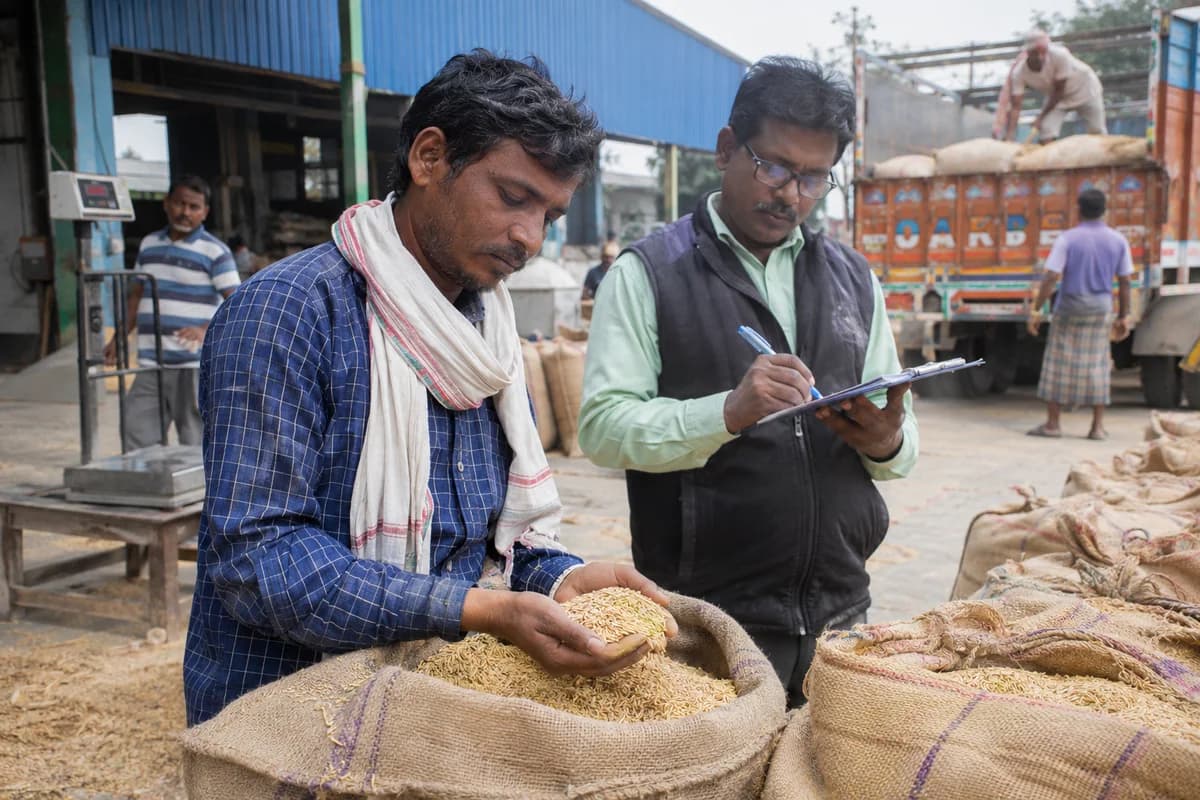
Raiganj lies in a farming district that borders Bihar. Paddy, jute and wheat are the main crops, and small mills in and around the town husk rice and grind flour. In the market, Hindi and Surjapuri are heard beside Bengali.
The town is a transport stop. Buses link villages and nearby cities, and trucks carry grain and jute out. The Kulik bird sanctuary on the edge of town draws visitors in winter. Small hotels and eateries gain.
The areas, estates and markets that matter in Raiganj.
How Raiganj businesses pick and use software.
Customers move between Bengali and Hindi in the same sentence. Software that shows labels in both, and does not fail on a mixed-language name, avoids a lot of repeat questions.
Bus operators collect cash at stops and from conductors. Owners want daily collection by route, and they will not wait for the conductor’s settlement at the end of the trip or the week.
Where Raiganj businesses lose time and money.
Mill yield is known only in total
Rice and bran are counted for the month, not for each lot of paddy, so which supplier’s grain gave the better yield stays a guess.
Seasonal input credit grows unwatched
Farmers take seed and fertiliser on credit. Balances become visible only after harvest, when the dealer has already lent more than planned.
Conductors settle collection by hand
Cash from tickets and parcels is counted at the depot after the buses return, and when a shortfall appears it is hard to say which conductor, route or day it came from.
Jute lots are graded and weighed by eye
Different buyers record weights differently. Disputes follow the sale.
What we would build for Raiganj businesses.
Usually in this order, starting with whatever the audit ranks first.
Business Process Automation
Approvals, reminders and reports triggered by agreed rules, with exceptions assigned to a responsible person.
Learn moreERP, CRM and Business Software Implementation
One record of stock, orders, customers and accounts, set up so your team opens it every day.
Learn moreWeb and Mobile Application Development
Web and mobile apps for customers, field staff and dealers, built to work on ordinary phones.
Learn moreAPI and System Integration
Connections between existing tools, with record ownership, duplicate handling and reconciliation agreed for each flow.
Learn moreReady products that fit Raiganj businesses.
Each one is adapted to how your business works before it goes live, and anything your trade needs that it lacks is added then. You are not paying to build the basics again.
Flour Mill Management Software
Wheat intake and testing, bin stock, blend recipes, extraction, flour grades, customer specifications, bagging and bulk dispatch for flour mills.
Learn moreFertiliser Dealer Management Software
Truck receipts, bag counts by grade, warehouse stacks, farmer sales, seasonal credit and sale registers for dealers who sell fertiliser to growers.
Learn moreIntercity Bus Operator Management Software
Departures, seat charts, agent ledgers, crew duty hours, coach permits, workshop job cards, tyre fitment, diesel issue and conductor cash settlement for operators running sleeper and seater coaches.
Learn moreHow the work runs from Bengaluru for Raiganj.
- 1
The audit, by call
A screen-share and a look at the sheets, accounting reports and WhatsApp groups your team uses. No travel needed.
- 2
A written proposal
Scope, what we build first and the cost, agreed in writing before anything starts.
- 3
Build in short rounds
Working screens shared every few weeks. Your team tests them from your own office.
- 4
Go-live, in person when it helps
For data migration and training we can come to Raiganj. Travel is agreed in advance.
- 5
Support online
Fixes, changes and hosting handled remotely by the same team that built it.
The work we have published.
We don’t claim Raiganj clients we don’t have. These are systems our team built; the way we work is the same wherever you are.
PetSeva: matching owners to the right vet, at any hour
A two-sided veterinary platform where vets are searchable by specialisation and bookable outside clinic hours. It now carries more than 2,000 veterinary doctors.
Read the case study Paying guest accommodationSAM Atithi Pavathi: bed-level occupancy as the source of truth
PG management software where allocation, rates and invoices are derived from bed-level occupancy and not maintained in parallel spreadsheets.
Read the case study School transport servicesSAM Tours: school transport on a single ledger
Registration, fee collection, routing and finance write to the same records, closing the gap between journeys run and fees collected.
Read the case study Microfinance and Self Help GroupsVikasa RDO: making SHG loan recovery auditable
Loan proposals, recoveries and commissions sit on one record, with a person attached to every state change, so a business handling a bank’s money can show where each rupee went.
Read the case studyMake the scope specific to your business.
Work through a real example from your operation and agree the handoffs, controls and support the project needs.
Mill yield is known only in total
Which observation would change the proposed scope?
For “Mill yield is known only in total”, observe someone completing the task with a representative example. Record where they stop, ask another person or re-enter information, then choose the smallest change whose result the team can verify.
Background reading: GOV.UK: researching user needs
Questions Raiganj owners ask before they call.
Can screens show both Bengali and Hindi?
Yes. Each user can set labels in Bengali, Hindi or English, so staff from either side of the border read their own language.
Can a bus owner see daily collection by route?
Yes. Conductors enter ticket and parcel amounts on a phone. By evening, the owner sees collection for every bus and route.
What happens after I share my requirements?
We review your brief and clarify the work with you. We then look at the software, spreadsheets and WhatsApp groups your business runs on today and write down what works, what slows your team down and what is missing. A demo login, a screen-share or a few screenshots are enough. You get a short written summary ordered by priority, with no obligation to hire us afterwards.
How much will the software cost?
We don’t publish a price, because it depends on what the system has to do. That first review settles the scope, and the cost goes into a written proposal before any work starts.
Industries we build for in Raiganj.
Tell us what your Raiganj business runs on today.
Send a short note on the spreadsheets, software or WhatsApp groups your team depends on. We reply the same working day.
What happens after you share your requirements
- We review your brief and the systems you already use.
- We clarify the workflow, missing information and the work to consider first.
- The proposed scope sets out the deliverables, responsibilities and dependencies.
- Review the scope and commercial terms before deciding whether to proceed.
Start with your requirements
Describe your current process, the people involved and the change you need. Start with the details you know; we can clarify the rest together.
Share your requirements