Software for Estonian timber firms, online sellers and small accounting practices, supported from Bengaluru.
Estonia is small, wooded and digital. Citizens sign contracts and file taxes online, sawmills and prefab house makers export planks and panels, and Baltic ports move goods to Finland and Sweden. Invoices carry käibemaks. The software is written and maintained in Bengaluru, and nobody of ours is posted in Estonia.
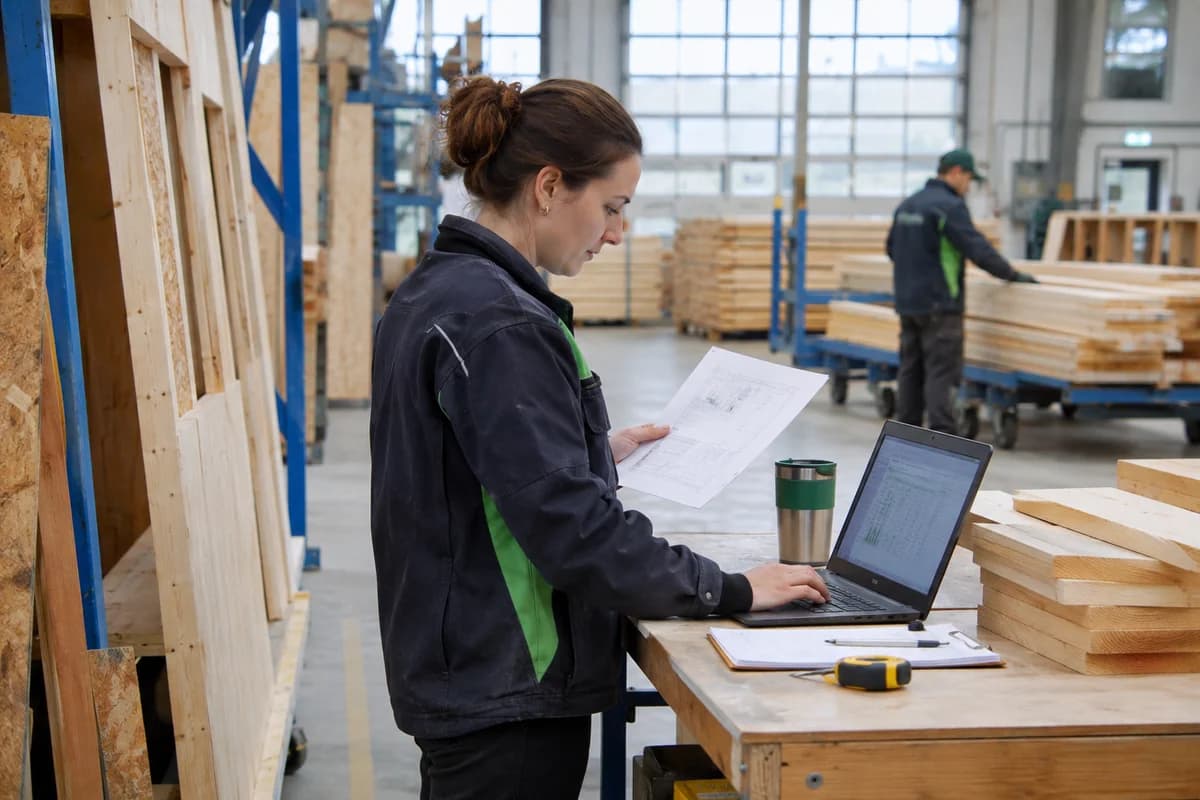
Working with a team in India from Estonia.
Estonian firms are used to doing things on a screen. A company can be formed online, tax returns go in by computer, and owners expect every supplier to offer the same ease. That raises the bar for small shops, workshops and clinics, which still keep orders in notebooks. Wood is the oldest trade, and sawmills, joinery plants and makers of prefab houses sell across Scandinavia and Germany to buyers who order months ahead.
Our base is Nagarbhavi in Bengaluru, with no premises, staff or licences in Estonia, and we work by screen share and email without claiming any Estonian customers or partners. Estonia runs on Eastern European time, so Bengaluru leads by 2.5 to 3.5 hours, and calls land comfortably in the Estonian morning.
What changes when your business is in Estonia.
Hours, money, language and data are decided with you at the start, not discovered later.
What the software has to fit.
The filing cycles, payment habits and licences a small business there already works around.
Trades we write for in Estonia.
Products that fit them.
Capabilities often asked for.
What we would build for Estonia businesses.
Usually in this order, starting with whatever the audit ranks first.
E-Commerce and Digital Commerce
An online store or B2B order portal wired to your stock, billing and dispatch.
Learn moreAPI and System Integration
Connections between existing tools, with record ownership, duplicate handling and reconciliation agreed for each flow.
Learn moreGlobal Compliance and Localisation
Software has to change for each country. Currency tables, VAT and sales tax codes, invoice layouts, translation files, storage regions and consent records are built as configuration that your team can edit without code changes. The legal question stays with your adviser.
Learn moreERP, CRM and Business Software Implementation
One record of stock, orders, customers and accounts, set up so your team opens it every day.
Learn moreMake the scope specific to your business.
Work through a real example from your operation and agree the handoffs, controls and support the project needs.
Invoices and käibemaks
Can you explain the balance from its original documents?
Select a partly settled example in “Invoices and käibemaks”. Ask for the invoice, allocated receipts and remaining balance to be shown together before agreeing the opening figures.
Background reading: ERPNext: outstanding invoices
Online selling and small logistics
Which location and stock state support the delivery promise?
Use “Online selling and small logistics” to follow an item moved between two locations. Distinguish stock on hand, stock already committed and stock still travelling before presenting an available quantity to a buyer.
Background reading: Shopify: inventory and locations
Questions from businesses in Estonia.
Is anyone from GullySystem based in Estonia?
No. We work from Bengaluru, and nobody of ours is posted in Estonia. If a project calls for someone on site, you are told before you sign.
Can the software use Estonian and Russian side by side?
Yes. Estonian, Russian, English or a mix can appear on screens, labels and papers. Special letters are tested before launch, and someone native on your staff approves each template.
Do you work with Estonian e-invoice formats?
Structured electronic invoices are what Estonian buyers ask for. Ask your accountant which format your customers use. We then shape the data fields and the export to match.
Can a web shop connect to parcel lockers and couriers?
Often, yes, where the carrier offers a connection we can use. We check the terms first, then test with a few real parcels and a few awkward addresses before opening the shop to customers.
Is Estonian customer data kept inside the EU?
It can be, and staff see only what their job needs. Retention periods and consent text are set by your adviser, and the setup mirrors them.
Can a joinery plant quote doors made to the buyer’s drawing?
Yes, a quote can start from a door or window type with its width, height, glazing and finish, and the system adds material and labour from your own price lists. A changed drawing produces a new version of the quote. The old one stays on file.
What happens in the weeks after launch?
Staff use the system for real work while we watch the list of questions they send. Small fixes go straight in. Larger requests go onto a list that you rank yourself, and we build them in the order you choose, one at a time, with a short note after each.
Tell us what you run.
Share your requirements and an engineer will read them before getting in touch, at an hour that suits your day.
What happens after you share your requirements
- We review your brief and the systems you already use.
- We clarify the workflow, missing information and the work to consider first.
- The proposed scope sets out the deliverables, responsibilities and dependencies.
- Review the scope and commercial terms before deciding whether to proceed.
Start with your requirements
Describe your current process, the people involved and the change you need. Start with the details you know; we can clarify the rest together.
Share your requirements