Kota Kinabalu · CountriesKota Kinabalu’s dive boats, mountain guides, guesthouses and fishing crews all work to the weather.
Kota Kinabalu is the capital of Sabah, on the northern coast of Borneo. Visitors come for Mount Kinabalu and the islands off the shore. Fishing boats land catch daily. Estates inland ship palm products through the state’s ports. Seasons and sea conditions decide most bookings. Small firms here keep every moving part going with few staff.
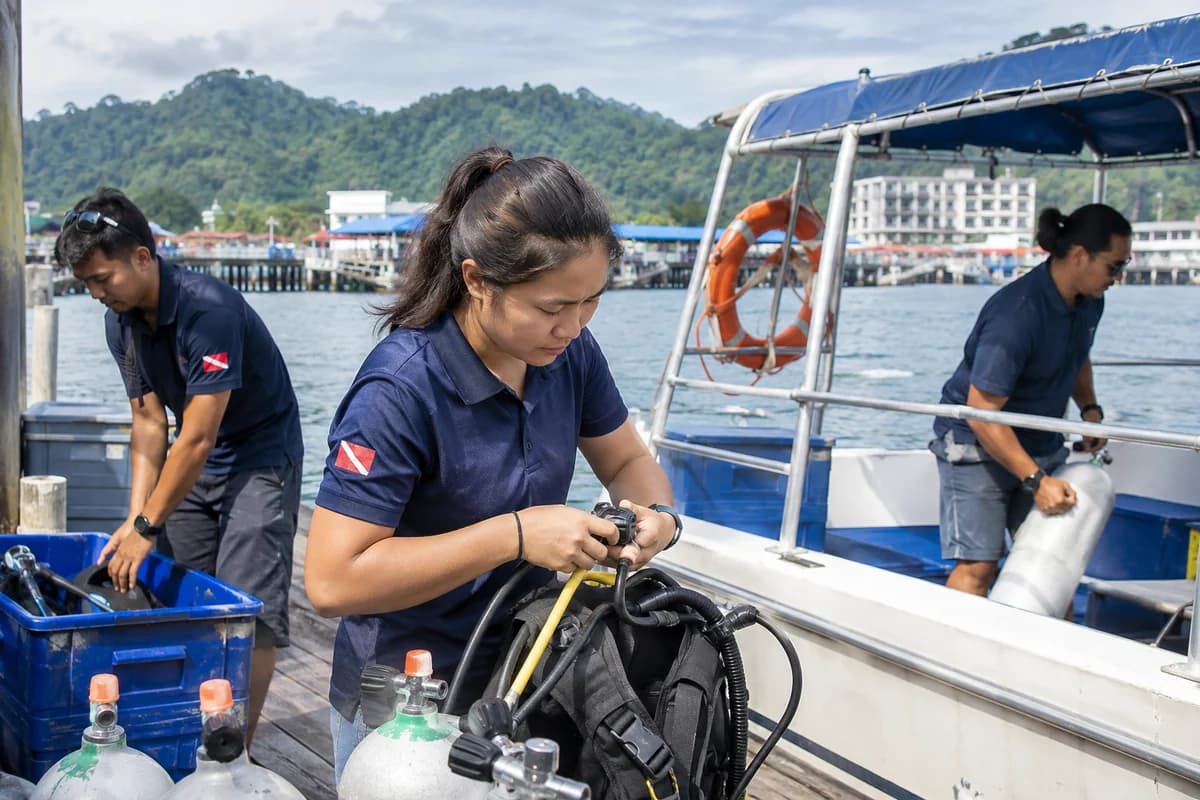
Tourism is the most visible trade. Guides, boat operators and dive shops take guests to the islands of Tunku Abdul Rahman Park, and mountain tours leave early for the Kinabalu area. Guesthouses and small hotels fill the town centre.
Fishing and fish farming supply the markets and restaurants along the waterfront. Inland, estates grow oil palm and send fruit to mills, and trucks and ships carry the product out to the mill and the port. Sabah keeps Malaysian time, ahead of Bengaluru by a few hours, so we overlap with a shop that opens at eight. Staff here speak Malay, English and Chinese dialects, and a record may need to be read in any of them.
The districts, business parks and markets that matter in Kota Kinabalu.
How Kota Kinabalu businesses pick and use software.
Tour and dive operators want one booking record that holds guests, guides, boats, permits and supplier payments.
Small hotel and guesthouse owners need room availability that matches across the website, phone calls and the booking platforms they list on.
Estate managers want harvest, transport and mill weights recorded where the work happens.
Where Kota Kinabalu businesses lose time and money.
Weather cancels a trip and the refunds are done by hand
Cancelled sailings mean rebooking, partial refunds and notes to suppliers. A single record of each booking shows who is affected.
Guests book through several channels
Rooms sold on a platform and rooms sold on the phone can collide. One shared calendar stops double bookings.
Catch and fruit weights are written on slips
Slips get lost between the landing point and the office, and a phone entry at the time of weighing keeps the figure.
Supplier payments for packages arrive late
Guides, boats and permits are paid after the trip, and a list of what is owed per tour prevents missed payments.
What we would build for Kota Kinabalu businesses.
Usually in this order, starting with whatever the audit ranks first.
Web and Mobile Application Development
Web and mobile apps for customers, field staff and dealers, built to work on ordinary phones.
Learn moreData Migration and Moving Off Spreadsheets
Data migration and spreadsheet replacement covers auditing existing files, cleaning and deduplicating records, loading them into a new system and reconciling the loaded result against known totals. Both systems then run side by side before cutover. Originals stay untouched.
Learn moreWhatsApp Business API and Chatbots
WhatsApp Business API work covers number onboarding, template approval, opt-in records and a chatbot with human handover, all set up under the client’s own Meta account. It connects WhatsApp to a CRM, billing or booking system, so every message is sent from an existing record and every reply is written back. It suits businesses that already take orders, payments or bookings in chat.
Learn moreBusiness Process Automation
Approvals, reminders and reports triggered by agreed rules, with exceptions assigned to a responsible person.
Learn moreReady products that fit Kota Kinabalu businesses.
Each one is adapted to how your business works before it goes live, and anything your trade needs that it lacks is added then. You are not paying to build the basics again.
Tour Operator Management Software
Itineraries, group departures, vendor bookings, vouchers, per-passenger costing, guest payments and vendor payables for tour operators running fixed departures and custom trips.
Learn moreHomestays and Guesthouse Management Software
Room and bed calendar, enquiries, guest register, deposits, meals, extras, housekeeping and bills for homestays and guesthouses.
Learn moreFisheries and Aquaculture Farm Management Software
Ponds and cages, seed lots, feed rounds, water readings, mortality, treatments, harvest grading and buyer billing for fish and shrimp farms.
Learn moreHow the work runs from Bengaluru for Kota Kinabalu.
- 1
The audit, by call
A screen-share and a look at the sheets, accounting reports and WhatsApp groups your team uses. No travel needed.
- 2
A written proposal
Scope, what we build first and the cost, agreed in writing before anything starts.
- 3
Build in short rounds
Working screens shared every few weeks. Your team tests them from your own office.
- 4
Go-live, in person when it helps
For data migration and training we can come to Kota Kinabalu. Travel is agreed in advance.
- 5
Support online
Fixes, changes and hosting handled remotely by the same team that built it.
The work we have published.
We don’t claim Kota Kinabalu clients we don’t have. These are systems our team built; the way we work is the same wherever you are.
PetSeva: matching owners to the right vet, at any hour
A two-sided veterinary platform where vets are searchable by specialisation and bookable outside clinic hours. It now carries more than 2,000 veterinary doctors.
Read the case study Paying guest accommodationSAM Atithi Pavathi: bed-level occupancy as the source of truth
PG management software where allocation, rates and invoices are derived from bed-level occupancy and not maintained in parallel spreadsheets.
Read the case study School transport servicesSAM Tours: school transport on a single ledger
Registration, fee collection, routing and finance write to the same records, closing the gap between journeys run and fees collected.
Read the case study Microfinance and Self Help GroupsVikasa RDO: making SHG loan recovery auditable
Loan proposals, recoveries and commissions sit on one record, with a person attached to every state change, so a business handling a bank’s money can show where each rupee went.
Read the case studyMake the scope specific to your business.
Work through a real example from your operation and agree the handoffs, controls and support the project needs.
Weather cancels a trip and the refunds are done by hand
What returns to stock, and what returns to the customer’s account?
Walk through “Weather cancels a trip and the refunds are done by hand” using a partly paid sale. Agree the physical return and the financial correction separately, with a reference to the original transaction.
Background reading: ERPNext: returns and credits
Supplier payments for packages arrive late
Can the same receipt be allocated without counting the money twice?
Take an unallocated amount in “Supplier payments for packages arrive late” and apply it to the intended balance. Review the remaining amount and the original receipt reference together.
Background reading: ERPNext: payment allocation
Questions Kota Kinabalu owners ask before they call.
Can guests book and pay in Malaysian ringgit on our own site?
Yes, the site can show ringgit prices and take payments through a gateway you already use or choose. Our job is the booking flow, tied to your room or trip calendar.
Our guides and captains have patchy signal. Will the app still work?
A form can hold what the guide types and send it once the signal comes back. We test this on the actual routes, because coverage on islands and in the hills differs.
What happens after I share my requirements?
We review your brief and clarify the work with you. We then look at the software, spreadsheets and WhatsApp groups your business runs on today and write down what works, what slows your team down and what is missing. A demo login, a screen-share or a few screenshots are enough. You get a short written summary ordered by priority, with no obligation to hire us afterwards.
How much will the software cost?
We don’t publish a price, because it depends on what the system has to do. That first review settles the scope, and the cost goes into a written proposal before any work starts.
Industries we build for in Kota Kinabalu.
Elsewhere in Malaysia.
Tell us what your Kota Kinabalu business runs on today.
Send a short note on the spreadsheets, software or WhatsApp groups your team depends on. We reply the same working day.
What happens after you share your requirements
- We review your brief and the systems you already use.
- We clarify the workflow, missing information and the work to consider first.
- The proposed scope sets out the deliverables, responsibilities and dependencies.
- Review the scope and commercial terms before deciding whether to proceed.
Start with your requirements
Describe your current process, the people involved and the change you need. Start with the details you know; we can clarify the rest together.
Share your requirements