Kuching · CountriesKuching’s timber workshops, kitchens, tour guides and oil service firms keep Sarawak’s capital busy.
Kuching sits on the Sarawak River in the Malaysian part of Borneo. It is the state capital and a university town. Timber, furniture and oil and gas service firms work from its industrial estates. Heritage streets along the waterfront draw visitors to cafes, craft shops and guided river tours. Families run the firms here.
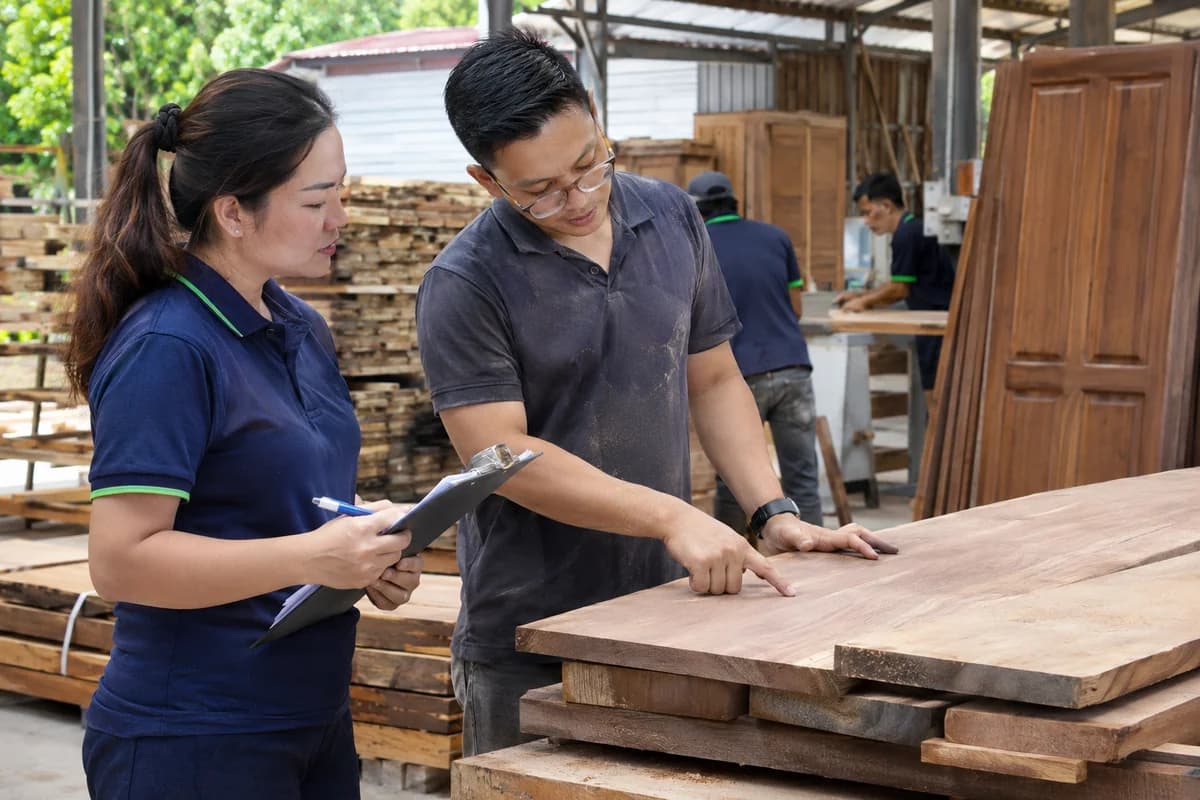
Wood has long been central to Sarawak. Mills, door makers and furniture workshops around Kuching turn timber into finished goods, and exporters need records of species, grades and shipments for every container that leaves the state. Food is a second pillar. Laksa stalls, bakeries and kitchens fill the old town.
Service contractors supply the energy sector with fabrication, inspection and transport work, and each client asks for job and material records before it will pay the invoice. Universities, including the one at Samarahan, keep a steady student population. Tourism adds guided river trips and visits to longhouses. A call before lunch in Kuching reaches us at a good hour, since the gap with Bengaluru is only a few hours.
The districts, business parks and markets that matter in Kuching.
How Kuching businesses pick and use software.
Door and furniture makers want each order tracked from the timber purchase to the delivered piece, so the price quoted on Monday can be compared with what the job cost by Friday.
Restaurant and bakery owners need daily stock and sales figures from every outlet.
Service contractors to the energy sector must show clients job, material and inspection records.
Where Kuching businesses lose time and money.
Wood cost is guessed
Offcuts and wastage vary with the timber grade, and only a record of the actual use per order shows which doors and tables earn their margin.
Recipes are in the cook’s head
Costs shift when ingredient prices change. Written recipes linked to purchases show which dishes still pay.
Client records are rebuilt after the job
Inspection sheets and material papers are collected at the end. Capturing them during the work saves days.
What we would build for Kuching businesses.
Usually in this order, starting with whatever the audit ranks first.
ERP, CRM and Business Software Implementation
One record of stock, orders, customers and accounts, set up so your team opens it every day.
Learn moreIoT and Edge Computing
Machine and sensor readings connected to office records, with buffering limits and recovery after a lost connection defined.
Learn moreSoftware Maintenance, Support and Rescue
Taking over the system your last vendor stopped answering for: fixing it, documenting it and keeping it running.
Learn moreData Engineering and Business Intelligence
Dashboards that answer the owner’s Monday questions without anyone building an Excel sheet first.
Learn moreReady products that fit Kuching businesses.
Each one is adapted to how your business works before it goes live, and anything your trade needs that it lacks is added then. You are not paying to build the basics again.
Wooden Door Manufacturer Management Software
Door schedules, timber moisture and seasoning, frame and shutter production, press batches, mortising, polish, delivery by floor and fixing snags for wooden door makers.
Learn moreRestaurant Management System
Table and counter orders, kitchen tickets (KOT), menu and recipe stock, platform orders, POS billing with tax and day close for restaurants.
Learn moreOil and Gas Company Management Software
Wells, daily readings, field tickets, equipment maintenance, spares, permits and partner billing for oil and gas operators and field service companies.
Learn moreHow the work runs from Bengaluru for Kuching.
- 1
The audit, by call
A screen-share and a look at the sheets, accounting reports and WhatsApp groups your team uses. No travel needed.
- 2
A written proposal
Scope, what we build first and the cost, agreed in writing before anything starts.
- 3
Build in short rounds
Working screens shared every few weeks. Your team tests them from your own office.
- 4
Go-live, in person when it helps
For data migration and training we can come to Kuching. Travel is agreed in advance.
- 5
Support online
Fixes, changes and hosting handled remotely by the same team that built it.
The work we have published.
We don’t claim Kuching clients we don’t have. These are systems our team built; the way we work is the same wherever you are.
PetSeva: matching owners to the right vet, at any hour
A two-sided veterinary platform where vets are searchable by specialisation and bookable outside clinic hours. It now carries more than 2,000 veterinary doctors.
Read the case study Paying guest accommodationSAM Atithi Pavathi: bed-level occupancy as the source of truth
PG management software where allocation, rates and invoices are derived from bed-level occupancy and not maintained in parallel spreadsheets.
Read the case study School transport servicesSAM Tours: school transport on a single ledger
Registration, fee collection, routing and finance write to the same records, closing the gap between journeys run and fees collected.
Read the case study Microfinance and Self Help GroupsVikasa RDO: making SHG loan recovery auditable
Loan proposals, recoveries and commissions sit on one record, with a person attached to every state change, so a business handling a bank’s money can show where each rupee went.
Read the case studyMake the scope specific to your business.
Work through a real example from your operation and agree the handoffs, controls and support the project needs.
Recipes are in the cook’s head
What changes when a component or quantity is substituted?
Take one entry from “Recipes are in the cook’s head” and change an input in a test copy. Review the resulting material requirement and cost with the person who approves production.
Background reading: ERPNext: bills of materials
Questions Kuching owners ask before they call.
Our shop runs in English and Malay. Can the system show both?
Yes, both. Screens, printed orders and customer messages can carry two languages, and we agree the wording with your staff before it goes live.
Can wood use be tracked per order without a lot of typing?
A short form at the cutting stage holds the board size and grade. The system then adds up the use against each order without any extra typing in the office.
What happens after I share my requirements?
We review your brief and clarify the work with you. We then look at the software, spreadsheets and WhatsApp groups your business runs on today and write down what works, what slows your team down and what is missing. A demo login, a screen-share or a few screenshots are enough. You get a short written summary ordered by priority, with no obligation to hire us afterwards.
How much will the software cost?
We don’t publish a price, because it depends on what the system has to do. That first review settles the scope, and the cost goes into a written proposal before any work starts.
Industries we build for in Kuching.
Elsewhere in Malaysia.
Tell us what your Kuching business runs on today.
Send a short note on the spreadsheets, software or WhatsApp groups your team depends on. We reply the same working day.
What happens after you share your requirements
- We review your brief and the systems you already use.
- We clarify the workflow, missing information and the work to consider first.
- The proposed scope sets out the deliverables, responsibilities and dependencies.
- Review the scope and commercial terms before deciding whether to proceed.
Start with your requirements
Describe your current process, the people involved and the change you need. Start with the details you know; we can clarify the rest together.
Share your requirements