Auckland · CountriesAuckland’s port, airport, marinas and retailers keep imports and tourism moving through the year.
Auckland is New Zealand’s largest city and its main port and airport, so importers, distributors, retailers and hotels are concentrated here. Boat builders and marine suppliers work around the Waitematā and Hauraki Gulf. Summer brings visitors and events. New Zealand time runs ahead of India, so sessions fall in the Indian early morning.
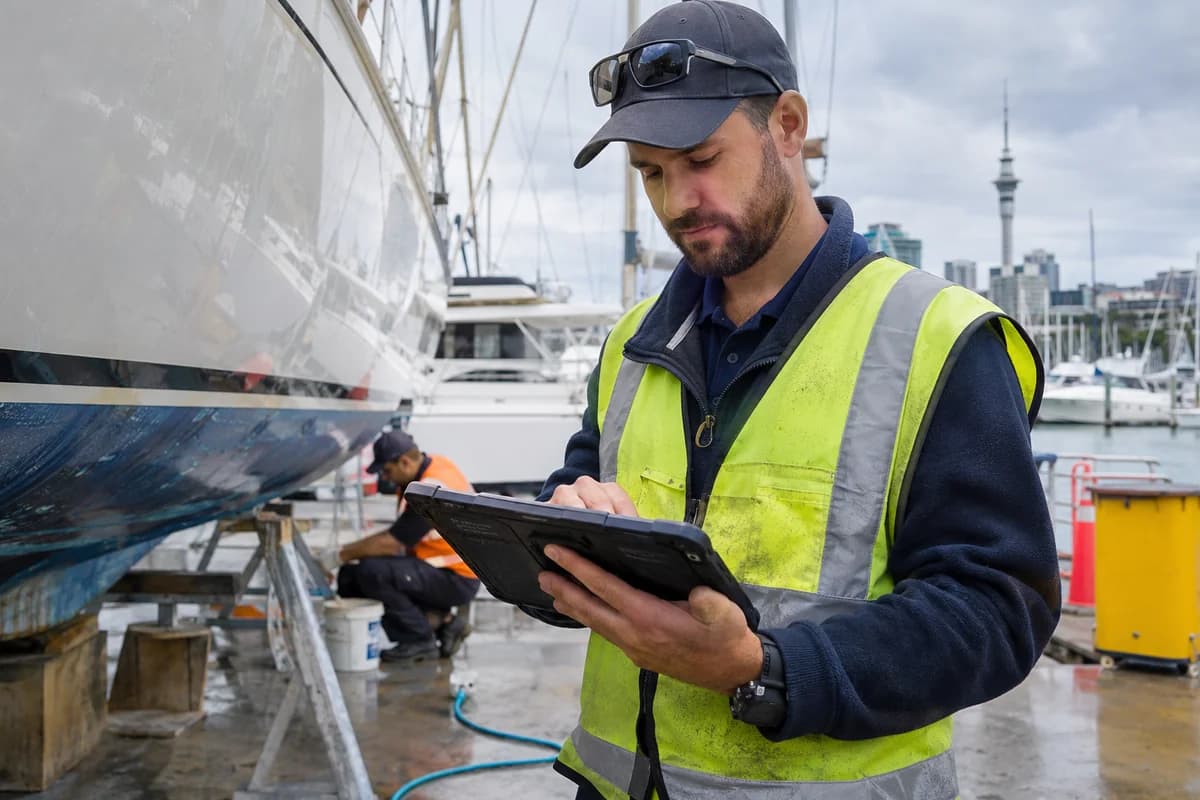
Most of what New Zealand imports passes near Auckland. Importers, customs brokers and warehouses in the south run on container arrivals and delivery slots, and stock arrives in lumps and leaves in small orders that retailers across the city feel.
Water shapes the rest. Marinas at Westhaven and Hobsonville support boat builders, chandlers and charter operators, and the cruise and summer seasons fill hotels and restaurants. Housing keeps builders busy. Small, owner-run firms make up the trade here.
The districts, business parks and markets that matter in Auckland.
How Auckland businesses pick and use software.
Importers and distributors want orders, stock and delivery runs in one view, so a late container does not catch the sales team by surprise.
Boat yards and marine service firms need job cards, parts and slipway bookings tied to each vessel.
Hotels and cafes want bookings, rosters and supplier orders to sit together, especially before summer.
Where Auckland businesses lose time and money.
Container arrivals not linked to customer orders
Stock lands late and sales have already promised it, and linking incoming shipments to open orders shows what can be committed.
Boat refits quoted but never reconciled
Marine work grows once a hull is opened, and job cards that record added work against the quote keep invoices fair.
Summer rosters rebuilt weekly
Hospitality firms hire casual staff for the season, and a roster with availability and swaps saves hours of messages.
Goods and services tax on mixed invoices
Most sales carry the standard rate, while some exports are zero-rated, and codes are set per product and checked with your accountant.
What we would build for Auckland businesses.
Usually in this order, starting with whatever the audit ranks first.
E-Commerce and Digital Commerce
An online store or B2B order portal wired to your stock, billing and dispatch.
Learn moreAPI and System Integration
Connections between existing tools, with record ownership, duplicate handling and reconciliation agreed for each flow.
Learn moreERP, CRM and Business Software Implementation
One record of stock, orders, customers and accounts, set up so your team opens it every day.
Learn moreBusiness Process Automation
Approvals, reminders and reports triggered by agreed rules, with exceptions assigned to a responsible person.
Learn moreReady products that fit Auckland businesses.
Each one is adapted to how your business works before it goes live, and anything your trade needs that it lacks is added then. You are not paying to build the basics again.
Hotel Management Software
A property management system for room bookings, the reservation chart, front desk, housekeeping, rate plans, guest folios and banquet hall bookings in hotels and resorts.
Learn moreLogistics and Transport Management Software
Consignment booking, trip sheets, lorry and driver records, attached vehicle hire, delivery proof, freight billing and to-pay collection for road haulage companies.
Learn moreHow the work runs from Bengaluru for Auckland.
- 1
The audit, by call
A screen-share and a look at the sheets, accounting reports and WhatsApp groups your team uses. No travel needed.
- 2
A written proposal
Scope, what we build first and the cost, agreed in writing before anything starts.
- 3
Build in short rounds
Working screens shared every few weeks. Your team tests them from your own office.
- 4
Go-live, in person when it helps
For data migration and training we can come to Auckland. Travel is agreed in advance.
- 5
Support online
Fixes, changes and hosting handled remotely by the same team that built it.
The work we have published.
We don’t claim Auckland clients we don’t have. These are systems our team built; the way we work is the same wherever you are.
PetSeva: matching owners to the right vet, at any hour
A two-sided veterinary platform where vets are searchable by specialisation and bookable outside clinic hours. It now carries more than 2,000 veterinary doctors.
Read the case study Paying guest accommodationSAM Atithi Pavathi: bed-level occupancy as the source of truth
PG management software where allocation, rates and invoices are derived from bed-level occupancy and not maintained in parallel spreadsheets.
Read the case study School transport servicesSAM Tours: school transport on a single ledger
Registration, fee collection, routing and finance write to the same records, closing the gap between journeys run and fees collected.
Read the case study Microfinance and Self Help GroupsVikasa RDO: making SHG loan recovery auditable
Loan proposals, recoveries and commissions sit on one record, with a person attached to every state change, so a business handling a bank’s money can show where each rupee went.
Read the case studyMake the scope specific to your business.
Work through a real example from your operation and agree the handoffs, controls and support the project needs.
Goods and services tax on mixed invoices
Can you explain the balance from its original documents?
Select a partly settled example in “Goods and services tax on mixed invoices”. Ask for the invoice, allocated receipts and remaining balance to be shown together before agreeing the opening figures.
Background reading: ERPNext: outstanding invoices
Penrose, Mount Wellington and East Tamaki
Which location and stock state support the delivery promise?
Use “Penrose, Mount Wellington and East Tamaki” to follow an item moved between two locations. Distinguish stock on hand, stock already committed and stock still travelling before presenting an available quantity to a buyer.
Background reading: Shopify: inventory and locations
Questions Auckland owners ask before they call.
Does a Bengaluru team suit New Zealand hours?
New Zealand is ahead of India, so a session sits in the Indian early morning and the Auckland late afternoon. We keep it to a regular weekly slot and send written notes.
Can we use New Zealand dollars with overseas suppliers?
Yes. Orders can hold supplier currency while your books stay in New Zealand dollars. Exchange treatment is set with your accountant.
What happens after I share my requirements?
We review your brief and clarify the work with you. We then look at the software, spreadsheets and WhatsApp groups your business runs on today and write down what works, what slows your team down and what is missing. A demo login, a screen-share or a few screenshots are enough. You get a short written summary ordered by priority, with no obligation to hire us afterwards.
How much will the software cost?
We don’t publish a price, because it depends on what the system has to do. That first review settles the scope, and the cost goes into a written proposal before any work starts.
Industries we build for in Auckland.
Elsewhere in New Zealand.
Tell us what your Auckland business runs on today.
Send a short note on the spreadsheets, software or WhatsApp groups your team depends on. We reply the same working day.
What happens after you share your requirements
- We review your brief and the systems you already use.
- We clarify the workflow, missing information and the work to consider first.
- The proposed scope sets out the deliverables, responsibilities and dependencies.
- Review the scope and commercial terms before deciding whether to proceed.
Start with your requirements
Describe your current process, the people involved and the change you need. Start with the details you know; we can clarify the rest together.
Share your requirements