Daejeon · CountriesDaejeon’s research institutes and spin-off firms need tidy project, prototype and grant records.
Daejeon is Korea’s science city. Research institutes, KAIST and small firms that make sensors, instruments, embedded devices and defence parts gather at its science complex, and grants with reporting duties fund their projects. Invoices are in won. Project, build and compliance tools for such firms are built remotely by GullySystem in Bengaluru.
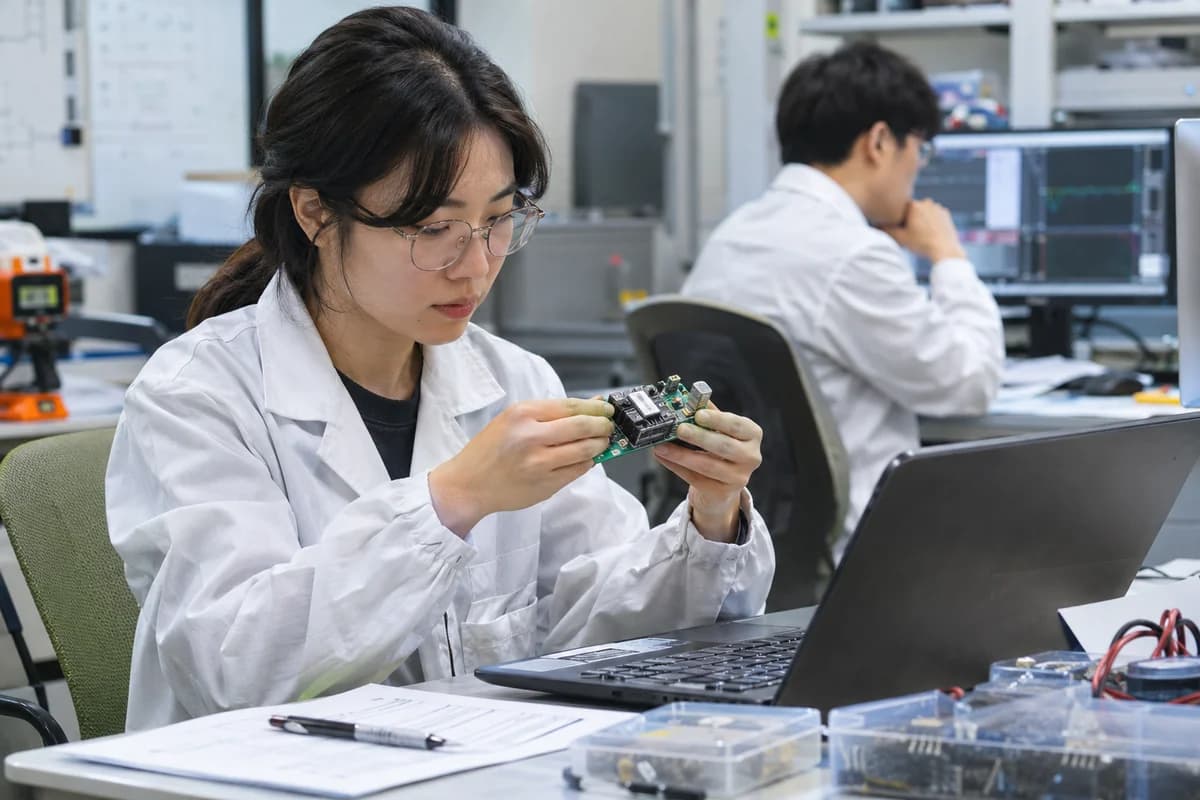
The science complex is the centre of the city’s work. Research institutes publish results and young companies turn them into devices, so a small team may build a prototype, write a grant report and prepare a first batch together.
Grants shape the paperwork, because each project has milestones, expense categories and receipts that officials check closely before the next instalment of funding is released. Defence and instrument makers add parts lists and test records for their buyers. Missing data stops payment.
The districts, business parks and markets that matter in Daejeon.
How Daejeon businesses pick and use software.
Founders of small instrument and embedded device firms who report to grant officials as well as to customers.
Managers of defence component workshops who keep test results and parts lists for each delivery.
Where Daejeon businesses lose time and money.
Grant receipts are sorted at the deadline
Spending is gathered in the last week before a report is due, and the finance lead spends two evenings matching receipts. Tagging expenses as they happen helps.
Prototype versions are not recorded
Teams rebuild boards and forget which parts list was used for which revision, so a failed test cannot be traced. A build register settles it.
Test data sits on lab laptops
Results are stored on the machine where the test ran, and a customer who asks for them must wait for someone to find the file. A shared record by serial number fixes it.
What we would build for Daejeon businesses.
Usually in this order, starting with whatever the audit ranks first.
Custom Software and Product Engineering
Software built around how your business actually runs, when nothing off the shelf fits without workarounds.
Learn moreQA and Software Testing
Testing on the phones, browsers and patchy networks your customers and staff actually use.
Learn moreIoT and Edge Computing
Machine and sensor readings connected to office records, with buffering limits and recovery after a lost connection defined.
Learn moreTechnology Strategy and Product Consulting
A plain answer to what to build, what to buy and what to leave alone, before money is spent.
Learn moreReady products that fit Daejeon businesses.
Each one is adapted to how your business works before it goes live, and anything your trade needs that it lacks is added then. You are not paying to build the basics again.
Embedded Systems Company Management Software
Quotes from statements of work, change requests, schematic and firmware revisions, prototype serials, bench defects, engineer time and milestone invoices for embedded design companies.
Learn moreDefence Component Manufacturer Management Software
Contract schedules, controlled drawings, free-issue material, customer inspection hold points, serial registers and conformance certificates for defence component makers.
Learn moreDiagnostic Equipment Manufacturer Management Software
PCB and sensor lots, firmware images, heat chamber hours, calibration points, installation reports and replaced pumps or lamps, kept by serial for diagnostic equipment makers.
Learn moreHow the work runs from Bengaluru for Daejeon.
- 1
The audit, by call
A screen-share and a look at the sheets, accounting reports and WhatsApp groups your team uses. No travel needed.
- 2
A written proposal
Scope, what we build first and the cost, agreed in writing before anything starts.
- 3
Build in short rounds
Working screens shared every few weeks. Your team tests them from your own office.
- 4
Go-live, in person when it helps
For data migration and training we can come to Daejeon. Travel is agreed in advance.
- 5
Support online
Fixes, changes and hosting handled remotely by the same team that built it.
The work we have published.
We don’t claim Daejeon clients we don’t have. These are systems our team built; the way we work is the same wherever you are.
PetSeva: matching owners to the right vet, at any hour
A two-sided veterinary platform where vets are searchable by specialisation and bookable outside clinic hours. It now carries more than 2,000 veterinary doctors.
Read the case study Paying guest accommodationSAM Atithi Pavathi: bed-level occupancy as the source of truth
PG management software where allocation, rates and invoices are derived from bed-level occupancy and not maintained in parallel spreadsheets.
Read the case study School transport servicesSAM Tours: school transport on a single ledger
Registration, fee collection, routing and finance write to the same records, closing the gap between journeys run and fees collected.
Read the case study Microfinance and Self Help GroupsVikasa RDO: making SHG loan recovery auditable
Loan proposals, recoveries and commissions sit on one record, with a person attached to every state change, so a business handling a bank’s money can show where each rupee went.
Read the case studyMake the scope specific to your business.
Work through a real example from your operation and agree the handoffs, controls and support the project needs.
Grant receipts are sorted at the deadline
Can the same receipt be allocated without counting the money twice?
Take an unallocated amount in “Grant receipts are sorted at the deadline” and apply it to the intended balance. Review the remaining amount and the original receipt reference together.
Background reading: ERPNext: payment allocation
Prototype versions are not recorded
Can someone correct a mistake without losing their earlier work?
Use “Prototype versions are not recorded” to test an incomplete submission with keyboard-only input. Check the error wording and retained values before signing off the screen.
Background reading: W3C: usable form validation
Questions Daejeon owners ask before they call.
Can a small hardware firm track builds by serial number?
Yes. Each unit carries its revision, parts lots and test results, and the record opens from the serial number. We would agree the fields with your engineers first.
Can the grant report come from the same records?
Yes. If expenses are tagged to milestones as they are entered, the report becomes a view of that data, and we would match the layout your funder asks for. A call at noon in Daejeon is half past eight in Bengaluru.
What happens after I share my requirements?
We review your brief and clarify the work with you. We then look at the software, spreadsheets and WhatsApp groups your business runs on today and write down what works, what slows your team down and what is missing. A demo login, a screen-share or a few screenshots are enough. You get a short written summary ordered by priority, with no obligation to hire us afterwards.
How much will the software cost?
We don’t publish a price, because it depends on what the system has to do. That first review settles the scope, and the cost goes into a written proposal before any work starts.
Industries we build for in Daejeon.
Tell us what your Daejeon business runs on today.
Send a short note on the spreadsheets, software or WhatsApp groups your team depends on. We reply the same working day.
What happens after you share your requirements
- We review your brief and the systems you already use.
- We clarify the workflow, missing information and the work to consider first.
- The proposed scope sets out the deliverables, responsibilities and dependencies.
- Review the scope and commercial terms before deciding whether to proceed.
Start with your requirements
Describe your current process, the people involved and the change you need. Start with the details you know; we can clarify the rest together.
Share your requirements