Gwangju · CountriesGwangju’s car part makers, appliance plants, lighting firms and arts venues share one calendar of orders.
Gwangju is the main city of southwestern Korea, with a car component base, home appliance plants and a cluster of optics and lighting firms. The Asia Culture Complex and the Biennale give it an arts calendar, and its food is well known. Invoices are in won. Order, line and venue tools for these firms are built remotely by GullySystem in Bengaluru.
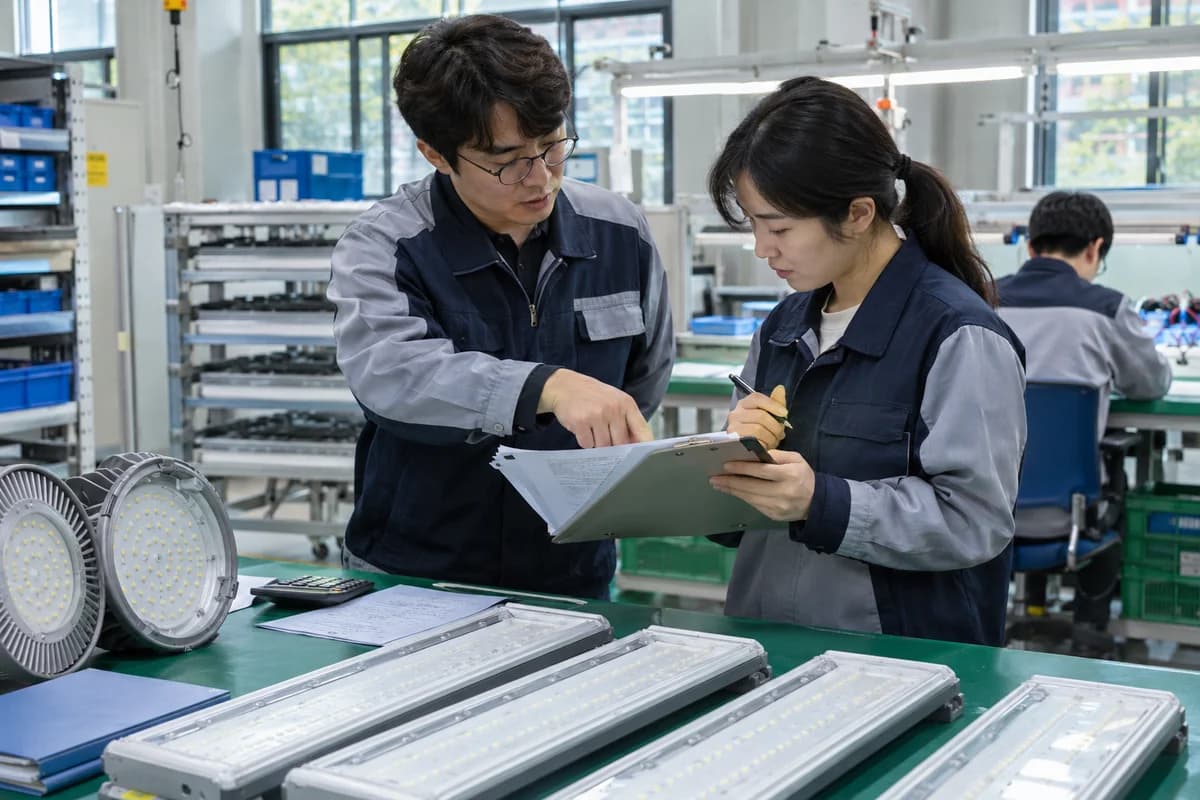
Car and appliance plants anchor the industrial side. Small suppliers machine, mould and assemble parts for them to a weekly schedule, and a supplier that misses a delivery window can lose its slot on the next order. Records of lots, defects and returns decide who stays on the list.
Optics and lighting firms add a more design-led trade, selling LED and optical parts to buyers abroad. Spec sheets travel with every order. The arts scene is separate but busy, with exhibitions, festivals and restaurants.
The districts, business parks and markets that matter in Gwangju.
How Gwangju businesses pick and use software.
Owners of small parts suppliers who answer to weekly delivery schedules and defect reports.
Managers of lighting and optics firms who handle export orders with batch-level specifications.
Where Gwangju businesses lose time and money.
Defect reports return as phone calls
A buyer rings about a failed lot and the supplier searches through paper to find the test result. A lot register answers at once.
Weekly schedules change during the week
Revised schedules arrive by message and the shop floor keeps working from an old copy until someone notices. One live schedule ends that.
Exhibition logistics sit in scattered files
Artists, venues, loans and tickets are tracked in separate sheets, and each opening needs someone to join them by hand. A single event register replaces them.
What we would build for Gwangju businesses.
Usually in this order, starting with whatever the audit ranks first.
ERP, CRM and Business Software Implementation
One record of stock, orders, customers and accounts, set up so your team opens it every day.
Learn moreIoT and Edge Computing
Machine and sensor readings connected to office records, with buffering limits and recovery after a lost connection defined.
Learn moreUI/UX Design and Prototyping
Prototypes tested with the people doing the work, including corrections, missing information and everyday devices.
Learn moreWeb and Mobile Application Development
Web and mobile apps for customers, field staff and dealers, built to work on ordinary phones.
Learn moreReady products that fit Gwangju businesses.
Each one is adapted to how your business works before it goes live, and anything your trade needs that it lacks is added then. You are not paying to build the basics again.
Home Appliance Manufacturer Management Software
Model BOMs, component lots, line kitting, end-of-line tests, serial numbers, dealer dispatch and warranty claims for home appliance manufacturers.
Learn moreIndustrial Lighting Manufacturer Management Software
Luminaire variants, LED board and driver lots, assembly orders, burn-in and light output records, project packing and warranty claims for industrial lighting makers.
Learn moreMuseum Management Software
Accession registers, object movements, loans, condition reports, exhibitions, timed tickets, group bookings, memberships, donors, shop sales and volunteer rotas for museums.
Learn moreHow the work runs from Bengaluru for Gwangju.
- 1
The audit, by call
A screen-share and a look at the sheets, accounting reports and WhatsApp groups your team uses. No travel needed.
- 2
A written proposal
Scope, what we build first and the cost, agreed in writing before anything starts.
- 3
Build in short rounds
Working screens shared every few weeks. Your team tests them from your own office.
- 4
Go-live, in person when it helps
For data migration and training we can come to Gwangju. Travel is agreed in advance.
- 5
Support online
Fixes, changes and hosting handled remotely by the same team that built it.
The work we have published.
We don’t claim Gwangju clients we don’t have. These are systems our team built; the way we work is the same wherever you are.
PetSeva: matching owners to the right vet, at any hour
A two-sided veterinary platform where vets are searchable by specialisation and bookable outside clinic hours. It now carries more than 2,000 veterinary doctors.
Read the case study Paying guest accommodationSAM Atithi Pavathi: bed-level occupancy as the source of truth
PG management software where allocation, rates and invoices are derived from bed-level occupancy and not maintained in parallel spreadsheets.
Read the case study School transport servicesSAM Tours: school transport on a single ledger
Registration, fee collection, routing and finance write to the same records, closing the gap between journeys run and fees collected.
Read the case study Microfinance and Self Help GroupsVikasa RDO: making SHG loan recovery auditable
Loan proposals, recoveries and commissions sit on one record, with a person attached to every state change, so a business handling a bank’s money can show where each rupee went.
Read the case studyMake the scope specific to your business.
Work through a real example from your operation and agree the handoffs, controls and support the project needs.
Defect reports return as phone calls
What does one row mean before totals are combined?
Choose one period in “Defect reports return as phone calls” and compare it with the source records. Define the date basis and grouping before accepting a total that combines several kinds of entry.
Background reading: Microsoft: reporting grain and relationships
Questions Gwangju owners ask before they call.
Can a small supplier see its buyer’s weekly schedule live?
Yes. We can load the schedule from the files the buyer sends and show it on a shop floor screen with changes marked. We would start by reading two weeks of sample schedules.
Can the software handle lighting export batches?
Yes. Each batch keeps its specification, test results and shipping papers, and the set can go to a buyer as one pack. Ten o’clock in Gwangju is half past six in Bengaluru, so we suggest the afternoon.
What happens after I share my requirements?
We review your brief and clarify the work with you. We then look at the software, spreadsheets and WhatsApp groups your business runs on today and write down what works, what slows your team down and what is missing. A demo login, a screen-share or a few screenshots are enough. You get a short written summary ordered by priority, with no obligation to hire us afterwards.
How much will the software cost?
We don’t publish a price, because it depends on what the system has to do. That first review settles the scope, and the cost goes into a written proposal before any work starts.
Industries we build for in Gwangju.
Tell us what your Gwangju business runs on today.
Send a short note on the spreadsheets, software or WhatsApp groups your team depends on. We reply the same working day.
What happens after you share your requirements
- We review your brief and the systems you already use.
- We clarify the workflow, missing information and the work to consider first.
- The proposed scope sets out the deliverables, responsibilities and dependencies.
- Review the scope and commercial terms before deciding whether to proceed.
Start with your requirements
Describe your current process, the people involved and the change you need. Start with the details you know; we can clarify the rest together.
Share your requirements