Sheffield · CountriesSheffield still makes steel, forgings and cutlery, and its engineering research draws new firms.
Sheffield earned its name from steel and blades. Forges and foundries still operate, and cutlery makers survive in smaller shops. Universities run engineering research centres that work with manufacturers. Heat treatment, forging and finishing jobs need careful routing and records, and we build such software remotely from Bengaluru.
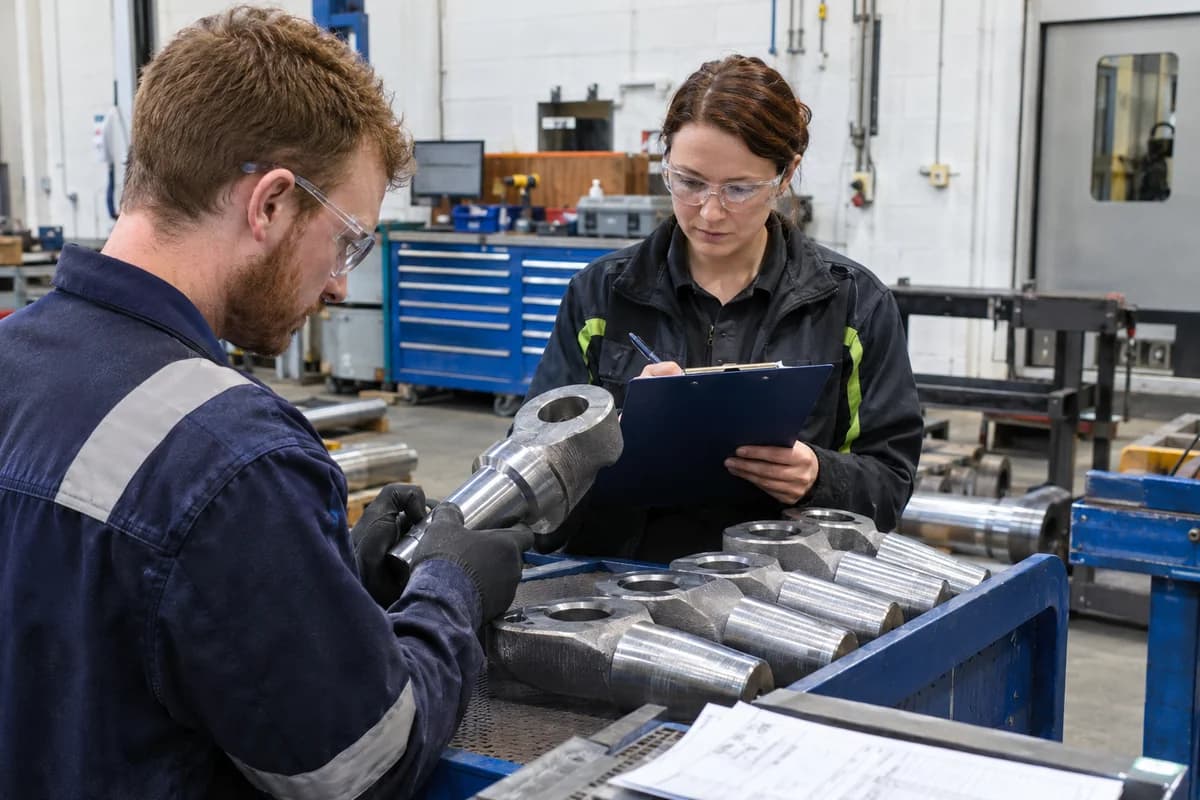
Steel remains the city’s trade. Melters, forgers and heat treaters make specialist alloys for aircraft, energy and medical work, and each job carries a certificate that names the alloy, the heat and the process used. Customers read that paper before they read the part.
Smaller firms make knives, tools and surgical instruments in workshops across the city. Shops take one-off orders, so quotes and delivery dates are rarely the same twice. Sheffield opens its offices when our day is well under way, so handover notes are ready when its team arrives.
The districts, business parks and markets that matter in Sheffield.
How Sheffield businesses pick and use software.
Works managers at forges and foundries who certify every heat and must prove to an aerospace customer that the paper matches the metal.
Owners of small cutlery and tool shops who quote one-off jobs.
Where Sheffield businesses lose time and money.
Material certificates are filed by hand
Each bar arrives with a paper certificate. If a buyer wants the heat number of a delivered part, staff search shelves and box files for an hour, and sometimes the paper is simply not there. Scanning certificates to a job record finds it in seconds.
Job routing lives in a foreman’s head
Which furnace, which press, which finisher? The knowledge sits with one person, and when that person is off sick the shop floor guesses at the order of work and the customer hears nothing. A routing board with live status lets anyone see where a job waits.
Quotes ignore real machine hours
One-off work is priced by feel. Costs are known only after the job is shipped, which is too late to learn that a quote lost money. Recording hours per operation gives a basis for the next quote.
What we would build for Sheffield businesses.
Usually in this order, starting with whatever the audit ranks first.
ERP, CRM and Business Software Implementation
One record of stock, orders, customers and accounts, set up so your team opens it every day.
Learn moreIoT and Edge Computing
Machine and sensor readings connected to office records, with buffering limits and recovery after a lost connection defined.
Learn moreQA and Software Testing
Testing on the phones, browsers and patchy networks your customers and staff actually use.
Learn moreData Migration and Moving Off Spreadsheets
Data migration and spreadsheet replacement covers auditing existing files, cleaning and deduplicating records, loading them into a new system and reconciling the loaded result against known totals. Both systems then run side by side before cutover. Originals stay untouched.
Learn moreReady products that fit Sheffield businesses.
Each one is adapted to how your business works before it goes live, and anything your trade needs that it lacks is added then. You are not paying to build the basics again.
Steel Foundry Management Software
Patterns, heats, moulding plans, fettling, weld repair, heat treatment loads, keel block results and material test certificates for steel foundries.
Learn morePrecision Forging Company Management Software
Billet heats, die register, press planning, induction heating logs, magnetic particle tests, outside normalising and dispatch for precision forging companies.
Learn moreStainless Steel Fabricator Management Software
Grade and heat tracking, finish and polish quotes, TIG weld and polish stages, pickling records, test logs and mill certificate packs for stainless fabricators.
Learn moreHow the work runs from Bengaluru for Sheffield.
- 1
The audit, by call
A screen-share and a look at the sheets, accounting reports and WhatsApp groups your team uses. No travel needed.
- 2
A written proposal
Scope, what we build first and the cost, agreed in writing before anything starts.
- 3
Build in short rounds
Working screens shared every few weeks. Your team tests them from your own office.
- 4
Go-live, in person when it helps
For data migration and training we can come to Sheffield. Travel is agreed in advance.
- 5
Support online
Fixes, changes and hosting handled remotely by the same team that built it.
The work we have published.
We don’t claim Sheffield clients we don’t have. These are systems our team built; the way we work is the same wherever you are.
PetSeva: matching owners to the right vet, at any hour
A two-sided veterinary platform where vets are searchable by specialisation and bookable outside clinic hours. It now carries more than 2,000 veterinary doctors.
Read the case study Paying guest accommodationSAM Atithi Pavathi: bed-level occupancy as the source of truth
PG management software where allocation, rates and invoices are derived from bed-level occupancy and not maintained in parallel spreadsheets.
Read the case study School transport servicesSAM Tours: school transport on a single ledger
Registration, fee collection, routing and finance write to the same records, closing the gap between journeys run and fees collected.
Read the case study Microfinance and Self Help GroupsVikasa RDO: making SHG loan recovery auditable
Loan proposals, recoveries and commissions sit on one record, with a person attached to every state change, so a business handling a bank’s money can show where each rupee went.
Read the case studyMake the scope specific to your business.
Work through a real example from your operation and agree the handoffs, controls and support the project needs.
Job routing lives in a foreman’s head
Is the plan based on demand that is still open?
Review “Job routing lives in a foreman’s head” with an order that changes after planning. Check which material or capacity reservations need review before promising the revised completion date.
Background reading: ERPNext: production planning
Questions Sheffield owners ask before they call.
Can you help with aerospace paperwork?
We can build records for traceability, inspection and certification, following the format your customer requires. We do not hold aerospace approvals ourselves.
Can the system run on a shop-floor tablet?
Yes. Screens are built for gloved use and low light, and we test on the tablet you choose.
What happens after I share my requirements?
We review your brief and clarify the work with you. We then look at the software, spreadsheets and WhatsApp groups your business runs on today and write down what works, what slows your team down and what is missing. A demo login, a screen-share or a few screenshots are enough. You get a short written summary ordered by priority, with no obligation to hire us afterwards.
How much will the software cost?
We don’t publish a price, because it depends on what the system has to do. That first review settles the scope, and the cost goes into a written proposal before any work starts.
Industries we build for in Sheffield.
Tell us what your Sheffield business runs on today.
Send a short note on the spreadsheets, software or WhatsApp groups your team depends on. We reply the same working day.
What happens after you share your requirements
- We review your brief and the systems you already use.
- We clarify the workflow, missing information and the work to consider first.
- The proposed scope sets out the deliverables, responsibilities and dependencies.
- Review the scope and commercial terms before deciding whether to proceed.
Start with your requirements
Describe your current process, the people involved and the change you need. Start with the details you know; we can clarify the rest together.
Share your requirements