Elevator Enquiry and Site Survey Records
Every person who asks for a lift or for service cover is recorded here, with the source of the enquiry. The survey notes taken at the site stay on the same record.
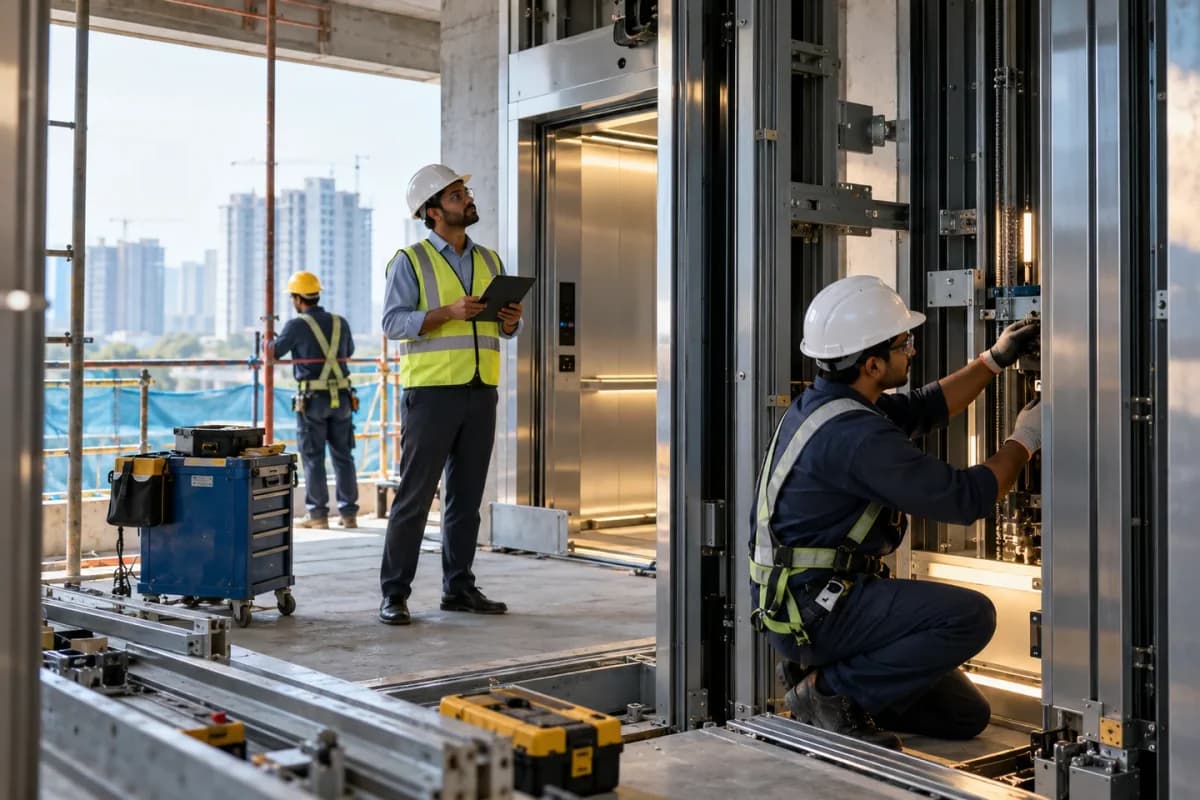
Where lift enquiries come from
Work reaches a lift company by several routes, and each one is worth naming.
What the site survey records
The surveyor fills the same sheet at every address, so nothing is reconstructed afterwards from memory. Guesswork costs material later.
- Shaft size, pit depth, headroom, travel and the floors to be served
- Machine room position, power supply available and the earthing point
- Existing lift make, model, controller and the condition of car and doors
- Access for material, crane or hoist, and the working hours the building allows
- Photographs of the shaft, machine room and landing openings
From survey to quotation
A survey that is complete feeds the quotation without anyone retyping it. The floors, travel and lift type carry over, and the surveyor’s notes stay attached for the person who prices the job. Dead enquiries close with a reason. Budget, a competitor and a stalled project are the common ones, and the owner reads them together.
What your office decides
- Which enquiry sources and closing reasons appear in the lists
- Who may record a survey and who signs it off
- Whether a surveyor must attach photographs before the survey closes
- How long an open enquiry waits before the desk calls again
Questions a surveyor must answer on site
A good survey answers what the quotation needs. It also catches problems with the shaft before an order is signed.
Following an enquiry until it ends
Most enquiries wait. Builders move handover dates and committees hold meetings.
- Each enquiry has a next call date
- Lost enquiries carry a closing reason
- A repeat enquiry from the same society attaches to its record
- Source is recorded so you see which channel gives orders
Questions for a lift enquiry tool
- Can the survey be filled on a phone?
- Do photos stay with the survey?
- Does the survey feed the quotation?
- Can website enquiries arrive here?
Following an enquiry through a sales week
Lift enquiries arrive from builders, societies, architects and walk-in callers. Each needs a call back, a site visit and a quotation. This is how the sales team, the surveyor and the owner use the record across one week. Follow one enquiry.
Rules to agree before enquiries are recorded
An enquiry record is only useful if everyone fills it the same way. A few rules come before the first entry. Each rule saves arguments later, when the quotation and the survey have to be matched. Write them down on one page.
Agree the evidence before signing off this part.
Use a representative scenario to decide what this part of the system must show and where review is still needed.
From survey to quotation
Which assumptions stop being valid when the quotation changes?
For “From survey to quotation”, compare an accepted version with a later revision. Identify changed quantities, exclusions and validity dates before the revised amount is used downstream.
Background reading: ERPNext: quotation terms
Frequently asked questions
Can a survey be filled at the site on a phone?
Yes. The surveyor fills the sheet and attaches photographs from the building itself, and the office reads it the same hour.
Does a repeat enquiry from the same society create a new record?
No. The building is already on file, so the fresh enquiry attaches to it and the earlier survey stays visible. Nothing is typed twice.
Can enquiries from a website form arrive here?
Only where that link is built. Otherwise the desk types the enquiry and marks its source by hand.
Who sees an enquiry once it is entered?
The office staff you name for sales work. A surveyor sees the addresses assigned to that surveyor and nothing beyond that.
How soon should a survey follow an enquiry?
That is your decision. Firms visit soon after the enquiry to keep the buyer interested. A reminder shows when the visit is due.
Can a builder’s enquiry cover more than one lift?
Yes. One enquiry can list several lifts with their floors and handover months.
What if the survey is incomplete?
The record shows which fields are empty. You can choose to block the quotation until key fields are filled.
Can I compare surveys across buildings?
Yes. The same sheet is used each time, so shaft sizes and conditions line up.
How this feature fits the system.
Elevator Service Management Software: the parts that work with this feature, the trades that use it and the ways to put it in place.
Quotations and modernisation proposals
Quotations list the parts and labour for a new lift, a repair or a modernisation, and are tracked to an order with revisions kept on file.
Estimate/Quotation ManagementAMC contracts and renewals
Each building’s contract records cover type, the lifts included, visit frequency and instalments, so the service team sees renewal dates and visits owed.
AMC and Service ContractsTechnician routes and attendance
Buildings are grouped into routes with a technician or pair assigned, and the day’s visits and calls are recorded as attended.
Technician SchedulingTell us what you need.
Tell us what your team does today, where work gets stuck and what you want to change.
What happens after you share your requirements
- We review your brief and the systems you already use.
- We clarify the workflow, missing information and the work to consider first.
- The proposed scope sets out the deliverables, responsibilities and dependencies.
- Review the scope and commercial terms before deciding whether to proceed.
Start with your requirements
Describe your current process, the people involved and the change you need. Start with the details you know; we can clarify the rest together.
Share your requirements