Lift Installation Project Stage Tracking
An accepted order opens an installation job for one lift or for several in a building. The job moves through erection stages until the lift is handed over.
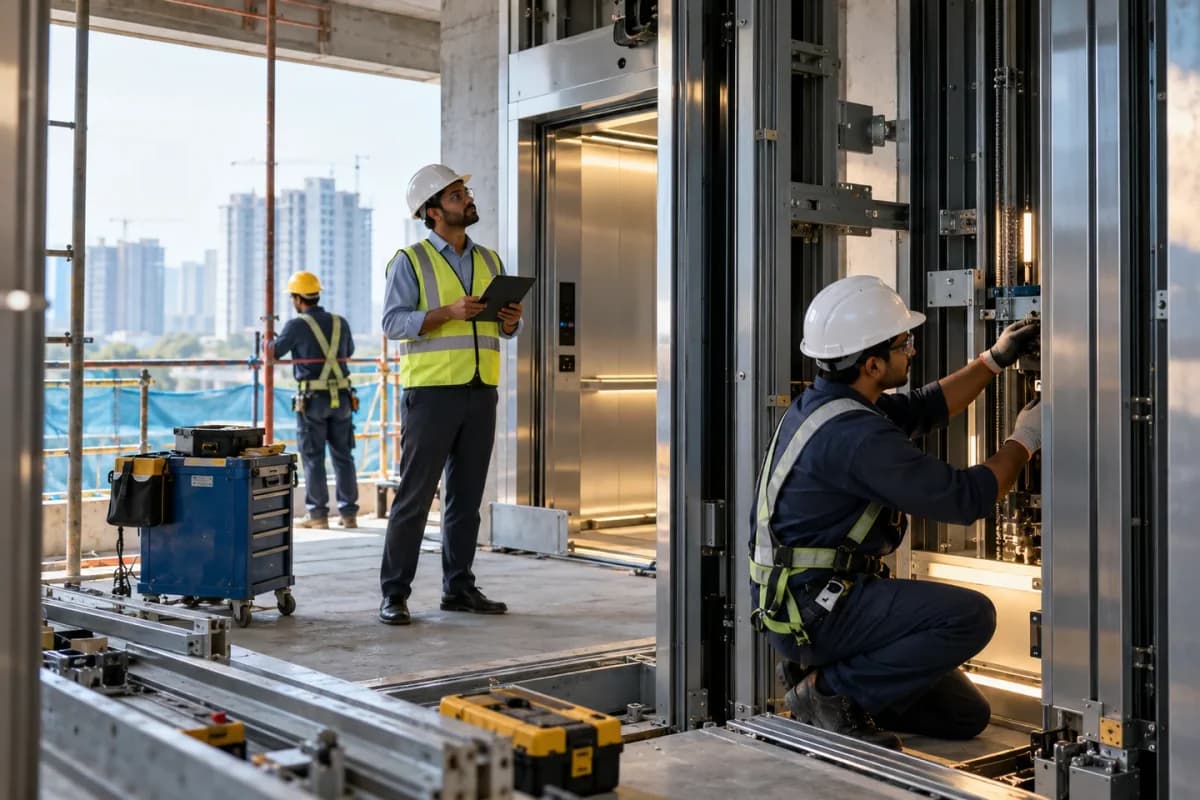
Stages of a lift erection
Erection is a sequence. Each step is marked done by the supervisor who did it, on the day it finished.
Material and manpower on a job
Each job holds what left your store for that building and who worked there. Material sent, material returned and shortages are listed against the lift, so a missing bracket is traced instead of argued over. The erection team and the days each member spent at the site are recorded. Builder delays, such as a shaft not ready or power not given, are noted with the date they were reported.
Where the job connects
What the client decides at set-up
- The erection stages your supervisors actually work to, and their order
- Which stages need a photograph or a reading before being marked done
- Who may mark a stage complete and who signs the handover
- How builder delays are recorded and who is told about them
The order of work in a lift erection
Method statements for lift installation follow a familiar order. The shaft is prepared, guide rails are erected and aligned, the counterweight and car are assembled, the machine and ropes are fitted, and the controller is wired and commissioned. The stages above follow that order.
- Rail alignment is checked before the car goes in
- Rope fitting and the machine are recorded with the day’s readings
- Commissioning covers mechanical inspection, electrical tests and safety checks
- Documents are reviewed before handover
Delays that come from outside
Builders cause most delays on erection jobs. A civil team may not clear the shaft, or power may not reach the machine room.
Questions for an installation tracker
- Can stages be changed to match how my team works?
- Is a photo required to close a stage?
- How are shortages raised?
- Does handover create the lift record?
An installation job as the weeks pass
A lift installation runs for weeks and passes through several hands. Each hand adds a mark. The supervisor, the store, the erector and the client each see their part of the job. Here is how the stage record is used from the first delivery of rails to handover.
Questions to settle before rollout.
Use a representative scenario to decide what this part of the system must show and where review is still needed.
To the quotation
Which assumptions stop being valid when the quotation changes?
For “To the quotation”, compare an accepted version with a later revision. Identify changed quantities, exclusions and validity dates before the revised amount is used downstream.
Background reading: ERPNext: quotation terms
To billing
Can you explain the balance from its original documents?
Select a partly settled example in “To billing”. Ask for the invoice, allocated receipts and remaining balance to be shown together before agreeing the opening figures.
Background reading: ERPNext: outstanding invoices
Frequently asked questions
Can several lifts in one building be tracked together?
Yes. Each lift has its own stage list, and the building shows all of them on one screen.
Does it plan the erection schedule by itself?
No. Your supervisor sets the target dates, and the module records what was reached and on which day.
Can material shortages be raised from the site?
Yes. A supervisor records a shortage against the job, and the store reads it on the issue list.
What happens to the job after handover?
It closes. The lift appears in the service register with its warranty period and the parts fitted during erection.
Who should sign a stage as complete?
The supervisor who did the work, and a senior engineer for key stages. You set this at the start.
What do the trial runs record?
Levelling, door timing and other readings taken on the day. Your engineer decides what the readings must show.
Can I see all jobs at one place?
Yes. A board shows each job and its current stage, so you can see which are behind.
How do stage payments connect to the job?
Each stage can carry a payment. When it is marked reached, the office is told an invoice can be raised.
How this feature fits the system.
Elevator Service Management Software: the parts that work with this feature, the trades that use it and the ways to put it in place.
Quotations and modernisation proposals
Quotations list the parts and labour for a new lift, a repair or a modernisation, and are tracked to an order with revisions kept on file.
Estimate/Quotation ManagementAMC contracts and renewals
Each building’s contract records cover type, the lifts included, visit frequency and instalments, so the service team sees renewal dates and visits owed.
AMC and Service ContractsTechnician routes and attendance
Buildings are grouped into routes with a technician or pair assigned, and the day’s visits and calls are recorded as attended.
Technician SchedulingTell us what you need.
Tell us what your team does today, where work gets stuck and what you want to change.
What happens after you share your requirements
- We review your brief and the systems you already use.
- We clarify the workflow, missing information and the work to consider first.
- The proposed scope sets out the deliverables, responsibilities and dependencies.
- Review the scope and commercial terms before deciding whether to proceed.
Start with your requirements
Describe your current process, the people involved and the change you need. Start with the details you know; we can clarify the rest together.
Share your requirements