Routine Lift Service Schedules and Visit Checklists
Routine visits are raised from the frequency written on each contract. The technician fills a checklist at the site, and the office sees which lifts are still waiting.
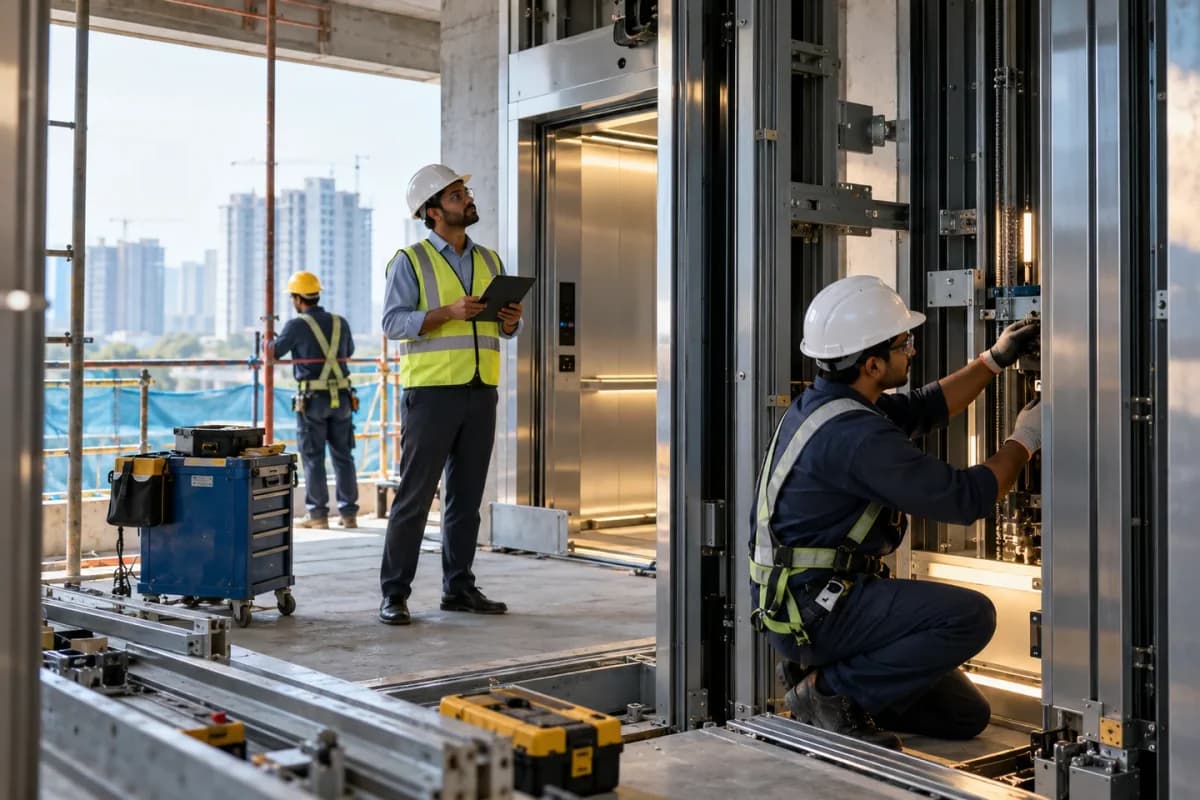
How the month is planned
Visits come from the contract, not a diary. A lift on a monthly contract produces one visit a month, and a lift visited twice a month produces two. Visits are grouped by building, so a technician attends every lift at one address in a single trip.
Frequency, contracts and month-end for routine visits
Contracts for lifts commonly ask for a visit at least monthly, though your own agreements may say otherwise. Buyers ask three things.
What the visit checklist covers
The checklist follows your own service sheet. These are the usual groupings.
Reading a lift from the sheet over time
One sheet tells little. A run of sheets tells a lot. A rope marked worn at three visits in a row, or a pit with water on the floor each monsoon, is a pattern the next technician should open first. Remarks from earlier visits sit at the top of the new checklist. Flags that stay open for months are listed for the service manager.
Signing off and what follows
A visit closes when the technician marks it done and the site signs. The signature of the security in charge or the facility manager can be taken on the phone screen. Items flagged as needing attention become a short list the office reads. That list turns into a spare part request, a quotation for work outside cover, or a note for the next visit.
What to settle when the sheet is first loaded
- Whether traction and hydraulic lifts need separate checklists
- Which readings the customer insists on, such as levelling or door timing
- Who signs on the customer side at hospitals, malls and housing societies
- How a visit done after hours should be recorded
- Whether your engineer wants flagged items escalated the same day
What the schedule module does not decide
- It fixes no frequency of its own, and the contract supplies that
- It cannot certify that a lift is fit to run, which stays with your engineer
- A missed visit is not rescheduled unless a person moves it
- The checklist wording is loaded from your service sheet at set-up
A month of routine visits from plan to sign-off
Routine service is a month of small jobs repeated across every lift under contract. The schedule, the checklist and the sign-off each play a part. Here is how the module is used by the people who carry out a month’s work. It is steady work.
Agree the evidence before signing off this part.
Use a representative scenario to decide what this part of the system must show and where review is still needed.
How the month is planned
Which observation would change the proposed scope?
For “How the month is planned”, observe someone completing the task with a representative example. Record where they stop, ask another person or re-enter information, then choose the smallest change whose result the team can verify.
Background reading: GOV.UK: researching user needs
Frequently asked questions
Can the checklist differ by lift make?
Yes. Separate checklists can be held for different makes or machine types, and the lift record picks the right one.
What happens when a visit is not done in the month?
It stays on the pending list with the lift and the building named. The office decides what to do.
Does the technician need a signal at the site?
Not throughout. Even in a basement machine room, the form can be filled and sent once the phone finds a network.
Can a visit be entered by the office instead?
Yes. The desk can enter a visit from the paper sheet, and the record shows that a person typed it.
How should a technician’s day of lifts be sized?
That depends on floors, machine room access and travel. The planner lets you group a building’s lifts into one trip and shows the load per technician, but the number you set is your own judgement.
Can a customer see which visits were done?
Yes, if you open a customer view for them. They read dates and signed sheets for their own building only.
What if the lift has no signal in the machine room?
Technicians fill it and hold it on the phone. It is sent once the phone gets a network again.
Does a visit sheet replace the statutory inspection?
No. Statutory inspection and licensing follow the rules of your state and the arrangement with your customer. Your sheet is a service record that sits beside them.
How this feature fits the system.
Elevator Service Management Software: the parts that work with this feature, the trades that use it and the ways to put it in place.
Quotations and modernisation proposals
Quotations list the parts and labour for a new lift, a repair or a modernisation, and are tracked to an order with revisions kept on file.
Estimate/Quotation ManagementAMC contracts and renewals
Each building’s contract records cover type, the lifts included, visit frequency and instalments, so the service team sees renewal dates and visits owed.
AMC and Service ContractsTechnician routes and attendance
Buildings are grouped into routes with a technician or pair assigned, and the day’s visits and calls are recorded as attended.
Technician SchedulingTell us what you need.
Tell us what your team does today, where work gets stuck and what you want to change.
What happens after you share your requirements
- We review your brief and the systems you already use.
- We clarify the workflow, missing information and the work to consider first.
- The proposed scope sets out the deliverables, responsibilities and dependencies.
- Review the scope and commercial terms before deciding whether to proceed.
Start with your requirements
Describe your current process, the people involved and the change you need. Start with the details you know; we can clarify the rest together.
Share your requirements