Raw Material Stock for Manufacturers
Material is counted by grade and size, not by rough weight on the floor. Every issue goes out against a work order, so consumption can be read later.
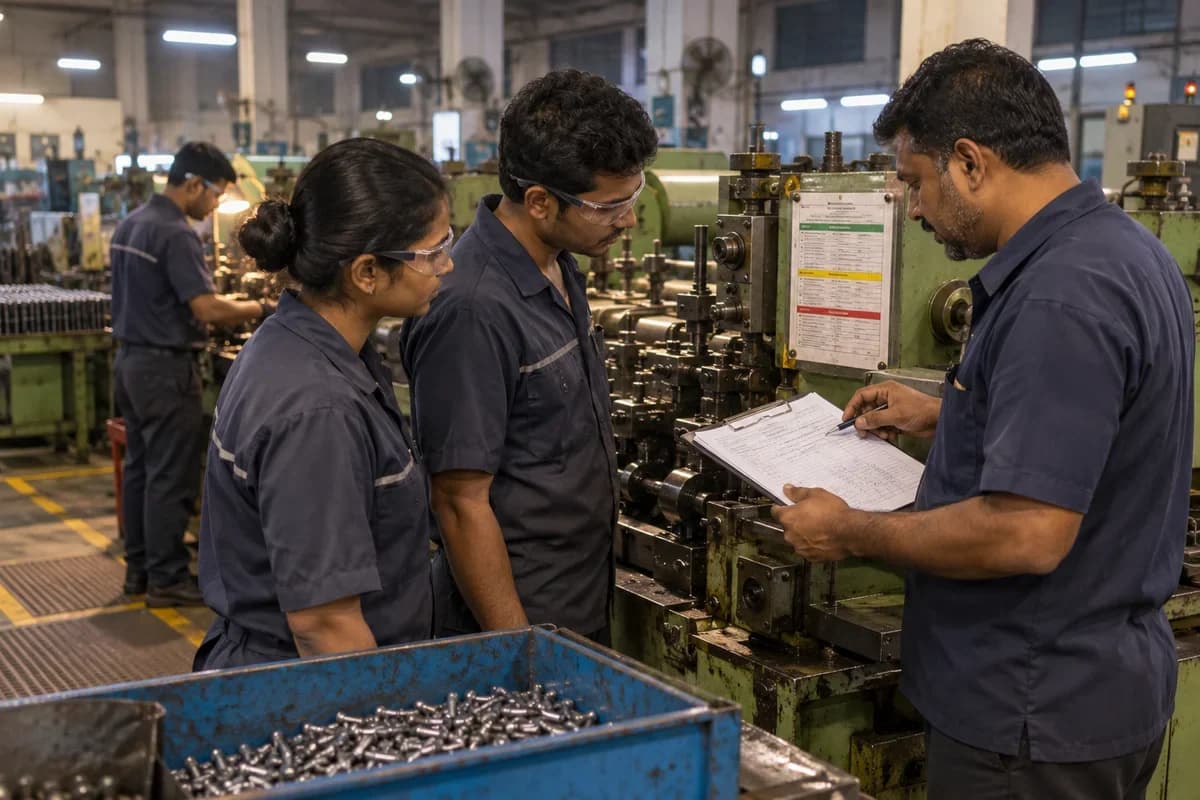
How material is counted
A unit holds several forms of the same metal or compound. Bars by diameter, sheets by thickness, castings by pattern, resin by grade, fasteners by size and cartons by dimension each need their own count. A single item line called steel tells a planner nothing useful. Each line keeps its store rack or bin. Reorder level and a usual supplier sit on the same line.
Issue against a work order
Shortages and receipts
What the plant sets up for raw stock
- How grades and sizes are named in your store
- Reorder level and minimum stock for each material line
- Whether issues need a supervisor signature before the store releases material
- Who may adjust stock after a physical count
- Whether heat and lot numbers are recorded at all
Checking steel on receipt
A steel bar arrives with a certificate. The heat number on that certificate is the link between paper and metal. It should match the marking on the bar and the number on the packing list.
Problems that distort material records
- Issues without a work order number, which hide where material went
- Offcuts thrown into scrap without a weight
- Two names for one size, so stock splits across lines
- Receipts booked before inspection
- A physical count adjusted quietly by the store
Reading the gap between issue and expectation
A batch of one hundred pieces should use a known quantity of bar. The store issued a little more. Part of that is scrap allowance, part is spoilt pieces, and part is cutting waste that nobody measured. When the gap is small, ignore it. When it grows batch after batch, something has changed, such as a worn tool, a different supplier size or a habit of drawing extra. Look at the pattern over a month, not a single batch, and ask the supervisor first. Blame helps nobody. The number is a question, not a verdict.
Raw material handling across a working day
A store has a different rhythm from the floor. This page follows a store keeper through one day of raw material work. The work is quiet but exact. Each entry is made once, by the person holding the material.
Questions to settle before rollout.
Use a representative scenario to decide what this part of the system must show and where review is still needed.
Receipts with inspection
Who decides whether a failed result blocks the next step?
For “Receipts with inspection”, bring an accepted result and a failed one. Agree who can authorise an exception and what evidence must accompany that decision.
Background reading: ERPNext: inspection criteria
Raw Material Stock for Manufacturers
What happens to movements entered while a count is being checked?
For “Raw Material Stock for Manufacturers”, choose a count date and trace the movements around it. Agree who investigates a difference before an adjustment changes the available balance.
Background reading: ERPNext: stock reconciliation
Frequently asked questions
Can material be issued by weight?
Yes. Bars and sheets can be held in kilograms, in pieces or in both, and a weighing scale can be read where one is connected.
How are offcuts handled?
They can be taken back as a usable remnant with its own size, or booked as scrap, whichever your store already practises.
Does stock show across two stores?
Yes, where you keep more than one. Each store carries its own count and the planner reads the total.
Will it stop an issue when stock is nil?
A warning shows and the issue can be blocked or allowed, depending on what the owner wants the storekeeper to be able to do.
Can the system hold mill certificates?
A certificate can be attached to the receipt and the heat number held on the stock line. Whether you keep both is your choice.
How often should we count stock?
Count fast moving items frequently and slow items a few times a year. The right rhythm depends on your volume and your auditors.
Can fasteners be kept by size and grade?
Yes. Each size and grade is its own line with its own rack and reorder level.
What about material supplied by the buyer?
Hold it as a separate stock owned by that buyer, so it is never issued to another buyer batch.
How this feature fits the system.
Manufacturing Production Management Software: the parts that work with this feature, the trades that use it and the ways to put it in place.
Multi-level bill of materials and routing
Each part carries a multi-level material list and routing with drawing revisions, scrap allowance and the machine per stage, while sub-assemblies hold their own lists.
Bill of MaterialsWork orders and batch planning
Planners release a work order for a batch with a target date and see the load already queued on each lathe, press and stage.
Work Order ManagementWork orders and batch planning
Batch work orders are scheduled against machine and stage loads, so the planner sees where capacity is already taken before setting the next date.
Production PlanningTell us what you need.
Tell us what your team does today, where work gets stuck and what you want to change.
What happens after you share your requirements
- We review your brief and the systems you already use.
- We clarify the workflow, missing information and the work to consider first.
- The proposed scope sets out the deliverables, responsibilities and dependencies.
- Review the scope and commercial terms before deciding whether to proceed.
Start with your requirements
Describe your current process, the people involved and the change you need. Start with the details you know; we can clarify the rest together.
Share your requirements