Edmonton · CountriesEdmonton’s fabricators, chemical plants and provincial offices keep steady schedules through long winters.
Edmonton is Alberta’s capital, a university town and the base for refineries, petrochemical plants and the fabrication shops that serve northern oil work. Provincial offices, colleges and hospitals give the city a steady public side. Deep cold shapes every building trade, and field crews head north on rotating schedules.
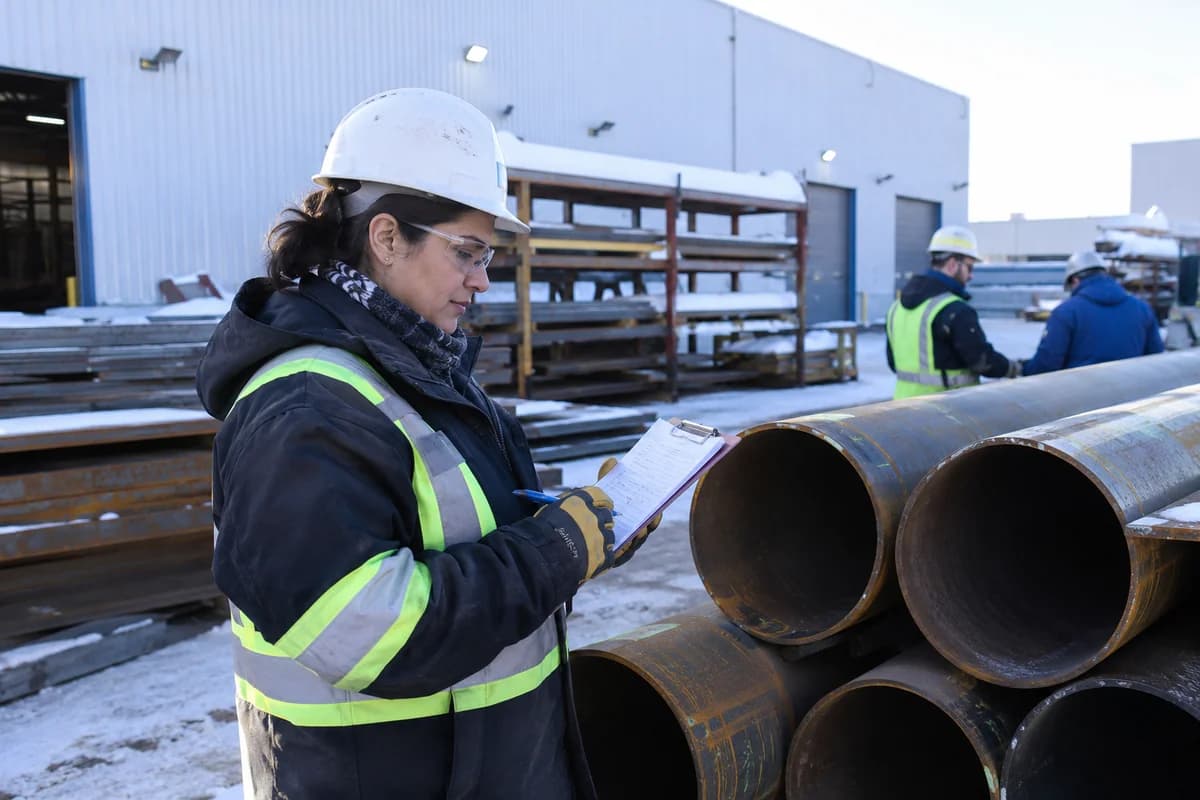
East of the river, refineries and chemical plants sit in a long industrial strip, and a web of steel fabricators, pipe shops and electrical contractors surrounds them. Shutdown work arrives in bursts. A plant turnaround means hundreds of tradespeople, tight permits and daily paperwork for safety and materials.
The city has a second face, with the Legislature, the University of Alberta and several colleges bringing offices, students and research. Winters run long and cold. Heating and ventilation firms stay busy, and every outdoor trade plans around freeze-up.
The districts, business parks and markets that matter in Edmonton.
How Edmonton businesses pick and use software.
Fabrication and pipe shops want job cards, material certificates and delivery paperwork tied to each order. Turnaround work leaves little room for lost documents.
Heating, ventilation and electrical contractors need service calls, maintenance contracts and parts in one view.
Firms that sell to institutions want tender dates, submitted documents and follow-ups held in one place.
Where Edmonton businesses lose time and money.
Material certificates not matched to jobs
Auditors ask where a plate or pipe came from, and a job record that carries the certificate number answers it quickly.
Shutdown crews counted by hand
Hundreds of workers sign in for a turnaround, and the office reconciles sheets afterwards. Digital sign-in and hours reduce the clean-up.
Maintenance calls forgotten in the cold months
Furnaces and rooftop units fail in the worst weather, and a service schedule with reminders catches contracts before the rush.
Tender deadlines tracked in calendars
Institutional bids have fixed dates and attachments, and a tracker with owner and status prevents late or incomplete submissions.
What we would build for Edmonton businesses.
Usually in this order, starting with whatever the audit ranks first.
Business Process Automation
Approvals, reminders and reports triggered by agreed rules, with exceptions assigned to a responsible person.
Learn moreERP, CRM and Business Software Implementation
One record of stock, orders, customers and accounts, set up so your team opens it every day.
Learn moreCloud Engineering and Managed Infrastructure
Hosting, monitoring and recovery planned around the hours your business operates and the downtime it can tolerate.
Learn moreTraining and Adoption
Adoption work starts after launch. Each role is trained at its own screen on its own tasks, such as billing returns, goods receipts or closing job cards. Support stands on the floor at go-live. Afterwards the records are reviewed to find which steps staff skip, which fields stay blank and why the stores or field team still reach for a notebook. Share your requirements and we will plan it with you.
Learn moreReady products that fit Edmonton businesses.
Each one is adapted to how your business works before it goes live, and anything your trade needs that it lacks is added then. You are not paying to build the basics again.
Government Contractor Management Software
Tender tracking, bid review, proposals, contract registers, deliverables, subcontractors, billing by contract line and payment follow-up for firms selling to public buyers.
Learn moreConstruction Project Management Software
Sites and stages, formwork and masonry gangs, bar bender bills, material issue, running bills with retention and site photos for builders and contractors.
Learn moreHow the work runs from Bengaluru for Edmonton.
- 1
The audit, by call
A screen-share and a look at the sheets, accounting reports and WhatsApp groups your team uses. No travel needed.
- 2
A written proposal
Scope, what we build first and the cost, agreed in writing before anything starts.
- 3
Build in short rounds
Working screens shared every few weeks. Your team tests them from your own office.
- 4
Go-live, in person when it helps
For data migration and training we can come to Edmonton. Travel is agreed in advance.
- 5
Support online
Fixes, changes and hosting handled remotely by the same team that built it.
The work we have published.
We don’t claim Edmonton clients we don’t have. These are systems our team built; the way we work is the same wherever you are.
PetSeva: matching owners to the right vet, at any hour
A two-sided veterinary platform where vets are searchable by specialisation and bookable outside clinic hours. It now carries more than 2,000 veterinary doctors.
Read the case study Paying guest accommodationSAM Atithi Pavathi: bed-level occupancy as the source of truth
PG management software where allocation, rates and invoices are derived from bed-level occupancy and not maintained in parallel spreadsheets.
Read the case study School transport servicesSAM Tours: school transport on a single ledger
Registration, fee collection, routing and finance write to the same records, closing the gap between journeys run and fees collected.
Read the case study Microfinance and Self Help GroupsVikasa RDO: making SHG loan recovery auditable
Loan proposals, recoveries and commissions sit on one record, with a person attached to every state change, so a business handling a bank’s money can show where each rupee went.
Read the case studyMake the scope specific to your business.
Work through a real example from your operation and agree the handoffs, controls and support the project needs.
Maintenance calls forgotten in the cold months
What proves that a planned task was actually completed?
Select an overdue entry in “Maintenance calls forgotten in the cold months”. Ask which work record closes it and what remains visible when the visit is postponed or only part of the job is done.
Background reading: ERPNext: maintenance plans
Questions Edmonton owners ask before they call.
Can maintenance contracts be tracked with reminders?
Yes. Each contract holds equipment, visit dates and notes, and reminders go to staff before service windows. Customer messages can be added if you want them.
Is remote support suitable for plant paperwork?
For records and scheduling it works well. Anything that touches safety rules stays under your own safety officer, and we build only the record-keeping around it.
What happens after I share my requirements?
We review your brief and clarify the work with you. We then look at the software, spreadsheets and WhatsApp groups your business runs on today and write down what works, what slows your team down and what is missing. A demo login, a screen-share or a few screenshots are enough. You get a short written summary ordered by priority, with no obligation to hire us afterwards.
How much will the software cost?
We don’t publish a price, because it depends on what the system has to do. That first review settles the scope, and the cost goes into a written proposal before any work starts.
Industries we build for in Edmonton.
Elsewhere in Canada.
Tell us what your Edmonton business runs on today.
Send a short note on the spreadsheets, software or WhatsApp groups your team depends on. We reply the same working day.
What happens after you share your requirements
- We review your brief and the systems you already use.
- We clarify the workflow, missing information and the work to consider first.
- The proposed scope sets out the deliverables, responsibilities and dependencies.
- Review the scope and commercial terms before deciding whether to proceed.
Start with your requirements
Describe your current process, the people involved and the change you need. Start with the details you know; we can clarify the rest together.
Share your requirements